Did American Education Forget Gettysburg?

 (This essay was originally published in The Lincoln Forum Bulletin, Fall 2013.

On the 150th anniversary of the greatest, most significant battle since the Revolutionary War, America—but for historical circles and the celebrations in Gettysburg itself—appears disinterested. Abe Lincoln, our most admired president, would be disappointed and would shudder at the implications for our country.    

        In probably the greatest land battle ever fought in the Western Hemisphere, Union and Confederate forces clashed at Gettysburg, Pennsylvania, July 1-3, 1863. During these three days some 70,000 Confederate soldiers, led by General Robert E. Lee, engaged 90,000 Union forces, led by Major General George Gordon Meade, in command of the Army of the Potomac for only three days. Lee had invaded the North with the hope, militarily, of scoring a decisive victory which, politically, might strengthen the Northern peace movement and force President Abraham Lincoln to negotiate for peace.

        The battle witnessed uncommon valor and good and poor tactical decisions on both sides, culminating in the ill-fated Confederate assault led by Major General George Pickett. Of the 14,000 Southern troops who attacked that July 3, only about one-half returned. While the Union won a resounding victory, the human toll on both sides was very costly: 23,000 Union casualties (killed, wounded, and missing) and 28,000 Confederate casualties, more than a third of the Confederate force.

        Lee and his Army of Northern Virginia would fight and win many other battles after Gettysburg; however, their former dominance in tactics and initiative was now matched by experienced Union forces, soon to be led by Lieutenant General Ulysses S. Grant.

        Many Americans who have heard of this battle may not know of its magnitude and significance. Many perhaps make facile assumptions about the inevitability of the North’s victory in the Civil War, similar to the common view of World War II—we all know the conclusion and casually assume the Allied victory was inevitable.

        Not so. The Battle of Gettysburg could have gone either way, and with it the Civil War. If Lee had prevailed over Meade, there was no guarantee that the North’s superiority in manpower, finances, and industry along with Lincoln’s Emancipation Proclamation would win the war. If the Confederacy succeeded in stifling the North sufficiently so that public opinion shifted dramatically, we would have become two separate nations. Lincoln’s greatest nightmare would have come true: that self-government was a chimera.

        Given the magnitude and significance of this battle, it is surprising how little commemoration, apart from the city of Gettysburg and historical circles, appears to be taking place. This past year Hollywood has given us Spielberg’s Lincoln; however, this is focused on Lincoln and the abolishment of slavery. Also, Copperhead, a movie about the peace movement in the North, opened in late June. The Postal Service has given us some marvelous stamps featuring the Emancipation Proclamation, the Battle of Gettysburg, and the Battle of Vicksburg. Minnesota is remembering its famous 1st Minnesota Volunteer Infantry Regiment, which sustained an 82% casualty rate at the battle. Here in Rhode Island we have a program at the state capitol on July 3 remembering the battle and the uncanny story of our famous “Gettysburg Gun.” A musical-theatrical “Tribute to the Battle of Gettysburg” is also planned for later in the month.

        Beyond this, there seems to be an absence of major commemorations. Our country seems disinterested or preoccupied. Honest Abe would be very disappointed. During this past year the weekly newspaper Education Week, self-described as “American Education’s [K-12] Newspaper of Record,” has had no articles on the Battle or the Civil War, focusing on such things as the implementation of the Common Core standards, assessment of students, and teacher education and evaluation. Likewise, Independent School, the quarterly magazine for independent schools, has also ignored this pivotal battle and our Civil War, focusing on such themes as technology, experiential learning, safety and security in schools, and accomplishing school missions in an era of fiscal restraints. Even the PBS Catalog for June features neither the Battle nor the War. Its cover emphasizes “Constitution USA” and its rear cover features British dramas.

        The implications of this neglect are serious. Societies and civilizations require glue to bind and sustain them, and one important source of this binding is a significant historical event, such as the Battle of Gettysburg. It was the so-called “high water mark of the Confederacy.” It was along with Vicksburg the pivotal battle of the Civil War which forged for us a new identity. It eliminated a way of life based on slavery. Before the war it was common to say “the United States are;” afterward, it became “the United States is.”

        With the former prominence of Columbus Day now diminished, and Thanksgiving now overtaken by a commercialism which whisks us from Halloween almost directly to Christmas, the remembrance of such key events becomes even more important.

        Secondly, our neglect of Gettysburg may signal a complacency about the longevity of our country. One of the great insights Lincoln gives us is his reminder of the contingent nature of our democratic system, a system which needs tending by its people for its survival. In his July 1861 message to Congress, he stated: “It [the War] presents to the whole family of man, the question whether a constitutional republic, or a democracy … can, or cannot, maintain its territorial integrity, against its own domestic foes.”

        With the rise of China and The Rest, America is again faced with maintaining its interests in a changing and challenging world. Lincoln also gives us insight into our greatest challenge: “If destruction be our lot, we must ourselves be its author and finisher. As a nation of freemen we must live through all time, or die by suicide.”

Fred Zilian is an educator at Portsmouth Abbey School and Salve Regina University, RI. For fifteen years he has been an Abraham Lincoln presenter/impersonator (www.honestaberi.com)


Posted in Uncategorized | Tagged , , , , , , , , , | Leave a comment

Rhodes Remains “All for the Union”

(This essay was originally published by the Newport Daily News on December 31, 2013, as “Despite hardships, soldier remained ‘for the Union.'”)

The year 1863 was filled with mud, battles, hunger, comradeship, and firmness in commitment to God and country for Elisha Hunt Rhodes, a Civil War soldier from the village of Pawtuxet, Cranston, who entered military service for the Union in July 1861, as a private and left it four years later as a colonel.

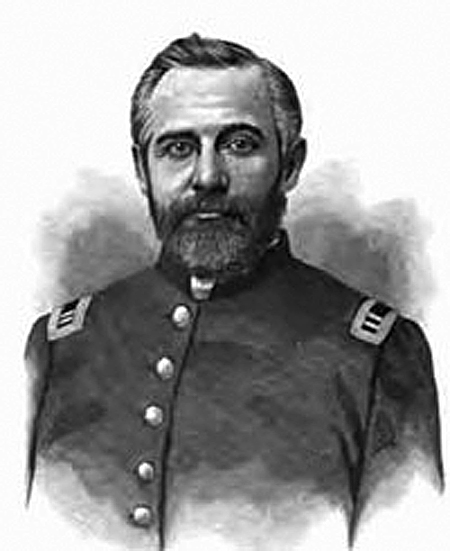
In February of this year, the 2nd R.I. Volunteer Infantry Regiment received a new commander, Colonel Horatio Rogers, Jr., whom Rhodes and the other soldiers quickly grew to respect and admire. Rhodes writes: “Colonel Rogers is a splendid fellow, and we like him already.” “Instead of making a great show of authority, he was very mild in his manner and it has had a good effect.”

 ColRogers

COL Horatio Rogers, Jr.

(angelfire.com)

            Rhodes was delighted on March 21 to reach the age of twenty. “I am a man today.” “I begin to feel that I am an old man if hard work makes one old.” He is very happy to receive a birthday “present” of a ten-day leave to visit home.

During this year Second Lieutenant Rhodes served as the commander of Company D for a short period of time, but mostly he led Company B. In April he showed great character in not accepting promotion to captain, which COL Rogers offered to him.  He declined the offer, “because I did not care to step over the heads of ten First Lieutenants who are my seniors.”

His living conditions throughout most of the year remained challenging; however, he continued to show great resilience, remaining reasonably healthy and upbeat. In poor weather, mud was a constant companion. Early in the year at Pratt’s Landing, VA, he writes: “So the gallant Second [R.I Vols.] is again shoveling Virginia.” On January 24 near Falmouth, VA, he states: “Men, Horses, Artillery, pontoons, and wagons were stuck in the mud.” The wagons began to turn over and “mules actually drowned in the mud and water.” On November 24 at Camp Sedgwick, he writes: “It is raining, and we all live in mud, sleep in mud, and almost eat in mud.”

Rhodes clearly had good rapport with his men, as they often built him shelters and modest houses, so-called “shebangs.” On February 1 he indicates: “The men of Company D have built me a house.” It is outfitted with a fireplace and table on the first floor, a partial second floor with bed, walls of timber and mud, and the roof is pieces of tent. In August in camp at Warrenton, VA, he states: “My Co. ‘B’ built me a fine house of stone and put on a canvas roof.” On October 7 his men again built him a house: “One of my men found me a desk, so I am living in style.”

At several times during the year, he complains of lack of food. On a few such occasions, the unit is lucky enough to find blackberries. The men had had nothing to eat for two days when they discovered the gems. “On halting last night we found high blackberries very plenty and everybody ate their fill. They were good, too, for we were nearly starved.”

Remarkably, Rhodes was able throughout the year to keep his positive attitude. In April before a battle, he states: “I am well and confident of successful tomorrow.” After the battle, he indicates: “I am well and happy.” At the beginning of July, he writes: “I am tired—in fact I never was so tired in my life. But Hurrah! ‘It is all for the Union.’” In mid July, “I have not changed my clothes for five weeks, but still I am happy….” Finally in October: “… I am happy and feel well all the time.”

 elisha_hunt_rhodes

 Second Lieutenant Elisha Hunt Rhodes

(civilwartalk.com)

             During this year the 2nd R.I. was involved in numerous skirmishes, battles, and encounters with Confederate forces. In early May in fighting near Fredericksburg, Rhodes writes: “One iron bullet struck me upon my foot causing me to jump into the air, but only lamed me a little. I picked up the iron bullet and put it into my pocket and will send it home.” On several occasions he describes encounters with Southern troops with whom agreements were made not to fire. In February near Falmouth, VA, he describes such an agreement, allowing men to visit the river banks. “It seemed queer to see them only a few yards away in their gray clothes. One of their bands played every day, and we enjoyed the music with them.”  In April near Franklin’s Crossing (Rappahannock River), Rhodes states: “Gen. Thomas J. Jackson (Stonewall) came down to the river bank today with a party of ladies and officers. We raised our hats to the party, and strange to say the ladies waved their handkerchiefs in reply.” The 2nd R.I. also saw limited action at Gettysburg. On the climactic third day, he writes: “As we were only a few yards in rear of our lines we saw all the fight.” “But what a scene it was. Oh the dead and the dying on this bloody field.”

Late in the year, a big change occurs: Rhodes is moved to the regimental staff and becomes the Adjutant, allowing him to purchase two horses. “So good bye sore feet ….”

At year’s end, Rhodes is wistful but remains committed to service. On December 31 he closes: “The United States need the services of her sons.” … “I am going, if God wills, to see the end of this wicked rebellion.”

(For further reading, see Robert Hunt Rhodes, ed., All for the Union.)

See the final essay in the series: “Amid Horrors of 1864, RI Soldier Perseveres.

Posted in Uncategorized | Tagged , , , , , , , , , | 1 Comment

The Decline of Thanksgiving

(The essay was originally published by the Newport Daily News on November 27, 2013.)

An important threshold was crossed two years ago when Wal-Mart and Toys R Us moved their opening or early bird specials from very early Black Friday into Thanksgiving Thursday. Last year they moved these times even earlier and were joined by Sears and Target who both opened Thanksgiving evening. Santa’s commercial floodgates appear to be opening and swallowing up our national holiday of thanks.

The decline in the importance and integrity of Thanksgiving is regrettable. The common story of Thanksgiving, celebrated in elementary schools across the country, is a tale of the perseverance of Pilgrims and of cooperation and common thanks between two different peoples who had been until the early 1600s worlds apart. It is one of the stories that defines us as Americans. And civilizations need stories to serve as their connective tissue, helping them endure.

        Over the past fifty years, Thanksgiving has diminished in importance as Christmas commercialism has expanded. Since the early 1960s Christmas radio programming has steadily expanded into November.  A few years ago for the first time, one of my favorite radio stations started solid holiday music beginning the day after Thanksgiving. Last year some radio stations began playing holiday music as early as November 15. Such Christmas commercial creep has also taken place on television and in the print media. With regret I witnessed on November 2 this year the first Christmas TV commercial of the season.

        At the local pharmacy and drugstore, merchandise relating to Thanksgiving seems to have become extinct. The past few years the passing of Halloween has immediately brought Christmas goods to the shelves.

        This yuletide commercial creep is simply a part of the general increased commercial penetration of American society over the past fifty years. For example, fifty years ago it was the Sugar Ball football game; now it is the Allstate Sugar Bowl. The Orange Bowl became the FedEx Orange Bowl and is now the Discover Orange Bowl. The Granddaddy of Them All, the Rose Bowl, is now the “Rose Bowl Game presented by Vizio.” Insurance companies have paid for their names to be said and seen in baseball and football games, one as a player slides into home plate “safe and secure,” the same one appears on the line of scrimmage just before the play begins, and another mysteriously appears between the goal posts as I watch the point after touchdown.

        Sports stadiums have also succumbed. The Phillies no longer play at Veterans Memorial Stadium, but at Citizens Bank Park. The San Francisco Giants once played at Candlestick Park; now they play at AT&T Park. Thank goodness for Fenway Park and Yankee Stadium.

        Fifty years ago at the movies we would settle in with the newsreel, previews, and a few cartoons. Now we grow impatient as we are forced to view not only hyper-fast trailers but also commercial ads.

        Even our homes are no longer immune from commercial attacks. Fifty years ago when the phone rang, we answered it. The call was just about always from someone we knew—family, friend, acquaintance—who was not trying to sell us something. Today even placing one’s phone number on the no-call list does not ensure immunity from commercial offensives. Clearly our homes are no longer our protected castles.

        It was President Abraham Lincoln who made Thanksgiving a national holiday. In the fall of 1863, the pivotal year of our Civil War, Lincoln issued a proclamation declaring that the last Thursday in November would be a day of national thanksgiving. It was first celebrated on November 26 of that year, a week after his Gettysburg Address. “It has seemed to me fit and proper that they [God’s gracious gifts] should be solemnly, reverently, and gratefully acknowledged as with one heart and one voice by the whole American people.”

        Clearly Lincoln would not be happy with what American capitalism has done to push Christmas before Thanksgiving. He believed, as did the ancient Greek philosopher Aristotle, that government should always promote policies and execute laws that seek to elevate the condition of human beings and that enable the pursuit of those high ideals that all humans truly need in order to pursue happiness. He would be saddened to know what has happened to the holiday and would certainly strive to give the holiday a rebirth. If Descartes, the great thinker of the Enlightenment, were alive, he might, in looking at our society, restate his famous dictum as: “I consume; therefore, I am.”

        I was recently traveling over the Newburgh-Beacon Bridge across the Hudson River above New York City. On the toll gate arm I saw in large letters, FROST, but I could not read the remainder. I am wondering whether it said FROST ON BRIDGE or FROSTY FREEZE.

Posted in Uncategorized | Tagged , , , , , , , , , , | 3 Comments

The Gettysburg Address

(This essay was originally published in the Newport Daily News, November 19, 2013, as “Gettysburg Address Defined Our Purpose as a Free People.”) 

One-hundred fifty years ago, on November 19, 1863, at a ceremony to honor the fallen in the Battle of Gettysburg, President Abraham Lincoln gave his famous Gettysburg Address, bequeathing to us some of the central words of the American Creed, words that we as Americans live by.

        To understand the Address, it is important to understand its context. The speech came two and one-half years into the bloodiest war in American history and about five months after the actual Battle of Gettysburg, fought July 1-3. The day after the battle Major General Ulysses S. Grant succeeded in his siege of the Confederate city of Vicksburg on the Mississippi River, giving Union forces for the first time complete control of that strategic waterway and splitting the Confederate States of America.

        These two key Union victories, coming after two years of meager wins and many defeats, proved to be a turning point in the war. The war would continue for another two years with more Union defeats, such as at Chickamauga, fought just two months later, in which Union forces sustained the second largest toll of casualties of the war after Gettysburg. Nonetheless, the South would never again invade the North, and its earlier dominance in tactics and military leadership had vanished.

        The year 1863 had begun with another key event. On January 1, 1863, Lincoln signed into force the final Emancipation Proclamation, freeing over 3 million slaves within rebel-held territory. It took an additional dramatic step by stating that slaves “will be received into the armed service….” Historian James McPherson has called the enlisting and arming of blacks to fight the South a “revolution in earnest.”

        This Proclamation codified the changed nature of the Union war aims. For the first year of the war, its main goal was to patch the breach in our country—to return back to the Union the eleven states which had seceded from it. The Proclamation lifted the war to a higher plane. The Union now fought also to eliminate slavery in the South and hence the Southern way of life based upon it.

        In this Proclamation Lincoln asserted his devotion to the Declaration of Independence, a document he said was the basis of all his political beliefs, specifically the passage: “We hold these truths to be self-evident, that all men are created equal; that they are endowed by their creator with certain unalienable rights; that among these are life, liberty, and the pursuit of happiness.”     

lincoln1 

(Library of Congress)

        In the late morning of November 19, 1863, about 15,000 people gather outside the unremarkable town of Gettysburg in Pennsylvania, on a patch of land designated as the cemetery after the battle, to pay tribute to the fallen. Only about one-third of the bodies have actually been given permanent graves.

        President Lincoln is not the main speaker; Mr. Edward Everett, a famous speaker of the time, gives the “Oration.” This lasts about two hours, not uncommonly long for the time.

        Then President Lincoln with a sheet or two in his hands rises to give “a few appropriate remarks.” He is interrupted by applause five times as he reads the 272 words, lasting about three minutes. It is a challenge to project his high-pitched voice to such a large crowd; however, he has had practice in this.

        After honoring “the brave men, living and dead, who struggled here,” Lincoln summons us to the “great task remaining before us,” which evidently has two parts. The first is that with this address, Lincoln moves America forward another giant step in our march of freedom, one that began in 1776 with our break from Great Britain and that continues today. His speech connects the Civil War, the Battle of Gettysburg, and the fallen with “a new birth of freedom” for our country. The old circumscribed definition of freedom, not applicable to blacks, is now obsolete. Before the war, our country faced the grim contradiction between our founding ideal of freedom and the existence of slavery in our country. That contradiction has now dissolved. The Proclamation and the Address anticipate the final necessary act, the Thirteenth Amendment, adopted in 1865, abolishing slavery entirely in our country.

        The second part of the “great task” is to continue to strive in this exercise of self-government; there is no guarantee that it shall abide. He finishes with “so that government of the people, by the people, for the people shall not perish from the earth.” Lincoln believes in democracy, wants to see it endure, and calls us to continue to actuate it and protect it.

        Historian Garry Wills said of the Address: “In the crucible of the occasion, Lincoln distilled the meaning of the war, of the nation’s purpose, of the remaining task, in a statement that is straightforward yet magical.” Writer William Safire stated that the speech “is recognized …widely as the best short speech since the [Jesus’] Sermon on the Mount.”

        The Gettysburg Address is probably the greatest speech in American history, greater than Washington’s Farewell Address, Franklin Delano Roosevelt’s famous speeches of the Depression, and even Martin Luther King’s “I Have a Dream” Speech. It is the speech that so many Americans have had to memorize in elementary and junior high school, including the author.

(For further reading, see: Garry Wills, Lincoln at Gettysburg.)

Posted in Uncategorized | Tagged , , , , , , , | 6 Comments

The Monotonous Diet of Billy Yank

(This essay was originally published by the Newport Daily News as, “War Meals Were for Survival, not Great Taste,” September 6, 2013.)

The Union soldier’s diet during the Civil War was sufficient to keep him alive and fighting, and distinctly monotonous. His staples were meat, bread, and coffee. His official daily allowance for most of the war included 12 ounces of pork or bacon, or one pound and four ounces of salt or fresh beef; one pound and six ounces of soft bread or flour, or one pound of hard bread, or one pound and four ounces of corn meal. These were to be supplemented with beans or peas, rice or hominy, coffee or tea, sugar, vinegar, salt and pepper, potatoes, and molasses.

Bread might be in loaves, but more likely it was a flour-and-water cracker or biscuit, commonly known as “hardtack.” Each measured about three inches by three inches by one-half inch, ten to twelve making up the daily bread ration. Sometimes called “Lincoln pies” or McClellan pies,” these crackers were so hard they were labeled “tooth dullers” and ‘sheet iron crackers.” One soldier indicated that they “would make good brest works” since they would surely stop a musket ball. Soldiers stated that they had to beat them with the butts of their muskets to make them edible. One soldier offered this Grace before eating them:

Oh! Lord of Love, look from above, upon we hungry sinners.

Of what we ask ‘tis not in vain for what has been done can be done again.

Please turn our water into wine, and bless and break these crackers.

Soldiers softened them by crumbling them in their coffee, soup, or milk. They also toasted them over coals, fried them in bacon grease, or beat them into a powder, mixed it with cooked rice, and ate the mix as griddle cakes. When time precluded creative cooking, the Union soldier just ate the hardtack from the box with a slice of meat.

Hardtack  Hardtack (history.com)

             Unfortunately, hardtack was often infested with worms and weevils, leading to the name “worm castles.” One soldier stated: “We found 32 worms, maggots, &c in one cracker….” Another indicated: “It was no uncommon occurrence for a man to find the surface of his pot of coffee swimming with weevils after breaking up hardtack in it … but they were easily skimmed off and left no distinctive flavor behind.”

The meat portion of the ration was normally pork or beef, though occasionally fish. The pork might be cured bacon or ham; however, it was normally salt pork which soldiers called “sowbelly.” The soldier would fry it, roast it on a stick, bake it with beans, or add it to a soup or stew. Soup seasoned with pork and thickened with hardtack made a dish called lobscouse.

Beef was issued fresh or pickled. Pickled beef, called “salt horse” or “old bull,” had to be soaked in water to make it edible. A Massachusetts soldier indicated that it was “ten times saltier than salt itself & almost blistered the tongue.” An Ohio soldier stated: “Yesterday morning was the first time we had to carry our meat for the maggots always carried it till then.”

Among all food items, coffee was the most cherished. Soldiers generally carried a coffee-sugar mix in a bag to which they simply added boiling water.

The army did try a number of processed foods, including something it called “essence of coffee” (not well-liked), desiccated potatoes, and desiccated vegetables. The latter was named “desecrated vegetables,” came in hard, dry cakes, and included turnips, carrots, beets, onions, and string beans. Beans were also part of the diet and were especially liked by New England soldiers, who had a relatively sophisticated method of preparing them which called for slowly cooking them overnight in a hole in the ground. Other miscellaneous treats included Indian pudding, doughnuts, pies, honey from Southern apiaries and fruit from Southern orchards.

There were a number of other sources of food which supplemented the Army diet. The Union soldier might receive a package from home as did a New York soldier near Fredericksburg who wrote home: “We have been living on the contence of those boxes you and George sent us….” Voluntary organizations, such as the Sanitary Commission also distributed food. Sutlers, merchant camp followers, also relieved the monotony of the Army diet with such things as cakes, pies, butter, cheese, and apples. Enterprising blacks might sell food or set up a makeshift food stand.

The most common method of supplementing the diet was through foraging, which normally meant taking food supplies from Southern civilians without compensation. Much of it was done by official parties; however, the individual soldier also foraged on his own.

Army-of-the-Potomac-the-way-they-cook-dinner-in-camp

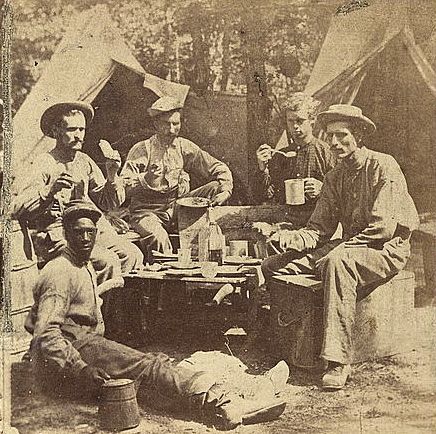
Soldiers of the Army of the Potomac (pbs.org)

             A typical camp scene might be a small group of soldiers lounging around a fire, each making his own coffee in his dipper, broiling his sowbelly on a stick, and munching on his hardtack. The smoke from the fire would make even darker their weathered faces, making them “smoked Yanks.”

Commenting on the diet, one soldier sent this poem to a Nashville editor:

The soldiers’ fare is very rough,

The bread is hard, the beef is tough;

If they can stand it, it will be,

Through love of God, a mystery.

(For further reading, see: Bell Irvin Wiley, The Life of Billy Yank, 1971.)


Posted in Uncategorized | Tagged , , , , , , , , , , , , , , , , , , , , , | 6 Comments

The Battle of Gettysburg: the Turning Point

 (This essay was originally published in the Newport Daily News on July 1, 2013)

        In probably the greatest land battle ever fought in the Western Hemisphere, Union and Confederate forces clashed at Gettysburg, Pennsylvania, July 1-3, 1863. During these three days some 70,000 Confederate soldiers, led by General Robert E. Lee, engaged 90,000 Union forces, led by Major General George Gordon Meade, in command of the Army of the Potomac for only three days. Lee had invaded the North with the hope, militarily, of scoring a decisive victory which, politically, might strengthen the Northern peace movement and force President Abraham Lincoln to negotiate for peace.

Rhode Island had six troop units at this battle, an infantry regiment and five artillery batteries. Of these, four units saw action. Battery A of the 1st RI Light Artillery Regiment was commanded by Captain William A. Arnold, a bookkeeper from Providence. It included 139 men with six 3-inch rifle guns. It took part in the heavy fighting on July 2-3 and sustained four killed and 24 wounded.

  William A. Arnold, Battery A

William A. Arnold (findagrave.com)

        Battery B was commanded by Thomas F. Brown of Providence. After he was wounded, command passed to Lieutenant William S. Perrin. It brought 103 men to the field using six 12-pound smooth-bore Napoleon guns. It also fought on July 2-3. In action on July 3, the battery was under fire preceding Pickett’s Charge. The muzzle of one gun was hit and killed two gunners instantly. Two others rushed to load a ball into the gun, now distorted. A second Confederate shell struck, causing the cannon to collapse. The barrel cooled and the ball was entrapped permanently in place. This is the famous “Gettysburg Gun” on display at the state’s Capitol. The battery lost seven killed, 19 wounded and two missing.

 Thomas F. Brown, Battery B

Thomas F. Brown (findagrave.com)

        Battery E was commanded by Lieutenant John K. Bucklyn, born in Foster, who was wounded in action on July 2. Second Lieutenant Benjamin Freeborn, himself wounded, took command. It had 116 men serving six 12-pound Napoleons. In action on July 2, it sustained casualties of three killed and 26 wounded.

 130701ndncivilwarbucklyn2

John K. Bucklyn (findagrave.com)

        Finally, the 2nd RI Volunteer Infantry Regiment also saw action at Gettysburg. It was commanded by Colonel Horatio Rogers, Jr., an attorney from Providence. It was used as a reserve unit in the 2nd Brigade, 3rd Division, 6th Corps. The Regiment arrived on the battlefield but was not directly engaged in the fierce fighting on July 3. Of the Battle, Rogers wrote: “Death seemed to be holding a carnival.” Elisha Hunt Rhodes of Cranston was a member of this unit, and his diary reveals his thoughts as Pickett’s Charge was repulsed. “Our lines of Infantry in front of us rose up and poured in a terrible fire. As we were only a few yards in rear of our lines we saw all the fight.” … “what a scene it was. Oh the dead and dying on this bloody field.” On July 5, he wrote: “Glorious news! We have won the victory, thank God, and the Rebel Army is fleeing to Virginia.”

The battle witnessed uncommon valor and good and poor tactical decisions on both sides, culminating in the ill-fated Confederate assault led by Major General George Pickett. Of the 14,000 Southern troops who attacked that July 3, only about one-half returned. While the Union won a resounding victory, the human toll on both sides was very costly: 23,000 Union casualties (killed, wounded, and missing) and 28,000 Confederate casualties, more than a third of the Confederate force.

Riding among his men, Lee maintained, “It’s all my fault.” “It is I who have lost the fight….” Noted Civil War historian Shelby Foote called Gettysburg Lee’s “greatest and worst-fought battle.” Like Hannibal in the Punic Wars of ancient Rome or Napoleon of revolutionary France, Lee was thought to be invincible, a myth that was now shattered. Lee and his Army of Northern Virginia would fight and win many other battles after Gettysburg; however, their former dominance in tactics and initiative was now matched by experienced Union forces, soon to be led by the formidable and intrepid Lieutenant General Ulysses S. Grant. It was Grant who had just forced on July 4 the surrender of Vicksburg, Mississippi, placing the entire river under Union control. The war had reached a turning point.

Many Americans who know of this battle may not know of its magnitude and significance. Many perhaps make facile assumptions about the inevitability of the North’s victory in the Civil War, similar to the common view of World War II—we all know the conclusion and casually assume the Allied victory was inevitable.

Not so. The Battle of Gettysburg could have gone either way, and with it the Civil War. If Lee had prevailed over Meade, there was no guarantee that the North’s superiority in manpower, finances, and industry along with Lincoln’s Emancipation Proclamation would win the war. If the Confederacy succeeded in stifling the North sufficiently so that public opinion shifted dramatically, we would have become two separate nations. Lincoln’s greatest nightmare would have come true: that self-government was a chimera.

Posted in Uncategorized | Tagged , , , , , , , , , | 8 Comments

Native Americans Join Fight

(This essay was originally published in the Newport Daily News on May 22, 2013.)

Native Americans, while continuing efforts to protect their tribes and lands, fought bravely on both land and sea for both the Union forces and the Confederate forces in the Civil War. Some 20,000 Native Americans saw action in numerous battles, including Pea Ridge, Second Bull Run, Antietam, Chattanooga, Wilderness, Spotsylvania, Cold Harbor, and finally Petersburg.

          Serving for numerous reasons, they volunteered and were also conscripted into the fighting forces. They viewed service and the meager pay as a means of lifting themselves and their families from the grinding poverty they experienced by the 1860s. Treaty obligations forced some into service. As with white young men, they were also drawn by the sense of adventure. Laurence Hauptman indicates that the most important reason was “their tenuous existence in both the North and South…. They were dependent peoples as a result of the American wars of conquest, treaties, or economic, political, social, and religious changes introduced by the ‘Long Knives’ [whites].”

Like their white comrades, they endured the same ill effects of war. Once captured, they were sent to the same prisoner of war camps, and they also became refugees of war. The war made them lose more of their self-sufficiency, a process which began with the arrival of the first European settlers in the early 1600s. They became even more dependent on the ‘Great Father’ (U.S. government) for their survival.

Like African-Americans, they had to endure the same racist attitudes whites commonly held at the time. The units in which they fought were segregated—consisting of Native Americans and African-Americans. Instead of the thirteen dollars per month pay received by whites, a Native American in 1864 received only seven dollars. In general they received poorer medical care, sustaining twice the death rate from disease compared to whites. The commanding officers of colored units were generally white.

A number of Native Americans distinguished themselves during the War, a few rising to high rank. Stand Waite, Head Chief of the Cherokee Nation (South) was the most successful Confederate commander in the Trans-Mississippi West region. He was the last Confederate general to surrender his troops at war’s end in June 1865. Colonel John Jumper, a Seminole chief, commanded the Seminole battalion in the Confederate Army. William Terrill Bradby, a Pamunkey Indian, served both on land and sea for the Union. During the Peninsular Campaign, he served as a scout for the Army of the Potomac. In 1863 he was transferred to duty on the James River, serving as a pilot there and later in the North Atlantic Blocking Squadron. Lieutenant Cornelius Cusick, a Tuscarora Indian serving in D Company, 132nd New York Volunteer Infantry, was twice cited for heroism during the War. Henry Berry Lowry, a Lumbee Indian of North Carolina, led guerrilla bands in 1864-65 that aided Union forces.

williamTerrillBradby William Terrill Bradby, Pamunkey

Alexandriava.gov

          Austin George, a private of the 31st U.S. Colored Infantry (Union), was a Mashantucket Pequot Indian from southeast Connecticut. He was one of two Indians serving in F Company’s 131-man force. With the New London whaling industry depressed and his family receiving public assistance, George enlisted. In May 1864 the regiment was sent to Virginia to guard Union rail lines. By mid-June he was digging trenches outside of Petersburg. In the Battle of the Crater in July, George was one of many casualties, sustaining a bad wound to his left shoulder. His unit helped to tighten the noose around Lee’s Confederate forces near Appomattox in April 1865. Mustered out of service in June, he was awarded in December 1866 a half-pension of four dollars per month for his shoulder injury.

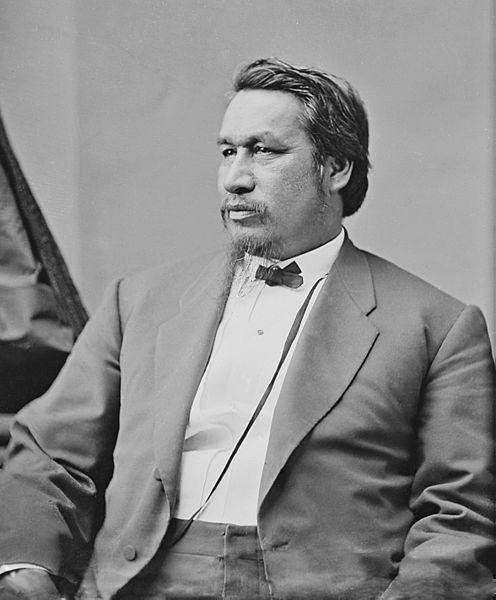
Colonel Ely S. Parker, a Seneca Indian, served as General Ulysses Grant’s secretary during the last years of the war and transcribed Lee’s official surrender at Appomattox. He later became a brigadier general and the first Native American to serve as U.S. Commissioner of Indian Affairs.

Ely_S__Parker

Ely S. Parker, Seneca

Wikipedia.org

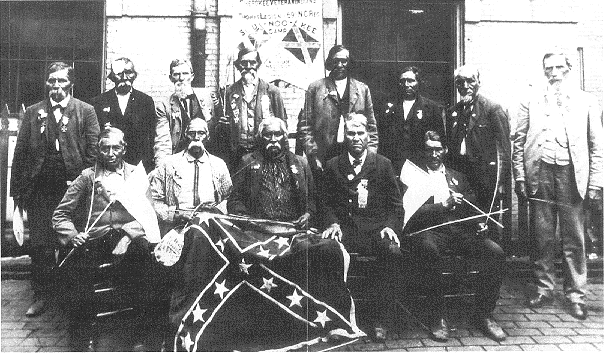
          Probably the most important Native American contribution to the Southern war effort in the East came from the Cherokee of North Carolina in a unit of whites and Native Americans which came to be known as the “Thomas Legion of Indians and Highlanders.” In his youth William Holland Thomas became fascinated with the Cherokee. He was adopted by Chief Yonaguska (Drowning Bear) and became the de facto chief upon Yonaguska’s death in 1839. When the war began, Thomas recruited 200 Cherokee as home guards, the Junaluska Zoaves, and eventually hundreds more for the Legion. In 1862-63, the Thomas Legion largely focused on pacifying Eastern Tennessee by guarding mountain passes, hunting spies, enforcing conscription, tracking deserters, impressing crops and livestock, and obtaining loyalty oaths.

 Cherokee_Confederates_Reunion

Thomas Legion Cherokee Reunion, 1901

North Carolina Department of Archives and History

(For further reading, see Laurence M. Hauptman, Between Two Fires: American Indians in the Civil War.)

Posted in Uncategorized | Tagged , , , , , , , , , , , , , , | 5 Comments

Newport Home to Naval Academy during Civil War

(This essay was originally published by the Newport Daily News as “After war began, Naval Academy temporarily moved to Newport,” April 13, 2013.)

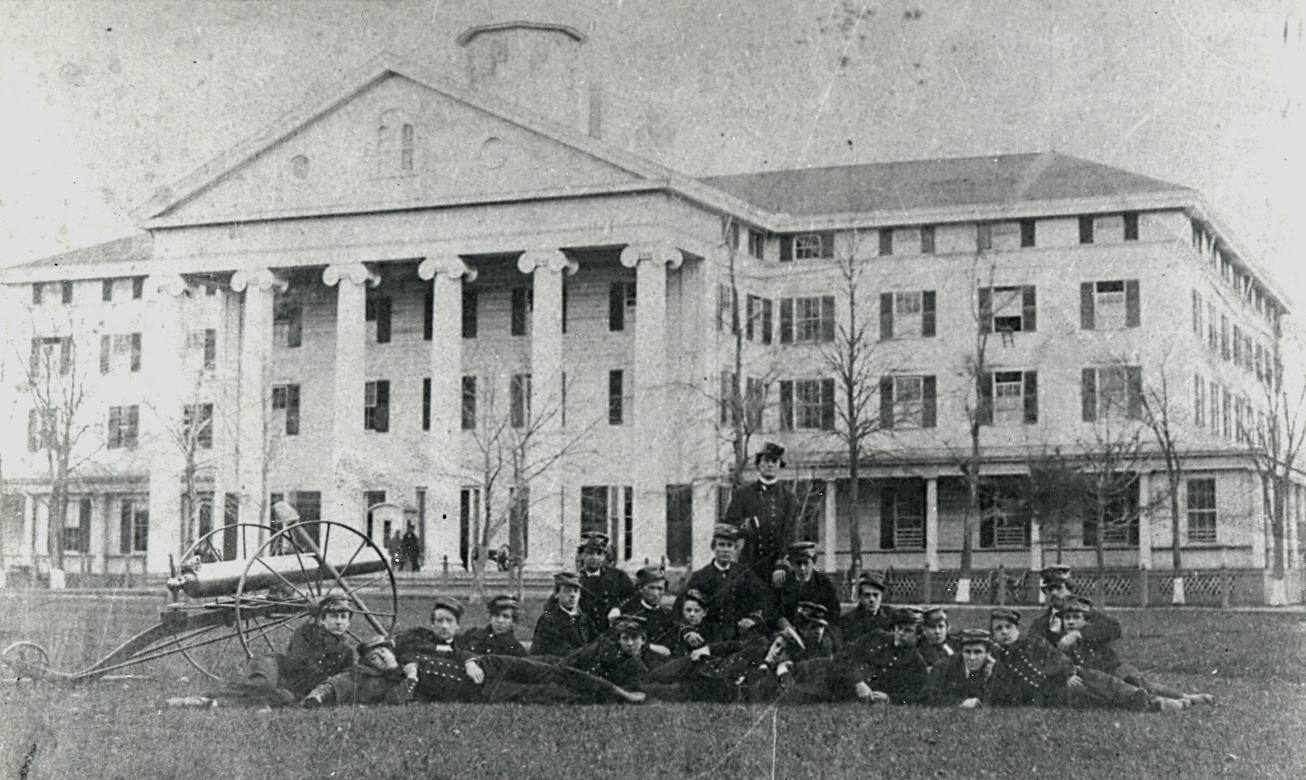
At the start of the Civil War, the U.S. Naval Academy at Annapolis, Maryland, was moved to Newport where it remained for the duration of the war. Though it remained in the Union, Maryland was a border state and had seen civil unrest from the outset, with many citizens who were sympathetic to the South. To protect it and to ensure its undisturbed operation, the Academy’s move took place within a month after the firing on Fort Sumter. On April 27, 1861, the War Department issued the order: “Fort Adams, Rhode Island, is hereby placed temporarily under control of the Secretary of the Navy, for the purposes of the Naval Academy now at Annapolis, Maryland.”

On May 8, 1861, the U.S.S. Constitution, “Old Ironsides,” and the steamer Baltic arrived in Newport with the officers, professors, families, and midshipmen of the Academy.

Upon arrival they were welcomed with a 24-gun salute from Fort Adams, and “Old Ironsides” returned the salute. On board were the Academy commandant, Captain George S. Blake, and some 130 midshipmen. Crowds of Newporters gathered to watch and to enjoy the military music springing from both Old Ironsides and from the band on Fort Wolcott, Goat Island.

After the personnel and furniture had disembarked, the press noted that all were gladly “welcomed to our city, and no pains spared by our citizens to make their residence among us agreeable.”

The midshipmen hailed from Maine, New Hampshire, Vermont, Massachusetts, Rhode Island, Connecticut, New York, Pennsylvania, Ohio, Indiana, Illinois, Michigan, Wisconsin, Iowa, Utah, California, Oregon, Kentucky, and the District of Columbia. A few came also from the states in rebellion.

Among the officers were Lieutenant Commander C.R.P. Rodgers, a descendant of a Rhode Island family, Lieutenant Edward Simpson, later an admiral, and Lieutenant Stephen B. Luce, later the founder of the Newport Naval Training Station and the Naval War College.

Drill for the midshipmen began soon after their arrival. The Naval Academy band played for the marching middies, soon attracting crowds of visitors. A dress parade was held each morning at 9:00 am and ended with tactical drill against a force acting as an enemy.

Old Ironsides became a popular attraction, and eventually the volume of visitors proved to be distracting to the studies of the middies onboard.

In the succeeding months, it became clear that the quarters at Fort Adams were not suitable, with many families complaining that they were too damp, cold, and unhealthy.  The officers then began to move their families to houses within the city.

On August 30, 1861, negotiations were completed to lease the Atlantic House Hotel, a fashionable hotel at Bellevue and Pelham. Fort Adams was given up on September 20, and the Academy began operations at its new location the next day.

Atlantic Hotel, w Midshipmen

The Atlantic House Hotel at Pelham and Bellevue

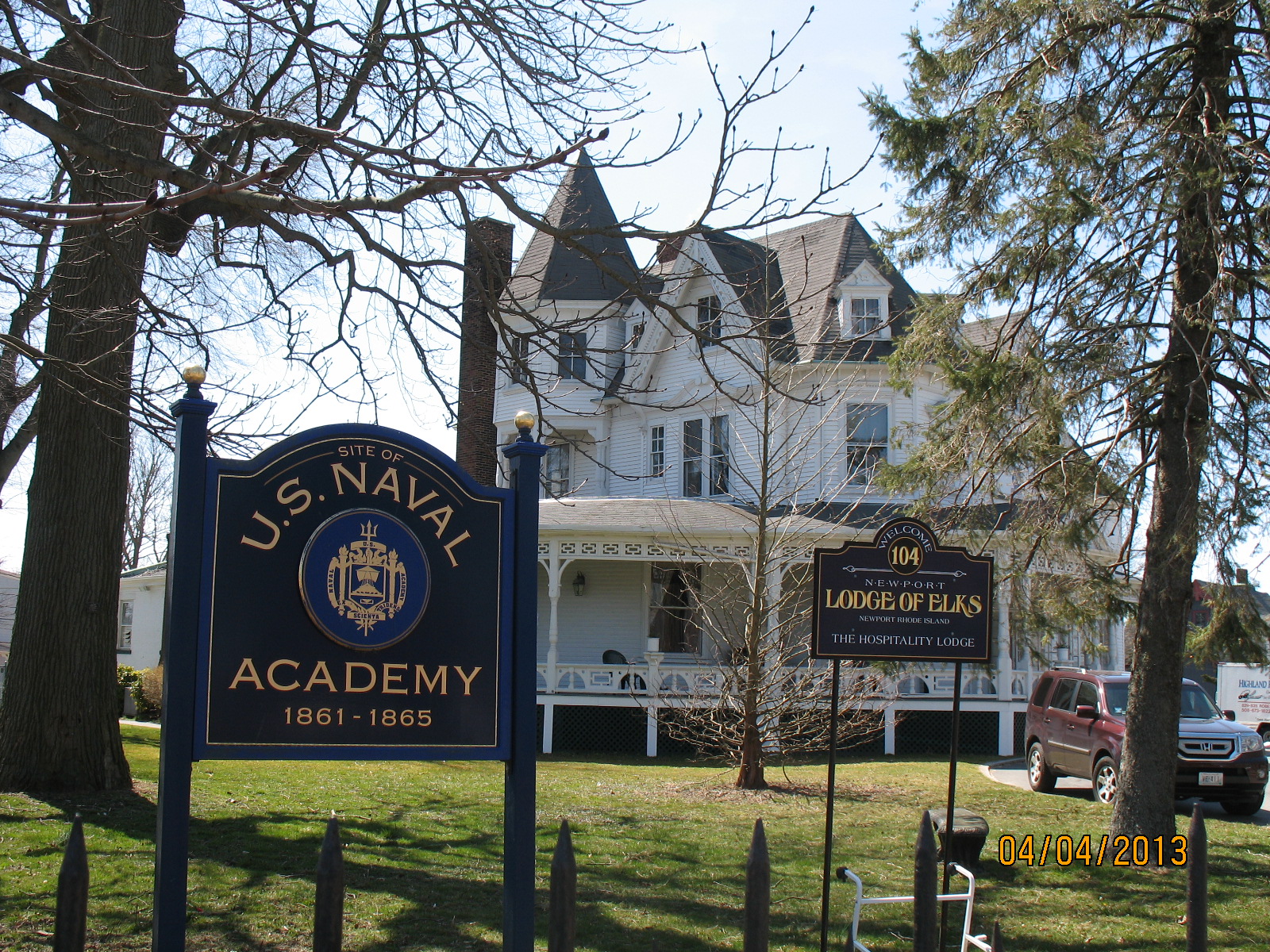
             This hotel lasted until 1877 when it was demolished, making room for the current Parkgate building, purchased in 1920 by the Benevolent and Protective Order of the Elks.

USNA, Civil War 002

Parkgate Building today (photo by Fred Zilian)

            George Bancroft, the former secretary of the Navy who spent summers at Rosecliff in Newport, must have been delighted about the move of the Naval Academy, as he had founded it in 1845.

Source: Rhode Island Civil War Centennial Commission. Rhode Island Civil War Chronicles: A Presentation of Articles and Photos Recalling Rhode Island’s Participation in the Civil War, 1861-1865, 1960.


Posted in Uncategorized | Tagged , , , | 8 Comments

Katherine Wormeley Fills Important Role in Civil War

(This essay was originally published in the Newport Daily News as “Comfort for casualties of battle,” February 27, 2013.)

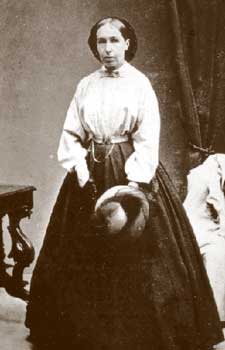
        Newport’s own Katharine (also spelled Katherine) Prescott Wormeley took an active role in public affairs throughout her life, founding the Girls Industrial School in Newport before the Civil War, and serving as one of the first women during the War to assist the Medical Bureau and Sanitary Commission in caring for sick and wounded soldiers.

katherine-prescott-wormeley

In her book, The Other Side of War with the Army of the Potomac, she describes the origins, duties, and early work of the newly-formed United States Sanitary Commission. “It was the outgrowth of a demand made by the women of the country” because both men and women wanted to contribute to the war effort. “As the men mustered for the battlefield, so the women mustered in churches, schoolhouses, and parlors….”

The Commission came into existence on June 9, 1861, a few months after the beginning of the War. It was “to inquire into the materiel of the volunteer army, to inspect recruits, and examine the working of the system by which they were enlisted; it was to keep itself informed as to the sanitary condition of the regiments, their camps, sites, drainage, etc; as to the means of preserving and restoring the health and promoting the general comfort and efficiency of the troops; as to the proper provision of cooks, nurses, and hospitals ….” Based on this information and applying “the fullest teachings of sanitary science,” it was to make suggestions to the Medical Bureau and the War Department on the health, comfort, and morale of the army. Finally, it was to aid the Medical Department “in the care of the sick and wounded as the generosity of the people, and especially the efforts of the women of the country [allowed].”

The majority of her book consists of letters she wrote after volunteering to join the “Hospital Transport Service” in April, 1862.  In her first letter of the book dated April 27, 1862, written from Newport to a friend, she relates her convictions. “I am thinking of going to Yorktown. How should you view it? …  I suppose this will rather startle you. But why should it not be done?” … “A drawing together of circumstances seems to point to this thing, and I enter upon it as if it were obviously the next thing to be done.”

By May 10, she was writing from the Daniel Webster, a floating hospital. As one of four women on the ship, her duties were “very much that of a housekeeper.” She had just received, stowed, and fed 245 men, most ill with typhoid fever. As each man came aboard, “I gave him brandy and water,” and later, tea, bread and butter. The “fever patients are very dreadful, and their moans are distressing. The men were all patient and grateful. Some said, ‘You don’t know what it is to me to see you.’ … ‘To think of a woman being here to help me!’”  “We shuffle about without hoops; Mrs. Griffin says it is de rigueur [the normal condition] that they shall not be worn in hospital service.”

In a subsequent letter she describes a normal day on the ship. “I took my first actual watch last night…. We begin the day by getting them all washed, and freshened up, and breakfasted. Then the surgeons and dressers make their rounds, open the wounds, apply the remedies, and replace the bandages. This is an awful hour; I sat with my fingers in my ears this morning.  When it is over, we go back to the men and put the ward in order once more … giving clean handkerchiefs with a little cologne or baywater on them. We sponge the bandages over the wounds constantly, –which alone carries us round from cot to cot almost without stopping, except to talk to some, read to others, or write letters for them; occasionally giving medicine or brandy …. Then comes dinner, which we serve ourselves, feeding those who can’t feed themselves. After that we go off duty, and get first washed and then fed ourselves; our dinner-table being the top of an old stove, with slices of bread as plates, fingers for knives and fork ….”

After her time on the hospital transports, she was named “Lady Superintendent” of Portsmouth Grove Hospital, here in Portsmouth, RI. She accepted the position in August 1862, and was responsible for its “domestic management.” The hospital came to have 28 ward buildings with 60 patients per ward. She named women to key supervisory roles, formerly occupied by only men.

With her health failing and with a sick mother, she resigned her position in September 1863. After regaining her health, she became in 1864 associate manager for Rhode Island of the Boston Branch of the New England Women’s Auxiliary Association, performing charitable work for Rhode Island veterans.

In her later years she gained fame for her translations of French works, such as The Works of Balzac, several works of Alexandre Dumas, a number of plays by Moliere, and the Memoirs of the Duc de Saint-Simon.


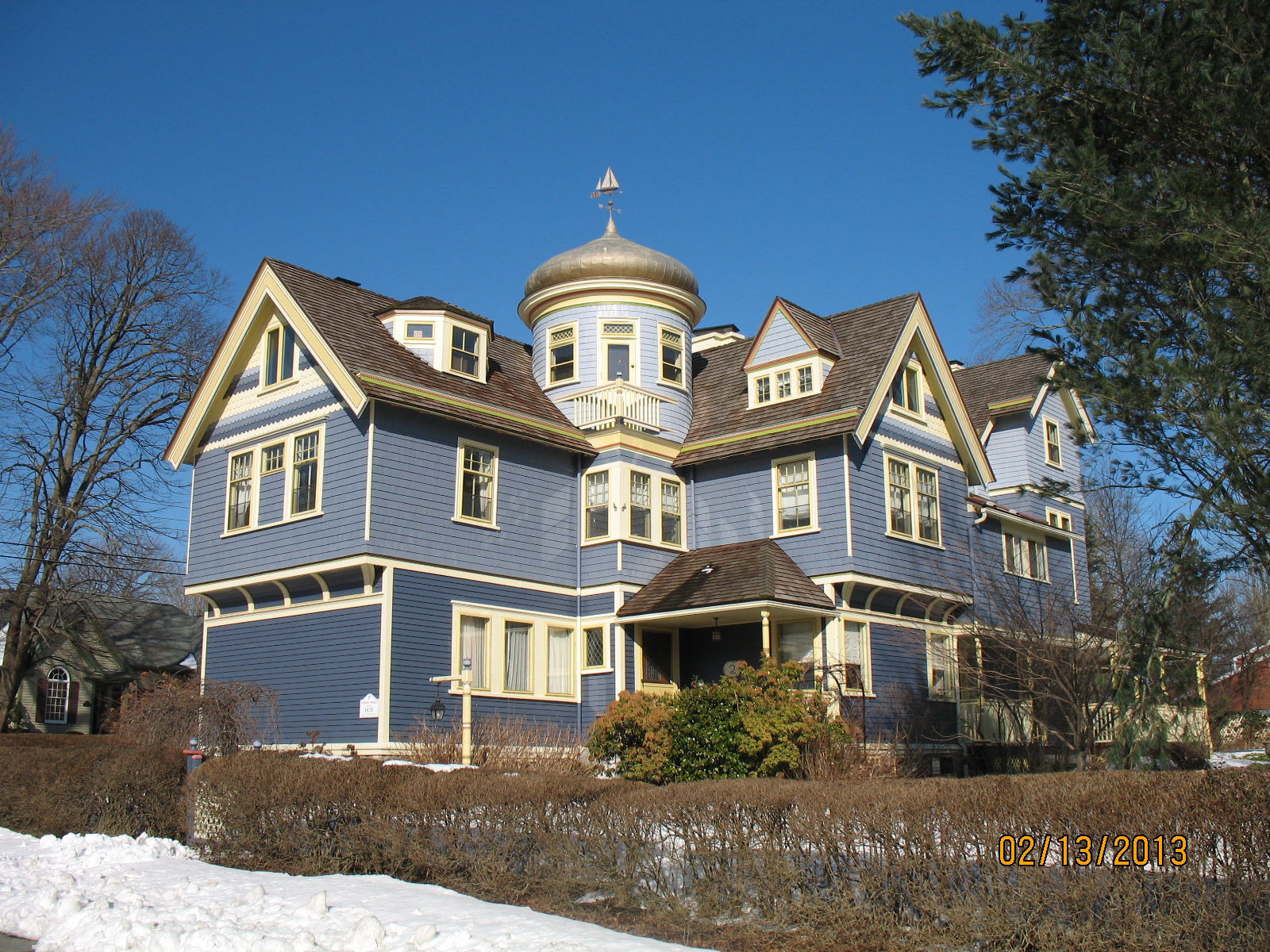
Wormeley House 001

The former Wormeley home in Newport today

(Photo by Fred Zilian)

        Her home in Newport still remains at the Corner of Red Cross Avenue and Old Beach Road. Her cremated remains are buried in a cemetery in Newport.

Note: For further info on the Portsmouth Grove Hospital, see Frank L. Grzyb, Rhode Island’s Civil War Hospital.

(The author would like to thank Mr. Bert Lippincott of the Newport Historical Society for his help with this article.)


Posted in Uncategorized | Tagged , , , , , , , , , | 7 Comments

Islam, Islamism, and the Just War Tradition

(This essay is based on the talk I gave to the senior class at Portsmouth Abbey School on February 6, 2013.)

The Just War Tradition has evolved over thousands of years from not only Western but also Eastern traditions, with not only religious but also secular roots, reflecting attempts to reduce the incidence of war and, in war, to reduce its severity and atrocities. It is clear from their words, goals, strategies, and tactics, that radical Islamic militants do not recognize these principles, raising difficult political, military and ethical questions for states contending with them.

The Just War Tradition

Hugo Grotius, the “father of international law,” was the individual who in the modern era with his 17th-century work, The Law of War and Peace, was the first to systematize and codify these traditions into a framework for evaluating whether a war was “just.” He arrived at six main criteria. The first is Just Cause: The state must identify the injury incurred from the opposing state, such as a violation of its territory or its rights. It may also be seeking the prevention of humanitarian abuses. The second is Proportionality: The good toward which a war aims must be proportional to the bad effects which the war will inevitably cause. The initiating state must consider the consequences for the whole human race, not just itself. This also implies a specific political end toward which the war is directed, an end determined before the war. The third is Reasonable Chance of Success: The initiating state must possess the necessary means to achieve the ends it seeks. Fourth, the war must be Publicly Declared: The initiating state must announce its intention to begin a war, demonstrating the collective will of its people and also making the gravity of the situation crystal clear to its enemy. The fifth criterion is that the state’s Legitimate Authority must declare the war. Due process by the responsible parties within the state must be followed. Finally, the state must have exhausted all other means before it initiates the war. It must be the Last Resort.

          Once the state is in war, Grotius and the Just War Tradition addresses three main areas for the conduct of the war to be just. First, who can be lawfully attacked and who should not be attacked? Exempted are women (if they are not soldiers), children, old men, merchants, farmers, prisoners, and holders of religious office. Paul Christopher in his book, The Ethics of War and Peace, suggests a rule of thumb for dealing with the enemy’s noncombatants: One should not subject enemy innocents to greater risk than that to which one is willing to submit one’s own population. The second area addresses the means used to fight the war. Prohibited are weapons that cause unnecessary harm and suffering and weapons which do not discriminate between combatants and innocents and continue to cause harm and suffering after the enemy soldier is disabled.  The finally area addressed is the treatment of prisoners of war. POWs have the same protection from harm that is given to other innocents. They also become the responsibility of the opposing force, which is obliged to care for them.

Terrorism

Rigidly fixed on their goals and prepared to use any means to obtain them, terrorists generally disregard these criteria and considerations. Terrorism can be defined as any act that involves the illegal, intentional threat or use of random violence against innocent people to instill fear for a political purpose. For Americans the most vivid example of terrorism is the attack on September 11, 2001, when American civilian planes were commandeered by Muslim terrorists and driven into the World Trade Center, the Pentagon, and toward the Capitol. Almost 3,000 people died in the attacks, including all 227 civilians and 19 hijackers aboard the four planes. However, this act came after nearly 25 years of terrorist attacks against Americans and their interests, starting with the November 1979 seizure of the American Embassy in Tehran, Iran.

Islam and Islamism

          Turning now to the world of Islam, we must first make the distinction between Islam and Islamism. Islam is a religion, like Christianity or Hinduism, the second largest in the world, practiced by about 21% of the world’s population. Islamism is a religious-political ideology, a set of beliefs, with broad political and social goals, the major ones being:

  • The implementation of the Sharia (Islamic law)
  • The fostering of all-Muslim unity or pan-Islam
  • The elimination of non-Muslim influence and peoples, especially, Western military, economic, political, social, and cultural influence in the Muslim world.

The Quran and Just War Principles

The holy book of Islam, the Quran, does contain guidelines and rules on many of the various issues of the Just War Tradition. For example, on Just Cause, it states: “O you who have believed, when you go forth [to fight] in the cause of Allah, investigate; and do not say to one who gives you [a greeting of] peace ‘You are not a believer,’ aspiring for the goods of worldly life; for with Allah are many acquisitions. You [yourselves] were like that before; then Allah conferred His favor upon you, so investigate.” (Sura 4: Verse 94) Also: “So let those fight in the cause of Allah who sell the life of this world for the Hereafter. And he who fights in the cause of Allah and is killed or achieves victory – We will bestow upon him a great reward.” (4:74)

     It speaks to when hostilities must cease: “Except for those who take refuge with a people between yourselves and whom is a treaty or those who come to you, their hearts strained at [the prospect of] fighting you or fighting their own people. And if Allah had willed, He could have given them power over you, and they would have fought you. So if they remove themselves from you and do not fight you and offer you peace, then Allah has not made for you a cause [for fighting] against them.” (4:90)

          The concept of proportionality is in so many words addressed in the Quran. “Fight in the cause of Allah those who fight you, but do not transgress limits; for Allah loveth not transgressors” (2:190); “whoever transgresses against you; respond in kind.”  And also: “[Fighting in] the sacred month is for [aggression committed in] the sacred month, and for [all] violations is legal retribution. So whoever has assaulted you, then assault him in the same way that he has assaulted you. And fear Allah and know that Allah is with those who fear Him.” (2:194) “And do not kill the soul which Allah has forbidden, except by right. And whoever is killed unjustly – We have given his heir authority, but let him not exceed limits in [the matter of] taking life. Indeed, he has been supported [by the law].” (17:33)

          The Quran also stresses the importance of seeking peace: “If your enemy inclines toward peace then you too should seek peace and put your trust in God.” “And if they incline to peace, then incline to it [also] and rely upon Allah.” (8:61)

          It gives instruction to avoid the killing of women and children: And when he brought them the truth from Us, they said, “Kill the sons of those who have believed with him and keep their women alive.” (40:25)

Islamism and Islamists

Let us now turn from the Quran to Islamism and the Islamists. Daniel Pipes of the Middle East Forum has divided them into three categories. First, Salafis, who revere the early era of Islam and try to revive it by their clothing, customs, and mindset, leading to religious-based violence. Second, Muslim Brothers and similar types who envision an Islamic version of modernity; they use violence selectively. Finally, lawful Islamists who are prepared to work within established political systems. They do not advocate violence. Pipes recognizes these real differences; however, he dismisses them as insignificant for Western interests because they “all pull in the same direction, toward full and severe application of Islamic Law.”

The Concept of Jihad

A critical concept and method of the Muslim faith is that of jihad; however, as John L. Esposito maintains in his book, Unholy War, Terror in the Name of Islam, there is no uniform agreement on its meaning. Definitions include:

  • Striving to lead a good life by the individual
  • Striving to spread the message of Islam.
  • Supporting the struggles of oppressed Muslims, for example, in Palestine or Kashmir.
  • For the more radical Islamists: Working and fighting to overthrow oppressive governments and in attacking the West.

Also, the concept may be split into greater and lesser jihad. The “greater” refers to an individual’s personal, spiritual struggle; the “lesser” relates to the warfare of jihad.

          If we look at the beliefs of radical Islamists on their past and their vision for the future, we can see two that are most fundamental. The main causes of Muslim decline in the past few centuries have been, first, the departure of Muslims from genuine and pure Islam, and second, the over-reliance and dependence on the West, beginning in the 19th century. Second, Jihad, personally and collectively, in ideas and in action to implement Islamic reform and revolution, is the way to effect successful Islamization of the society of a Muslim state and the world.

Many modern Muslim reformers, defending Islam against charges of militancy, have emphasized that jihad is only justified in defense. However, they seem to be drowned out by the words and actions of the radical Islamists. The radicals have essentially hijacked Islam and jihad for their broad goals. They emphasize other passages which speak to warfare, for example: “Not equal are those believers remaining [at home] – other than the disabled – and the mujahideen, [who strive and fight] in the cause of Allah with their wealth and their lives. Allah has preferred the mujahideen through their wealth and their lives over those who remain [behind], by degrees. And to both Allah has promised the best [reward]. But Allah has preferred the mujahideen over those who remain [behind] with a great reward.” (4: 95)

John Esposito maintains that jihad today has “become the evocative symbol and rallying cry for mobilization in holy and unholy wars, in wars of resistance and liberation as well as in global terrorism.”

Jihads have spread across northern Africa to Asia. Afghanistan and Pakistan became the centers for the globalization of jihad.  The Taliban and al Qaeda have provided refuge and training for militants who came from such countries as Egypt, Algeria, Yemen, Saudi Arabia, Malaysia, Thailand, the Philippines, Uzbekistan, Tajikistan, Kyrgystan, Chechnya, and the Xinjiang province of China.

Recent Radical Activity

 The latest radical Islamist militancy has shown itself in North Africa. It has increased especially among poor young men who are unemployed. The most powerful group is Al Qaeda in the Islamic Maghreb (AQIM), which operates in Algeria and northern Mali. The political goal of AQIM appears to be the establishment of an Islamic state in Algeria.

Also in nearby Mali are Ansar al Din and the Movement for Unity and Jihad in West Africa (MUJAO). With AQIM, these groups have seized control of northern Mali.

Most members of these groups are Salafis who strictly follow Islam to the letter. These groups obviously advocate violence. Their harsh rule in northern Mali has included amputating of hands of alleged thieves, banning music, and stoning people to death accused of adultery.

In Mali on January 11, after the some 900 militants had taken another town, France intervened with troops and airstrikes. Worried that there was little to stop the militants from storming ever further into Mali, France — for the second time in less than two years — intervened with guns and bombs into a former African colony roiling with turmoil. “French forces brought their support this afternoon to Malian Army units to fight against terrorist elements,” President François Hollande of France stated, noting that the operation would “last as long as necessary.” “The terrorists should know that France will always be there,” he added.

On January 16, militants seized an oil refining plant in the Algerian desert. It left at least 37 foreign hostages and 29 militants dead. Their aim seems to have been to blow the entire plant and create a huge fireball and public relations spectacle. They claimed that the action was in retaliation for France’s intervention. In the military’s final assault on January 19, army snipers killed many of the militants. Mr. Sellal, an Algerian official, said at the news conference as he defended the government’s aggressive, uncompromising approach toward the militants. “If you don’t terrorize the terrorists, they will terrorize you,” said a senior Algerian official.

In facing radical Islamists, we are faced with an enemy who has a deep hatred for Westerners with roots in the Middle Ages when Christian crusaders invaded their countries and committed atrocities against them. In their approach to war and in conducting warfare, they do not recognize Just War principles. While their holy book contains many rules and exhortations which echo Just War principles, they choose to interpret them in such a fashion as to justify fighting wars and using strategies and tactics which contradict the western Just War Tradition.

This has implications for Western states strategically, tactically, and morally. We can put ourselves at a distinct disadvantage if we try to follow Just War principles while the radical Islamist do not, leaving us with the vexing Essential Question: When faced with an enemy who does not respect Just War principles, do we continue to?

Posted in Uncategorized | Tagged , , , , , , , , , , , , , , , | 6 Comments