
In naming it the “250th of the American Revolution,” we have misnamed our celebration this July 4th. It was on this day 250 years ago that the Continental Congress adopted the Declaration of Independence, a revolution in our relationship with Great Britain, a vital component of but only a part of the more comprehensive “American Revolution.” A true celebration and our needed nation-building would last at least 12 years, until 2038.
While the time period for the American Revolutionary War is fairly well delimited (1775-1783), there is no such agreement on the time period of the American Revolution. If there is a consensus on the beginning of the revolutionary period, 1763-64, none exists for its culmination. In 1776, we broke with Great Britain; however, we were by no means yet a viable state with a functioning national government.
Indeed, for the entire military struggle, we possessed only the feeble beginnings of an actual state. We had the Continental Congress, made up of inconsistent delegates from 13 colonies, still trying to develop a collective will. It had no power to tax, and these new, independent-minded, barely-united states had no chief executive. The thirteen colonies remained more separate and parochial than integrated into a national state. In fact, up to the Civil War (1861-65), in speaking of our country, we normally said: the United States “are,” rather than “is,” as we now do.
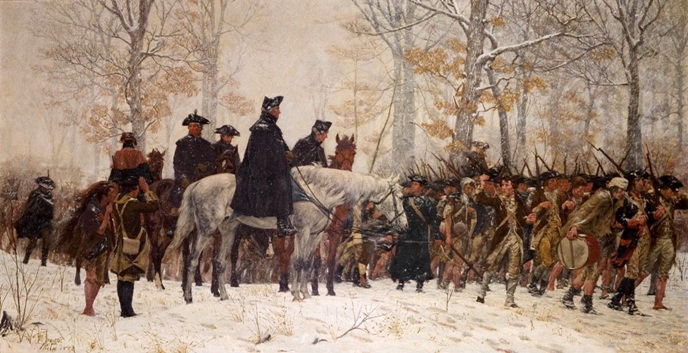
And we had our valiant but feeble Army, often teetering on the edge of dissolution, lacking soldiers, weapons, ammunition, food, uniforms, shoes, horses, and pay. After the war, Commander in Chief George Washington expressed his “astonishment” at the American triumph, calling it “little short of a standing miracle.”
Our initial constitution, the Articles of Confederation, which took effect in 1781, did not correct these fatal flaws. It quickly became apparent that our new country, lurching from crisis to crisis, needed a new constitution, something delivered by the Constitutional Convention of 1787. It is this constitution, ratified by the necessary ninth state in 1788, that gave us a truly viable, national, republican system of government, under which we now operate, with its 27 amendments.
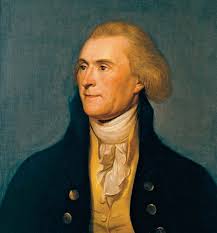
If Thomas Jefferson were alive today, he would argue for a celebration and national-workshop period even longer than 12 years. In 1819, looking back at his election, he spoke of the “revolution of 1800,” arguing that the election was “as real a revolution in the principles of our government as that of 1776 was in its form; not effected indeed by the sword, as that, but by … the suffrage of the people.” His election witnessed the first transfer of power between American political parties with contrasting visions of America.
Therefore, this July 4th should be the beginning of our celebration of the American Revolution, and it should last for at least 12 years. But, given the state of these United States, we should seek more than celebration. These should be 12 years of very necessary nation-building.
For starters, we need to get to know each other certainly more deeply. We are a nation of nations; that is a collection of different peoples with different languages, religions, and cultures. A mandatory, national service program would do much in this regard.
We had great success in building a common country which in the 20th Century became a superpower and the leader of the free, democratic West. However, many forces have pulled us apart over the past 60 years. The latest of these are the individual, digital platforms, super-sized TV programming, and the COVID pandemic. The first two have given us so many conveniences and options for information but have also weakened our inter-personal bonds. And these are the bonds that count when a country comes under civic stress, as we are.
Second, we must elect leaders of character and force them to act with integrity. We cannot have leaders who, once elected, retreat into personal gain and incivility to us and to their fellow political leaders. We must restore a code of honor and civility if we want to maintain a democracy. Other forms of government, especially authoritarian types, do not need this. However, in a democracy, civility—among its political leaders and its citizenry—is a necessary oil to keep the machine running smoothly. Without it, genuine communication and that all important activity in a democracy—compromise—wither and die.
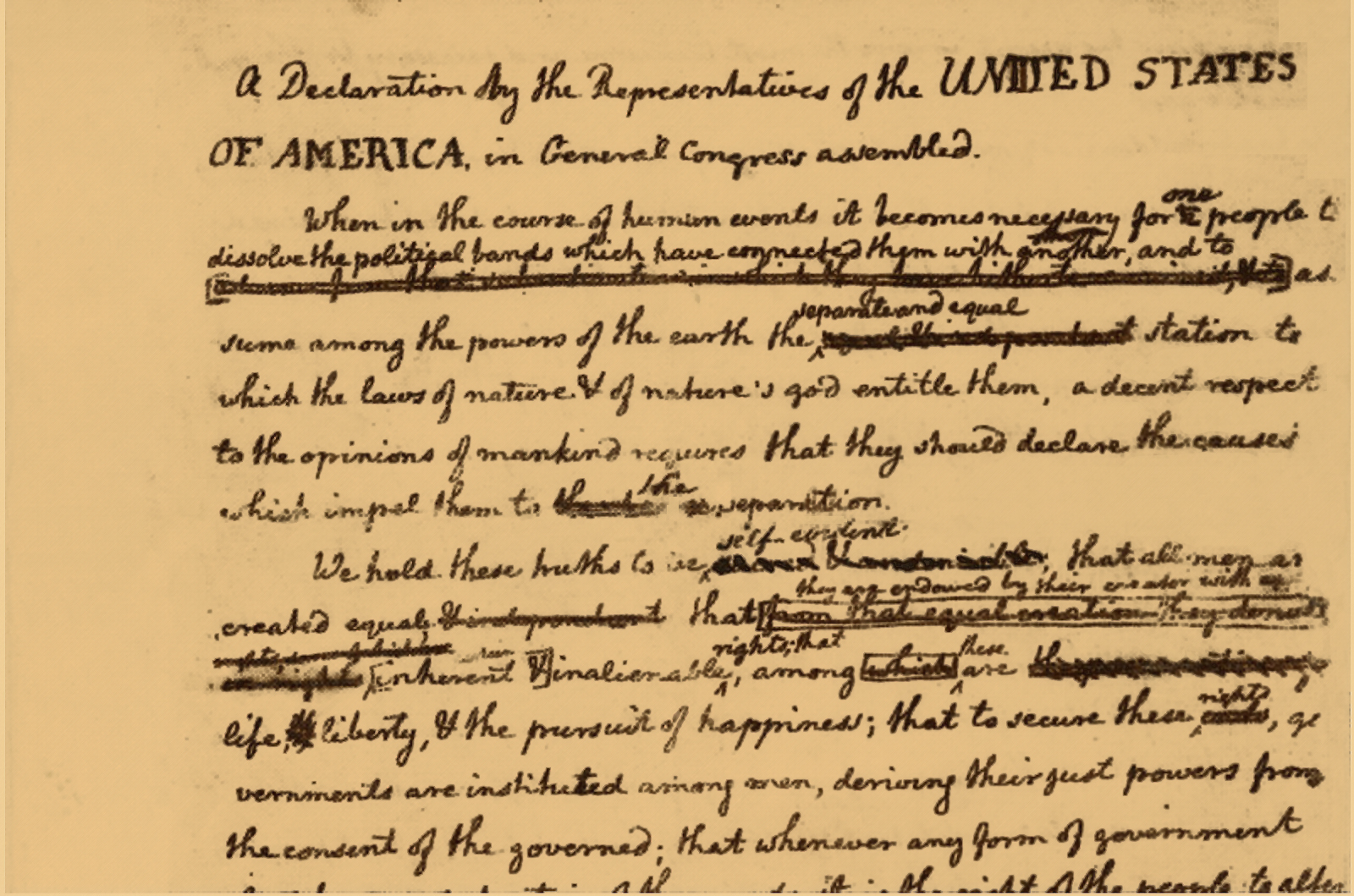
Third, because we are a democracy, living in the same house, we need to reaffirm our fundamental beliefs. Ultimately, we are a nation bound not by blood, background, or wealth, but by common values and ideas. Thomas Jefferson, although a slave holder of hundreds of enslaved Africans, wrote the first and unalienable one: that all human beings are created with the same fundamental rights, not related to one’s skin color, name, gender, religion or background. During these twelve years, let us discuss and debate, ask and argue, and try to define those fundamental beliefs. And after we do this—after we redefine and reaffirm our American Creed—let us engrave it in stone somewhere high and prominent for all to see.
Let us celebrate this July 4th. Let us tip our glasses together, play some John Philip Souza music, and watch some fireworks. But let us also gird ourselves for the necessary work of self-government to be done these next 12 years.
At the conclusion of the Constitutional Convention in 1787, Elizabeth Willing Powel asked Benjamin Franklin, “Well, Doctor, what have we got, a republic or a monarchy?” He responded: “A republic, if you can keep it.”
A retired educator and Army officer, Fred Zilian, Ph.D., has lectured widely on the American Revolution throughout Newport and Bristol Counties.


thank you Fred! This is beautifully written. I will share it! Happy Fourth of July to you and your family!❤️🇺🇸🙏🏻