The Battle of Gettysburg: the Turning Point

 (This essay was originally published in the Newport Daily News on July 1, 2013)

        In probably the greatest land battle ever fought in the Western Hemisphere, Union and Confederate forces clashed at Gettysburg, Pennsylvania, July 1-3, 1863. During these three days some 70,000 Confederate soldiers, led by General Robert E. Lee, engaged 90,000 Union forces, led by Major General George Gordon Meade, in command of the Army of the Potomac for only three days. Lee had invaded the North with the hope, militarily, of scoring a decisive victory which, politically, might strengthen the Northern peace movement and force President Abraham Lincoln to negotiate for peace.

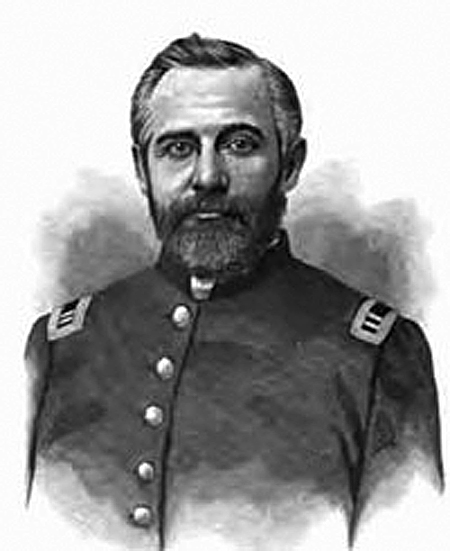
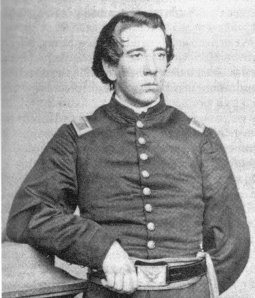
Rhode Island had six troop units at this battle, an infantry regiment and five artillery batteries. Of these, four units saw action. Battery A of the 1st RI Light Artillery Regiment was commanded by Captain William A. Arnold, a bookkeeper from Providence. It included 139 men with six 3-inch rifle guns. It took part in the heavy fighting on July 2-3 and sustained four killed and 24 wounded.

  William A. Arnold, Battery A

William A. Arnold (findagrave.com)

        Battery B was commanded by Thomas F. Brown of Providence. After he was wounded, command passed to Lieutenant William S. Perrin. It brought 103 men to the field using six 12-pound smooth-bore Napoleon guns. It also fought on July 2-3. In action on July 3, the battery was under fire preceding Pickett’s Charge. The muzzle of one gun was hit and killed two gunners instantly. Two others rushed to load a ball into the gun, now distorted. A second Confederate shell struck, causing the cannon to collapse. The barrel cooled and the ball was entrapped permanently in place. This is the famous “Gettysburg Gun” on display at the state’s Capitol. The battery lost seven killed, 19 wounded and two missing.

 Thomas F. Brown, Battery B

Thomas F. Brown (findagrave.com)

        Battery E was commanded by Lieutenant John K. Bucklyn, born in Foster, who was wounded in action on July 2. Second Lieutenant Benjamin Freeborn, himself wounded, took command. It had 116 men serving six 12-pound Napoleons. In action on July 2, it sustained casualties of three killed and 26 wounded.

 130701ndncivilwarbucklyn2

John K. Bucklyn (findagrave.com)

        Finally, the 2nd RI Volunteer Infantry Regiment also saw action at Gettysburg. It was commanded by Colonel Horatio Rogers, Jr., an attorney from Providence. It was used as a reserve unit in the 2nd Brigade, 3rd Division, 6th Corps. The Regiment arrived on the battlefield but was not directly engaged in the fierce fighting on July 3. Of the Battle, Rogers wrote: “Death seemed to be holding a carnival.” Elisha Hunt Rhodes of Cranston was a member of this unit, and his diary reveals his thoughts as Pickett’s Charge was repulsed. “Our lines of Infantry in front of us rose up and poured in a terrible fire. As we were only a few yards in rear of our lines we saw all the fight.” … “what a scene it was. Oh the dead and dying on this bloody field.” On July 5, he wrote: “Glorious news! We have won the victory, thank God, and the Rebel Army is fleeing to Virginia.”

The battle witnessed uncommon valor and good and poor tactical decisions on both sides, culminating in the ill-fated Confederate assault led by Major General George Pickett. Of the 14,000 Southern troops who attacked that July 3, only about one-half returned. While the Union won a resounding victory, the human toll on both sides was very costly: 23,000 Union casualties (killed, wounded, and missing) and 28,000 Confederate casualties, more than a third of the Confederate force.

Riding among his men, Lee maintained, “It’s all my fault.” “It is I who have lost the fight….” Noted Civil War historian Shelby Foote called Gettysburg Lee’s “greatest and worst-fought battle.” Like Hannibal in the Punic Wars of ancient Rome or Napoleon of revolutionary France, Lee was thought to be invincible, a myth that was now shattered. Lee and his Army of Northern Virginia would fight and win many other battles after Gettysburg; however, their former dominance in tactics and initiative was now matched by experienced Union forces, soon to be led by the formidable and intrepid Lieutenant General Ulysses S. Grant. It was Grant who had just forced on July 4 the surrender of Vicksburg, Mississippi, placing the entire river under Union control. The war had reached a turning point.

Many Americans who know of this battle may not know of its magnitude and significance. Many perhaps make facile assumptions about the inevitability of the North’s victory in the Civil War, similar to the common view of World War II—we all know the conclusion and casually assume the Allied victory was inevitable.

Not so. The Battle of Gettysburg could have gone either way, and with it the Civil War. If Lee had prevailed over Meade, there was no guarantee that the North’s superiority in manpower, finances, and industry along with Lincoln’s Emancipation Proclamation would win the war. If the Confederacy succeeded in stifling the North sufficiently so that public opinion shifted dramatically, we would have become two separate nations. Lincoln’s greatest nightmare would have come true: that self-government was a chimera.

Posted in Uncategorized | Tagged , , , , , , , , , | 8 Comments

Native Americans Join Fight

(This essay was originally published in the Newport Daily News on May 22, 2013.)

Native Americans, while continuing efforts to protect their tribes and lands, fought bravely on both land and sea for both the Union forces and the Confederate forces in the Civil War. Some 20,000 Native Americans saw action in numerous battles, including Pea Ridge, Second Bull Run, Antietam, Chattanooga, Wilderness, Spotsylvania, Cold Harbor, and finally Petersburg.

          Serving for numerous reasons, they volunteered and were also conscripted into the fighting forces. They viewed service and the meager pay as a means of lifting themselves and their families from the grinding poverty they experienced by the 1860s. Treaty obligations forced some into service. As with white young men, they were also drawn by the sense of adventure. Laurence Hauptman indicates that the most important reason was “their tenuous existence in both the North and South…. They were dependent peoples as a result of the American wars of conquest, treaties, or economic, political, social, and religious changes introduced by the ‘Long Knives’ [whites].”

Like their white comrades, they endured the same ill effects of war. Once captured, they were sent to the same prisoner of war camps, and they also became refugees of war. The war made them lose more of their self-sufficiency, a process which began with the arrival of the first European settlers in the early 1600s. They became even more dependent on the ‘Great Father’ (U.S. government) for their survival.

Like African-Americans, they had to endure the same racist attitudes whites commonly held at the time. The units in which they fought were segregated—consisting of Native Americans and African-Americans. Instead of the thirteen dollars per month pay received by whites, a Native American in 1864 received only seven dollars. In general they received poorer medical care, sustaining twice the death rate from disease compared to whites. The commanding officers of colored units were generally white.

A number of Native Americans distinguished themselves during the War, a few rising to high rank. Stand Waite, Head Chief of the Cherokee Nation (South) was the most successful Confederate commander in the Trans-Mississippi West region. He was the last Confederate general to surrender his troops at war’s end in June 1865. Colonel John Jumper, a Seminole chief, commanded the Seminole battalion in the Confederate Army. William Terrill Bradby, a Pamunkey Indian, served both on land and sea for the Union. During the Peninsular Campaign, he served as a scout for the Army of the Potomac. In 1863 he was transferred to duty on the James River, serving as a pilot there and later in the North Atlantic Blocking Squadron. Lieutenant Cornelius Cusick, a Tuscarora Indian serving in D Company, 132nd New York Volunteer Infantry, was twice cited for heroism during the War. Henry Berry Lowry, a Lumbee Indian of North Carolina, led guerrilla bands in 1864-65 that aided Union forces.

williamTerrillBradby William Terrill Bradby, Pamunkey

Alexandriava.gov

          Austin George, a private of the 31st U.S. Colored Infantry (Union), was a Mashantucket Pequot Indian from southeast Connecticut. He was one of two Indians serving in F Company’s 131-man force. With the New London whaling industry depressed and his family receiving public assistance, George enlisted. In May 1864 the regiment was sent to Virginia to guard Union rail lines. By mid-June he was digging trenches outside of Petersburg. In the Battle of the Crater in July, George was one of many casualties, sustaining a bad wound to his left shoulder. His unit helped to tighten the noose around Lee’s Confederate forces near Appomattox in April 1865. Mustered out of service in June, he was awarded in December 1866 a half-pension of four dollars per month for his shoulder injury.

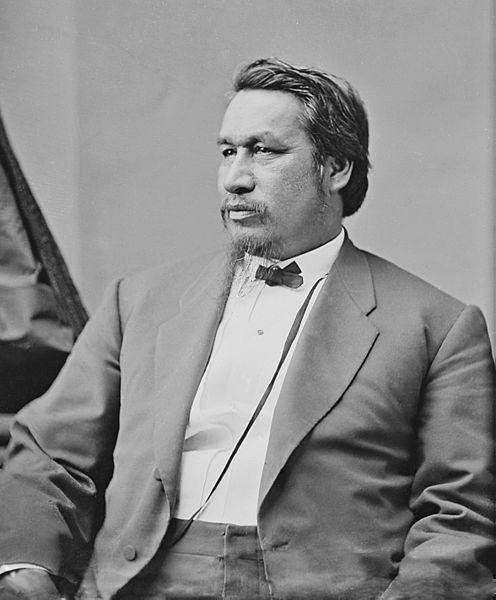
Colonel Ely S. Parker, a Seneca Indian, served as General Ulysses Grant’s secretary during the last years of the war and transcribed Lee’s official surrender at Appomattox. He later became a brigadier general and the first Native American to serve as U.S. Commissioner of Indian Affairs.

Ely_S__Parker

Ely S. Parker, Seneca

Wikipedia.org

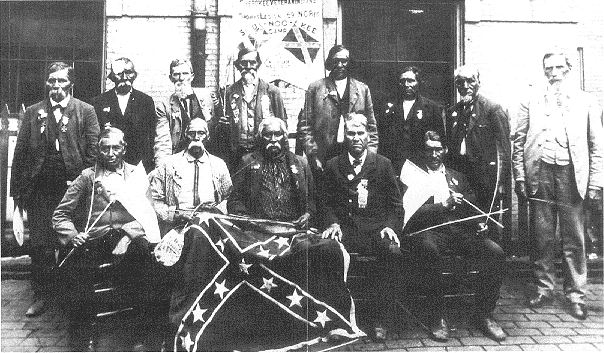
          Probably the most important Native American contribution to the Southern war effort in the East came from the Cherokee of North Carolina in a unit of whites and Native Americans which came to be known as the “Thomas Legion of Indians and Highlanders.” In his youth William Holland Thomas became fascinated with the Cherokee. He was adopted by Chief Yonaguska (Drowning Bear) and became the de facto chief upon Yonaguska’s death in 1839. When the war began, Thomas recruited 200 Cherokee as home guards, the Junaluska Zoaves, and eventually hundreds more for the Legion. In 1862-63, the Thomas Legion largely focused on pacifying Eastern Tennessee by guarding mountain passes, hunting spies, enforcing conscription, tracking deserters, impressing crops and livestock, and obtaining loyalty oaths.

 Cherokee_Confederates_Reunion

Thomas Legion Cherokee Reunion, 1901

North Carolina Department of Archives and History

(For further reading, see Laurence M. Hauptman, Between Two Fires: American Indians in the Civil War.)

Posted in Uncategorized | Tagged , , , , , , , , , , , , , , | 5 Comments

Newport Home to Naval Academy during Civil War

(This essay was originally published by the Newport Daily News as “After war began, Naval Academy temporarily moved to Newport,” April 13, 2013.)

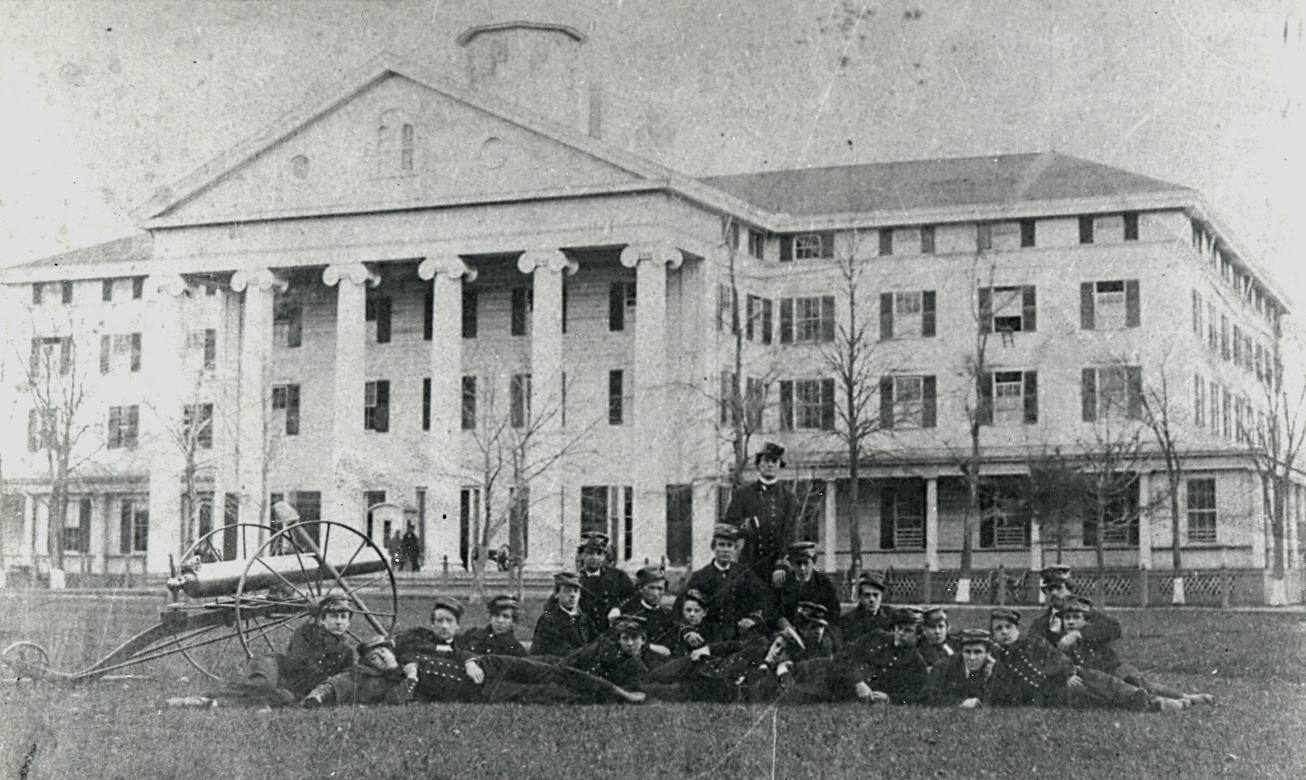
At the start of the Civil War, the U.S. Naval Academy at Annapolis, Maryland, was moved to Newport where it remained for the duration of the war. Though it remained in the Union, Maryland was a border state and had seen civil unrest from the outset, with many citizens who were sympathetic to the South. To protect it and to ensure its undisturbed operation, the Academy’s move took place within a month after the firing on Fort Sumter. On April 27, 1861, the War Department issued the order: “Fort Adams, Rhode Island, is hereby placed temporarily under control of the Secretary of the Navy, for the purposes of the Naval Academy now at Annapolis, Maryland.”

On May 8, 1861, the U.S.S. Constitution, “Old Ironsides,” and the steamer Baltic arrived in Newport with the officers, professors, families, and midshipmen of the Academy.

Upon arrival they were welcomed with a 24-gun salute from Fort Adams, and “Old Ironsides” returned the salute. On board were the Academy commandant, Captain George S. Blake, and some 130 midshipmen. Crowds of Newporters gathered to watch and to enjoy the military music springing from both Old Ironsides and from the band on Fort Wolcott, Goat Island.

After the personnel and furniture had disembarked, the press noted that all were gladly “welcomed to our city, and no pains spared by our citizens to make their residence among us agreeable.”

The midshipmen hailed from Maine, New Hampshire, Vermont, Massachusetts, Rhode Island, Connecticut, New York, Pennsylvania, Ohio, Indiana, Illinois, Michigan, Wisconsin, Iowa, Utah, California, Oregon, Kentucky, and the District of Columbia. A few came also from the states in rebellion.

Among the officers were Lieutenant Commander C.R.P. Rodgers, a descendant of a Rhode Island family, Lieutenant Edward Simpson, later an admiral, and Lieutenant Stephen B. Luce, later the founder of the Newport Naval Training Station and the Naval War College.

Drill for the midshipmen began soon after their arrival. The Naval Academy band played for the marching middies, soon attracting crowds of visitors. A dress parade was held each morning at 9:00 am and ended with tactical drill against a force acting as an enemy.

Old Ironsides became a popular attraction, and eventually the volume of visitors proved to be distracting to the studies of the middies onboard.

In the succeeding months, it became clear that the quarters at Fort Adams were not suitable, with many families complaining that they were too damp, cold, and unhealthy.  The officers then began to move their families to houses within the city.

On August 30, 1861, negotiations were completed to lease the Atlantic House Hotel, a fashionable hotel at Bellevue and Pelham. Fort Adams was given up on September 20, and the Academy began operations at its new location the next day.

Atlantic Hotel, w Midshipmen

The Atlantic House Hotel at Pelham and Bellevue

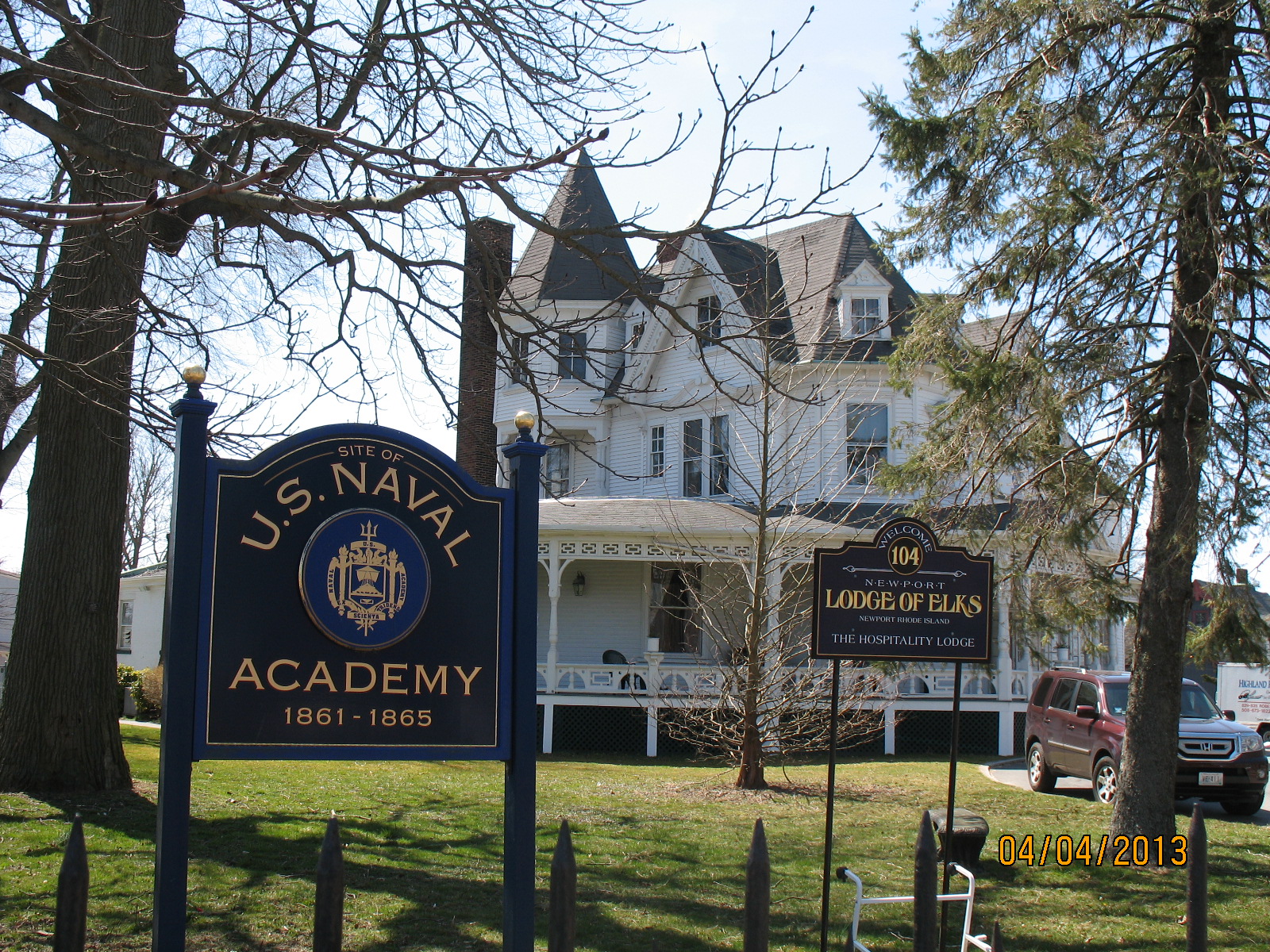
             This hotel lasted until 1877 when it was demolished, making room for the current Parkgate building, purchased in 1920 by the Benevolent and Protective Order of the Elks.

USNA, Civil War 002

Parkgate Building today (photo by Fred Zilian)

            George Bancroft, the former secretary of the Navy who spent summers at Rosecliff in Newport, must have been delighted about the move of the Naval Academy, as he had founded it in 1845.

Source: Rhode Island Civil War Centennial Commission. Rhode Island Civil War Chronicles: A Presentation of Articles and Photos Recalling Rhode Island’s Participation in the Civil War, 1861-1865, 1960.


Posted in Uncategorized | Tagged , , , | 8 Comments

Katherine Wormeley Fills Important Role in Civil War

(This essay was originally published in the Newport Daily News as “Comfort for casualties of battle,” February 27, 2013.)

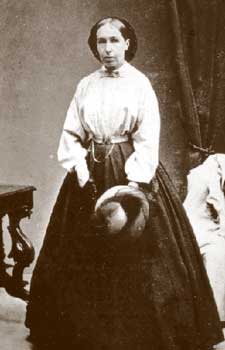
        Newport’s own Katharine (also spelled Katherine) Prescott Wormeley took an active role in public affairs throughout her life, founding the Girls Industrial School in Newport before the Civil War, and serving as one of the first women during the War to assist the Medical Bureau and Sanitary Commission in caring for sick and wounded soldiers.

katherine-prescott-wormeley

In her book, The Other Side of War with the Army of the Potomac, she describes the origins, duties, and early work of the newly-formed United States Sanitary Commission. “It was the outgrowth of a demand made by the women of the country” because both men and women wanted to contribute to the war effort. “As the men mustered for the battlefield, so the women mustered in churches, schoolhouses, and parlors….”

The Commission came into existence on June 9, 1861, a few months after the beginning of the War. It was “to inquire into the materiel of the volunteer army, to inspect recruits, and examine the working of the system by which they were enlisted; it was to keep itself informed as to the sanitary condition of the regiments, their camps, sites, drainage, etc; as to the means of preserving and restoring the health and promoting the general comfort and efficiency of the troops; as to the proper provision of cooks, nurses, and hospitals ….” Based on this information and applying “the fullest teachings of sanitary science,” it was to make suggestions to the Medical Bureau and the War Department on the health, comfort, and morale of the army. Finally, it was to aid the Medical Department “in the care of the sick and wounded as the generosity of the people, and especially the efforts of the women of the country [allowed].”

The majority of her book consists of letters she wrote after volunteering to join the “Hospital Transport Service” in April, 1862.  In her first letter of the book dated April 27, 1862, written from Newport to a friend, she relates her convictions. “I am thinking of going to Yorktown. How should you view it? …  I suppose this will rather startle you. But why should it not be done?” … “A drawing together of circumstances seems to point to this thing, and I enter upon it as if it were obviously the next thing to be done.”

By May 10, she was writing from the Daniel Webster, a floating hospital. As one of four women on the ship, her duties were “very much that of a housekeeper.” She had just received, stowed, and fed 245 men, most ill with typhoid fever. As each man came aboard, “I gave him brandy and water,” and later, tea, bread and butter. The “fever patients are very dreadful, and their moans are distressing. The men were all patient and grateful. Some said, ‘You don’t know what it is to me to see you.’ … ‘To think of a woman being here to help me!’”  “We shuffle about without hoops; Mrs. Griffin says it is de rigueur [the normal condition] that they shall not be worn in hospital service.”

In a subsequent letter she describes a normal day on the ship. “I took my first actual watch last night…. We begin the day by getting them all washed, and freshened up, and breakfasted. Then the surgeons and dressers make their rounds, open the wounds, apply the remedies, and replace the bandages. This is an awful hour; I sat with my fingers in my ears this morning.  When it is over, we go back to the men and put the ward in order once more … giving clean handkerchiefs with a little cologne or baywater on them. We sponge the bandages over the wounds constantly, –which alone carries us round from cot to cot almost without stopping, except to talk to some, read to others, or write letters for them; occasionally giving medicine or brandy …. Then comes dinner, which we serve ourselves, feeding those who can’t feed themselves. After that we go off duty, and get first washed and then fed ourselves; our dinner-table being the top of an old stove, with slices of bread as plates, fingers for knives and fork ….”

After her time on the hospital transports, she was named “Lady Superintendent” of Portsmouth Grove Hospital, here in Portsmouth, RI. She accepted the position in August 1862, and was responsible for its “domestic management.” The hospital came to have 28 ward buildings with 60 patients per ward. She named women to key supervisory roles, formerly occupied by only men.

With her health failing and with a sick mother, she resigned her position in September 1863. After regaining her health, she became in 1864 associate manager for Rhode Island of the Boston Branch of the New England Women’s Auxiliary Association, performing charitable work for Rhode Island veterans.

In her later years she gained fame for her translations of French works, such as The Works of Balzac, several works of Alexandre Dumas, a number of plays by Moliere, and the Memoirs of the Duc de Saint-Simon.


Wormeley House 001

The former Wormeley home in Newport today

(Photo by Fred Zilian)

        Her home in Newport still remains at the Corner of Red Cross Avenue and Old Beach Road. Her cremated remains are buried in a cemetery in Newport.

Note: For further info on the Portsmouth Grove Hospital, see Frank L. Grzyb, Rhode Island’s Civil War Hospital.

(The author would like to thank Mr. Bert Lippincott of the Newport Historical Society for his help with this article.)


Posted in Uncategorized | Tagged , , , , , , , , , | 7 Comments

Islam, Islamism, and the Just War Tradition

(This essay is based on the talk I gave to the senior class at Portsmouth Abbey School on February 6, 2013.)

The Just War Tradition has evolved over thousands of years from not only Western but also Eastern traditions, with not only religious but also secular roots, reflecting attempts to reduce the incidence of war and, in war, to reduce its severity and atrocities. It is clear from their words, goals, strategies, and tactics, that radical Islamic militants do not recognize these principles, raising difficult political, military and ethical questions for states contending with them.

The Just War Tradition

Hugo Grotius, the “father of international law,” was the individual who in the modern era with his 17th-century work, The Law of War and Peace, was the first to systematize and codify these traditions into a framework for evaluating whether a war was “just.” He arrived at six main criteria. The first is Just Cause: The state must identify the injury incurred from the opposing state, such as a violation of its territory or its rights. It may also be seeking the prevention of humanitarian abuses. The second is Proportionality: The good toward which a war aims must be proportional to the bad effects which the war will inevitably cause. The initiating state must consider the consequences for the whole human race, not just itself. This also implies a specific political end toward which the war is directed, an end determined before the war. The third is Reasonable Chance of Success: The initiating state must possess the necessary means to achieve the ends it seeks. Fourth, the war must be Publicly Declared: The initiating state must announce its intention to begin a war, demonstrating the collective will of its people and also making the gravity of the situation crystal clear to its enemy. The fifth criterion is that the state’s Legitimate Authority must declare the war. Due process by the responsible parties within the state must be followed. Finally, the state must have exhausted all other means before it initiates the war. It must be the Last Resort.

          Once the state is in war, Grotius and the Just War Tradition addresses three main areas for the conduct of the war to be just. First, who can be lawfully attacked and who should not be attacked? Exempted are women (if they are not soldiers), children, old men, merchants, farmers, prisoners, and holders of religious office. Paul Christopher in his book, The Ethics of War and Peace, suggests a rule of thumb for dealing with the enemy’s noncombatants: One should not subject enemy innocents to greater risk than that to which one is willing to submit one’s own population. The second area addresses the means used to fight the war. Prohibited are weapons that cause unnecessary harm and suffering and weapons which do not discriminate between combatants and innocents and continue to cause harm and suffering after the enemy soldier is disabled.  The finally area addressed is the treatment of prisoners of war. POWs have the same protection from harm that is given to other innocents. They also become the responsibility of the opposing force, which is obliged to care for them.

Terrorism

Rigidly fixed on their goals and prepared to use any means to obtain them, terrorists generally disregard these criteria and considerations. Terrorism can be defined as any act that involves the illegal, intentional threat or use of random violence against innocent people to instill fear for a political purpose. For Americans the most vivid example of terrorism is the attack on September 11, 2001, when American civilian planes were commandeered by Muslim terrorists and driven into the World Trade Center, the Pentagon, and toward the Capitol. Almost 3,000 people died in the attacks, including all 227 civilians and 19 hijackers aboard the four planes. However, this act came after nearly 25 years of terrorist attacks against Americans and their interests, starting with the November 1979 seizure of the American Embassy in Tehran, Iran.

Islam and Islamism

          Turning now to the world of Islam, we must first make the distinction between Islam and Islamism. Islam is a religion, like Christianity or Hinduism, the second largest in the world, practiced by about 21% of the world’s population. Islamism is a religious-political ideology, a set of beliefs, with broad political and social goals, the major ones being:

  • The implementation of the Sharia (Islamic law)
  • The fostering of all-Muslim unity or pan-Islam
  • The elimination of non-Muslim influence and peoples, especially, Western military, economic, political, social, and cultural influence in the Muslim world.

The Quran and Just War Principles

The holy book of Islam, the Quran, does contain guidelines and rules on many of the various issues of the Just War Tradition. For example, on Just Cause, it states: “O you who have believed, when you go forth [to fight] in the cause of Allah, investigate; and do not say to one who gives you [a greeting of] peace ‘You are not a believer,’ aspiring for the goods of worldly life; for with Allah are many acquisitions. You [yourselves] were like that before; then Allah conferred His favor upon you, so investigate.” (Sura 4: Verse 94) Also: “So let those fight in the cause of Allah who sell the life of this world for the Hereafter. And he who fights in the cause of Allah and is killed or achieves victory – We will bestow upon him a great reward.” (4:74)

     It speaks to when hostilities must cease: “Except for those who take refuge with a people between yourselves and whom is a treaty or those who come to you, their hearts strained at [the prospect of] fighting you or fighting their own people. And if Allah had willed, He could have given them power over you, and they would have fought you. So if they remove themselves from you and do not fight you and offer you peace, then Allah has not made for you a cause [for fighting] against them.” (4:90)

          The concept of proportionality is in so many words addressed in the Quran. “Fight in the cause of Allah those who fight you, but do not transgress limits; for Allah loveth not transgressors” (2:190); “whoever transgresses against you; respond in kind.”  And also: “[Fighting in] the sacred month is for [aggression committed in] the sacred month, and for [all] violations is legal retribution. So whoever has assaulted you, then assault him in the same way that he has assaulted you. And fear Allah and know that Allah is with those who fear Him.” (2:194) “And do not kill the soul which Allah has forbidden, except by right. And whoever is killed unjustly – We have given his heir authority, but let him not exceed limits in [the matter of] taking life. Indeed, he has been supported [by the law].” (17:33)

          The Quran also stresses the importance of seeking peace: “If your enemy inclines toward peace then you too should seek peace and put your trust in God.” “And if they incline to peace, then incline to it [also] and rely upon Allah.” (8:61)

          It gives instruction to avoid the killing of women and children: And when he brought them the truth from Us, they said, “Kill the sons of those who have believed with him and keep their women alive.” (40:25)

Islamism and Islamists

Let us now turn from the Quran to Islamism and the Islamists. Daniel Pipes of the Middle East Forum has divided them into three categories. First, Salafis, who revere the early era of Islam and try to revive it by their clothing, customs, and mindset, leading to religious-based violence. Second, Muslim Brothers and similar types who envision an Islamic version of modernity; they use violence selectively. Finally, lawful Islamists who are prepared to work within established political systems. They do not advocate violence. Pipes recognizes these real differences; however, he dismisses them as insignificant for Western interests because they “all pull in the same direction, toward full and severe application of Islamic Law.”

The Concept of Jihad

A critical concept and method of the Muslim faith is that of jihad; however, as John L. Esposito maintains in his book, Unholy War, Terror in the Name of Islam, there is no uniform agreement on its meaning. Definitions include:

  • Striving to lead a good life by the individual
  • Striving to spread the message of Islam.
  • Supporting the struggles of oppressed Muslims, for example, in Palestine or Kashmir.
  • For the more radical Islamists: Working and fighting to overthrow oppressive governments and in attacking the West.

Also, the concept may be split into greater and lesser jihad. The “greater” refers to an individual’s personal, spiritual struggle; the “lesser” relates to the warfare of jihad.

          If we look at the beliefs of radical Islamists on their past and their vision for the future, we can see two that are most fundamental. The main causes of Muslim decline in the past few centuries have been, first, the departure of Muslims from genuine and pure Islam, and second, the over-reliance and dependence on the West, beginning in the 19th century. Second, Jihad, personally and collectively, in ideas and in action to implement Islamic reform and revolution, is the way to effect successful Islamization of the society of a Muslim state and the world.

Many modern Muslim reformers, defending Islam against charges of militancy, have emphasized that jihad is only justified in defense. However, they seem to be drowned out by the words and actions of the radical Islamists. The radicals have essentially hijacked Islam and jihad for their broad goals. They emphasize other passages which speak to warfare, for example: “Not equal are those believers remaining [at home] – other than the disabled – and the mujahideen, [who strive and fight] in the cause of Allah with their wealth and their lives. Allah has preferred the mujahideen through their wealth and their lives over those who remain [behind], by degrees. And to both Allah has promised the best [reward]. But Allah has preferred the mujahideen over those who remain [behind] with a great reward.” (4: 95)

John Esposito maintains that jihad today has “become the evocative symbol and rallying cry for mobilization in holy and unholy wars, in wars of resistance and liberation as well as in global terrorism.”

Jihads have spread across northern Africa to Asia. Afghanistan and Pakistan became the centers for the globalization of jihad.  The Taliban and al Qaeda have provided refuge and training for militants who came from such countries as Egypt, Algeria, Yemen, Saudi Arabia, Malaysia, Thailand, the Philippines, Uzbekistan, Tajikistan, Kyrgystan, Chechnya, and the Xinjiang province of China.

Recent Radical Activity

 The latest radical Islamist militancy has shown itself in North Africa. It has increased especially among poor young men who are unemployed. The most powerful group is Al Qaeda in the Islamic Maghreb (AQIM), which operates in Algeria and northern Mali. The political goal of AQIM appears to be the establishment of an Islamic state in Algeria.

Also in nearby Mali are Ansar al Din and the Movement for Unity and Jihad in West Africa (MUJAO). With AQIM, these groups have seized control of northern Mali.

Most members of these groups are Salafis who strictly follow Islam to the letter. These groups obviously advocate violence. Their harsh rule in northern Mali has included amputating of hands of alleged thieves, banning music, and stoning people to death accused of adultery.

In Mali on January 11, after the some 900 militants had taken another town, France intervened with troops and airstrikes. Worried that there was little to stop the militants from storming ever further into Mali, France — for the second time in less than two years — intervened with guns and bombs into a former African colony roiling with turmoil. “French forces brought their support this afternoon to Malian Army units to fight against terrorist elements,” President François Hollande of France stated, noting that the operation would “last as long as necessary.” “The terrorists should know that France will always be there,” he added.

On January 16, militants seized an oil refining plant in the Algerian desert. It left at least 37 foreign hostages and 29 militants dead. Their aim seems to have been to blow the entire plant and create a huge fireball and public relations spectacle. They claimed that the action was in retaliation for France’s intervention. In the military’s final assault on January 19, army snipers killed many of the militants. Mr. Sellal, an Algerian official, said at the news conference as he defended the government’s aggressive, uncompromising approach toward the militants. “If you don’t terrorize the terrorists, they will terrorize you,” said a senior Algerian official.

In facing radical Islamists, we are faced with an enemy who has a deep hatred for Westerners with roots in the Middle Ages when Christian crusaders invaded their countries and committed atrocities against them. In their approach to war and in conducting warfare, they do not recognize Just War principles. While their holy book contains many rules and exhortations which echo Just War principles, they choose to interpret them in such a fashion as to justify fighting wars and using strategies and tactics which contradict the western Just War Tradition.

This has implications for Western states strategically, tactically, and morally. We can put ourselves at a distinct disadvantage if we try to follow Just War principles while the radical Islamist do not, leaving us with the vexing Essential Question: When faced with an enemy who does not respect Just War principles, do we continue to?

Posted in Uncategorized | Tagged , , , , , , , , , , , , , , , | 6 Comments

“All Slaves …Shall Be Free”

(This essay was originally published in the Newport Daily News on December 31, 2012, as “Emancipation changed the war, and the nation.”)

One hundred and fifty years ago today President Abraham Lincoln’s Emancipation Proclamation took effect, stating that “all persons held as slaves [within rebel held territory] shall be free ….”

Unable to resolve their differences over slavery, our Founding Fathers avoided mention of the word “slave” in our Constitution. Essayist John J. Chapman called slavery the “sleeping serpent’ that lay coiled up under the table at the Constitutional Convention of 1787. It was this serpent that awoke and envenomed our country in the 1850s, leading eventually to the beginning of the Civil War in April 1861.

By July of 1862, a number of key events had taken place which pushed President Abraham Lincoln toward emancipation. The Army of the Potomac had failed to capture Richmond, the capital of the Confederacy. Second, the Congress had passed legislation indicating a tougher war policy. This included the Second Confiscation Act which punished “traitors” by confiscating their property, including slaves who “shall be deemed captives of war and shall be forever free.” Third, both Great Britain and France appeared to be poised to recognize the Confederacy.

Lincoln’s own views had evolved, and by mid-July he felt prepared to proceed. “Things had gone from bad to worse, until I felt that we had reached the end of the rope on the plan of operations we had been pursuing, that we…must change our tactics, or lose the game.” The war, he said, could no longer be fought “with elder-stalk squirts, charged with rose water.”

On July 22, Lincoln called a cabinet meeting at which he announced his intention to issue an Emancipation Proclamation. Most approved of the measure, including Secretary of State William Seward; however, he recommended postponing it “until you can give it to the country supported by military success.” Lincoln accepted the point and waited until after the Battle of Antietam, in mid-September. Though not a decisive victory, Lincoln believed it to be enough of a victory to enable him to make the pronouncement.

Five days later on September 22, 1862, Lincoln issued the Preliminary Emancipation Proclamation to take effect on January 1. He drew his authority for it from his war powers as commander in chief to seize enemy resources. Though he had always believed in the immorality of slavery, he did not believe he had the constitutional authority to act against slavery in states and areas loyal to the Union. The Proclamation stated that “all persons held as slaves within any State … the people whereof shall then be in rebellion against the United States shall be then, thenceforward, and forever free.”

In the one hundred days between the announcement and its effective date, the Proclamation evoked strong criticism. Democrats denounced it as reckless and unconstitutional. Democrat Clement Vallandigham of Ohio railed against it and called for an immediate armistice and negotiations with the rebels. He is given credit for the phrase: “The Constitution as it is, the Union as it was, and the niggers where they are.” The New York Herald predicted a social revolution. Even abolitionist William Lloyd Garrison was not satisfied, stating that “it leaves slavery…still to exist in all the so-called loyal slave states.”

Despite all the counter-pressures, Lincoln persevered in his promise by signing the Emancipation Proclamation on January 1. As he signed, his hand reacted in tremor, though not from nerves but from the three hours of handshaking at his New Year’s Day reception. The final document differed from the preliminary proclamation in three ways. First, the colonization of blacks outside of the United States was not mentioned. Second, it indicated that slaves “will be received into the armed service….” Historian James McPherson called the enlisting and arming of blacks to fight the South a “revolution in earnest.” Lastly, Lincoln modified his earlier controversial language by adding: “I hereby enjoin [former slaves] …to abstain from all violence, unless in necessary self-defense…”

Emancipation-proclamation-granger

 Soldier reading the Proclamation to slaves

(1864, Library of Congress)

            Coming 244 years after the first African slave arrived in Jamestown, Virginia, this giant step toward freedom for all blacks had been indeed what Ralph Waldo Emerson called “a slow fruit.” With the Proclamation, 3.1 million slaves in rebel territory were proclaimed free, the nature of the war was taken to a higher and much nobler plane, and a great stride was taken for social justice. Historian Louis Masur has stated the Proclamation “shifted the momentum of the war and, combined with Lincoln’s reelection in 1864 and the Confederate surrender the following spring, ensured the eventual destruction of slavery in America.”

Throughout the Union states, there was rejoicing and exultation in churches, meeting halls, theaters and newspapers. Frederick Douglass indicated that the date would be celebrated as the “day which brought liberty and manhood to the American slaves.” Lincoln stated: “If my name goes into history it will be for this act, and my whole soul is in it.” With the Proclamation Lincoln launched the “new birth of freedom” for our country which he addressed so eloquently in his Gettysburg Address eleven months later.

Though the word Freedom appears on our buildings, banners, and postage stamps, and in the names of our businesses, housing developments, and military operations, Americans continue to disagree over the limits to and obligations of this ideal. Lincoln always believed that our country should be a beacon of freedom for the entire world; however, today we disagree whether America should inspire freedom principally as an exemplar like Lady Liberty in New York Harbor or as a crusader as in the U.S.-led invasion of Iraq in 2003. In the wake of the Newtown shooting, we begin our New Year in a debate about whether a mother should be free to instruct her son in and give him access to an assault weapon and whether more guns or fewer will make us freer.


Posted in Uncategorized | Tagged , , , , , , , , , | Leave a comment

Elisha Hunt Rhodes, as Officer, Sees Action at Antietam and Fredericksburg

(This essay was originally published in the Newport Daily News on December 17, 2012, as “Soldier’s Words Still Haunting.”

 The second half of 1862, 150 years ago, saw some momentous events in the life of Elisha Hunt Rhodes, a Civil War soldier from the village of Pawtuxet, Cranston, who entered military service for the Union in July 1861, as a private and left it four years later as a colonel.

Rhodes was delighted to obtain a commission as a second lieutenant, effective July 24, 1862. He was understandably proud of his achievement. On September 5 he noted in his diary that his brigade commander, Colonel Frank Wheaton, congratulated him on his promotion. “Well, I am proud, and I think I have a right to be, for 13 months ago I enlisted as a private and I am now an officer.”  Two days later he indicated: “I am very happy over my promotion, for I am one of the youngest officers, being only 20 years old and seven months.”

elisha_hunt_rhodes

   2nd Lieutenant Elisha H. Rhodes

             Rhodes was still finding army life agreeable, certainly more so as an officer. He and several other officers in his “mess” had three servants to carry their blankets, tents, and cooking utensils. During halts the servants cooked, erected the officers’ tents and found straw if possible. On the march they ate as their main diet salt pork toasted on a stick with hard bread and coffee. On September 30, they found a bee tree, containing a great quantity of honey. “What a treat it was to us. The bees charged the Regiment and accomplished what the Rebels have never done, put us to flight.”

During this time period Rhodes’ unit, the 2nd RI Volunteers, saw action at two of the War’s greatest battles—Antietam and Fredericksburg. At the Battle of Antietam in September, the 2nd RI arrived on the third day. “…we saw the Battle of Antietam fought almost at our feet.” The unit was placed into the front lines the next day. “I have never in my soldier life seen such a sight. The dead and wounded covered the ground.” His division continued to move to Sharpsburg and then Williamsport. He expressed his frustration at the lack of aggressiveness of the Union forces. “O, why did we not attack them and drive them into the river? I do not understand these things. But then I am only a boy.” The Union action at Antietam proved to be enough of a victory that President Abraham Lincoln felt confident in moving forward with announcing the preliminary Emancipation Proclamation on September 22, 1862.

Rhodes’ unit also saw action at the Battle of Fredericksburg, in December, 1862, a battle that proved to be a disaster for the Union. Commanding all Union forces at the time was Rhode Island’s own General Ambrose E. Burnside who faced General Robert E. Lee, leading the Confederate forces. On December 13 the battle began early and “the shot and shell screeched and screamed over our heads” wrote Rhodes. Union troops were charging Rebel positions on the heights. “We could see the long lines of Union troops move up the hill and melt away before the Rebel fire.” As evening came, the firing ceased. Ambulances tried to pick up the wounded, but Rebels fired on them. So the “wounded we left to suffer.” Writing on the battlefield the next day, Rhodes stated that they crossed the Rappahannock River and “have been under fire ever since. The Rebels are strongly entrenched, and we have not made much headway.” By December 16 Rhodes could say: “The Army has met with a severe loss, and I fear little has been gained.” … “I am tired, O so tired, and can hardly keep awake.” It was at this battle where Robert E. Lee stated to his staff: “It is well that war is so terrible; otherwise, we might grow too fond of it.”

As the year of 1862 closed, Rhodes took stock and remained optimistic. “As I look back I am bewildered when I think of the hundreds of miles I have tramped, the thousands of dead and wounded that I have seen, and the many strange sights that I have witnessed.” … “The year has not amounted to much as far as the War is concerned, but we hope for the best and feel sure that in the end the Union will be restored.” (Note: This essay is based on the Civil War diary of Elisha Hunt Rhodes, All for the Union.”)

See the next essay in the series: “Rhodes Remains: All for the Union.”

Posted in Uncategorized | Tagged , , , , , , | 10 Comments

Integrity

(This address was given to the Portsmouth Abbey School community at the Veteran’s Day commemoration, November 9, 2012.)

Ladies and gentlemen, I have the honor of addressing you in this Veteran’s Day Commemoration, probably my last one with you.

So it is fitting to talk to you today about something that I was introduced to when I was your age and which then was nurtured and enriched throughout the rest of my life, both in my military career and in my career here at Portsmouth Abbey. It is something that at once informs the way I think but also it is something close to my heart. And those 6th Formers who have had me in the War and Morality course remember what Clausewitz said about objective, concrete factors and subjective, emotional ones: the head is important but emotions—things of the heart—are also important.

I would like to talk to you about “integrity.”  Now, integrity is a very “big” word. There are lots of words out there; this is one of great import and significance.

The first recollection I have of him is watching him kick field goals on our high school athletic field, very long field goals. I was a freshman in high school, one of a hearty team of 13 players on our freshman football team.  During that season he taught me many good football techniques as we, though small in numbers, achieved a nearly undefeated season.

Mr. Mez or Coach Mez, as we called him, coached me my high school years in football and baseball and also taught me English. But he taught me more than how to drop back and pass the long one in football, more than how to pick and roll in basketball, and more than how to avoid dangling modifiers in English class.  He taught me also much about life.

During my last few years at the high school, he was no longer an English teacher but rather the Vice-Principal, the Mr. Chenoweth of Hasbrouck Heights High School. When I had time, I would drop by and visit him in his office, to “shoot the breeze” as he would say.

One day we walked through the halls talking about life. Passing Ms. Stahl’s Latin class, he turned to me and said in his Boston accent, “Hey, Freddie.  My philosophy of life is to bring a bit of integrity to any situation I’m in.”

Well, that sounded awfully nice, but I was not fully sure what he actually meant “to bring integrity to a situation.”   For the last 45 years I’ve been trying to clarify just what “living with integrity” means.

July 1, 1966, I entered the U. S. Military Academy to begin initial military training or “Beast Barracks.” This is eight weeks of tough and challenging physical and military training to convert a civilian into a military person.  Toward the end of these two months, we were told that it was time for us to decide on our class motto. We had a contest to determine this motto. The winner was: “Serve with Integrity.” This became our class motto. This is the motto engraved on the ring I wear.

Twelve years ago at my class’s 25th West Point reunion, our class dedicated a beautiful stone fountain at the Academy.  Engraved in a semi-circle of stone in large letters about 20 feet long is our motto: “Serve with Integrity.”  It is the only class motto so engraved at West Point.  We were told that one of the reasons the Academy allowed this is the strength and timelessness of the motto.  This is not a motto for just our class, but for all academy graduates.

It is remarkable how this simple motto over these years has become etched not only into our rings but also into our hearts. Most of us when emailing each other sign off with it: “SWI.” It is clear to me that it is a very, very strong glue which binds us together.

A few years ago we visited our good friends, Ann & Steve,  in Northern Virginia.  We had first met over 35 years ago when our families were very young.  We both had three children about the same ages and sexes.  For two years while I was in graduate school, we shared many great experiences as we lived across the street from one another.  We played silly board games together; shared holidays and weekends.

Her children now all grown and out of the house, Ann had taken a job outside the home.  She was explaining some of the frustrations with her new job. But then she followed with, “But that’s OK Fred.  I know who I am. I have my integrity.”

A few months ago my friend Brad and I were at an informal social event with some friends. Brad was talking with a young man who had started his own business a few years ago. The young man complained about the tough decisions he had to make and how tough it was to make a living for himself and his wife and two children. Brad, in the construction business for many years, advised him always to be honorable and trustworthy. He then reached into his pocket and pulled out a stone which he said he always carried with him. Etched into the stone was the word integrity.

I’m still not sure that I can give you a good definition of the word integrity. The dictionary definition of integrity: honest, sincere, open & upright in character and actions. I know that it is close to honor, certainly contains acting honorably as one of its components. I think it also suggests openness, being above board, nothing under the table, no smoke and mirrors, no speaking with forked tongue.  In one’s dealings with other people, acting in an open, honorable, and fair manner.  No hypocrisy.  Acting according to high ideals—doing the right thing.

My friend, Gus Lee, who teaches at West Point defines it as being able to discern the highest moral action in a given situation … but then also being able to act on it. He has a great metaphor to describe the difference between merely believing in or talking about integrity and actually acting with integrity. He says that we must be able to cross the “river of fear.”

No, it’s not easy to live and act with integrity, to cross that river of fear. Yes, in the easy times it is.  But as we get older we face increasingly difficult choices in life, professionally and personally.

A few years ago a student here at the Abbey broke a major school rule and covered it up. She was protecting herself but also another student who violated the rule and did not want to be exposed. After a few weeks when the truth came out, the student said. “This situation forced me to compromise my integrity.”  It was truly wonderful to hear these words from her mouth.  May I ask you: do you value your integrity as much as this girl did?

Enshrined in our mission statement are the three Rs: reverence, respect, and responsibility. Like Integrity these are also big words. Although the word Integrity is not specifically mentioned, I think we can agree it is closely related to them. Here is what I ask you to do: Reflect occasionally on our three Rs. Incorporate both them and the word INTEGRITY into your way of thinking, your mental habits, as Coach Mez would say, into your philosophy of life.

Young people of Portsmouth Abbey.  My hope and prayer for you on this Veteran’s Day is that you accept integrity as a guiding principle of your lives, to “live with integrity.”  That you engrave this onto your character.   Don’t ever put anything above your integrity.  I have found when I do, I may lose not only my integrity but also the thing I misguidely placed above it.

Posted in Uncategorized | Tagged , , , , , , , , | 2 Comments

Seeds of Chinese Liberalization, Made in America

(This essay abridged was originally published in the Wall Street Journal on October 30, 2012, as “Seeds of Chinese Liberalization, Made in America.”)

Right here in our cozy, conservative boarding school, we are unconsciously and with no malicious intent sowing the seeds of future revolution in China. Chinese students, coming to the United States for secondary and undergraduate education are learning through their formal education in American classrooms and through osmosis at corner coffee shops, liberal political ideas and critical thinking skills which will in the long run help to destabilize the Chinese political system. These students who will soon be part of the next generation of adults in China will prove in the long run a much more insidious force to the Chinese Communist Party and the People’s Liberation Army than the U.S. Seventh Fleet.

The Chinese discovered our New England boarding school only recently. Five years ago we had three Chinese students; four years ago we had eleven; then nineteen; then 26. This year we have 32. Our experience reflects a national phenomenon.  According to the U.S. Department of Homeland Security, only 65 Chinese students attended U.S. private high schools in academic year 2005-2006. In 2010-2011 the number had grown to 6,725. Chinese attendance at U.S. colleges is also booming. In 2011, 157,588 Chinese students attended college here, a 23% from the prior year.

The Chinese students at our school are not only among our best students, they are also among our best citizens. They run and are elected to class office, they apply for the Model United Nations Club, and–thank heavens—they play musical instruments and sing. Our choir and orchestra would be seriously weakened without their presence. Sometimes they stun us with their knowledge of American culture, knowing things that our American students do not. One Chinese student was the only student in the class able to identify “The Duke” from Huckleberry Finn; another was the only student to know the final line in the movie “Gone with the Wind.”

Since the fall of the Soviet Union in 1991, one of the preeminent existential questions facing China has been: Can the Chinese accomplish what the Soviets could not—liberalize economically while maintaining an illiberal political system? The Chinese Communist Party reigns over 1.4 billion people with power concentrated in its 25-member Politburo.  There are no genuinely free elections, no legal parties beside the Communist Party, and few guarantees of political rights. Whereas soldiers in Western armies swear to defend such things as the nation and the country’s constitution, Chinese soldiers swear first to loyalty to the Communist Party. The flag of the People’s Republic of China bears a larger star with four smaller stars; the larger star represents the guiding light of the Communist Party.

My Chinese professor friend has told me that the Chinese people are used to following an emperor or strong man—till 1911 it was an emperor/empress, from1949-1976 it was Mao Tse-tung. But that was the old China. Because of the tremendous double-digit growth China has realized during the past two decades, China’s middle class has grown from under 100 million two decades ago to over 300 million today. It is a good bet that these masses will shift their focus from rudimentary physical and security needs to self-expression values such as freedom of speech and assembly, representative government, and free and fair elections, those values of the Western Enlightenment which destabilized so many Western countries which had been governed with power concentrated in a monarchy or aristocracy.

History gives us numerous examples of the inexorable spread of a powerful idea or art form. From meager beginnings, nothing could stop the spread of Christianity, beginning as a small insignificant religion and becoming four centuries later the official religion of the Roman Empire. Islam and Buddhism had similar relentless force. It was the idea of the “nation in arms” and the idea of equality during the French revolutionary and Napoleonic periods two hundred years ago which inspired other European peoples to rise up and conquer an expansionist France, the very country which spawned these ideas. No wall, censorship system, or totalitarian regime in the world could stop the spread of American jazz or rock ‘n roll.

I asked some of our Chinese students after graduation what they believe they had obtained at our boarding school that their friends in China had not. More practical knowledge, said one. “Here we have a lot of chances to apply the knowledge we have learned to see if we really understand them. Such as essays and labs. These are very good ways to develop independent thinking as well.” Another emphasized the confidence in herself that she developed. If she had not come to our school, she “wouldn’t have become this strong person.” These students have tasted freedom of thought and have been educated to think independently and critically. As adults they will not easily be made to kowtow to anyone or to any political system that suppresses their freedoms.

Not Mycenaean warriors hiding in a wooden horse but Han students speaking native Mandarin—and excellent English—will return to China after their sojourns in America, carrying not weapons but liberal political ideas and critical thinking skills. These students combined with the masses of the new middle class will prove to be a revolutionary cocktail for Chinese society, roiling the descendants of Maoist revolutionaries, who now hold power. Call it the Han Spring.

Posted in Uncategorized | Tagged , , , , , , , , , , , , , , , | 6 Comments

Forever Free

(This essay was originally published in the Newport Daily News on September 22, 2012.)

One hundred fifty years ago today, President Lincoln issued his Emancipation Proclamation, freeing all slaves in rebel held territory and changing the nature of the Civil War from one of restoring the Union as it was to one of destroying the South’s war-fighting capability and its way of life based on slavery.

            By mid-July, 1862, a number of events had transpired to push Lincoln toward Emancipation. First, the Union Army of the Potomac, led by Major General George McClellan, had failed to capture Richmond, the capital of the Confederacy, in its Peninsular Campaign. After the Seven Days’ Battles (June 25-July 1, 1862) Lincoln ordered the evacuation of Union forces from the peninsular.

Second, the Congress had passed legislation that indicated a tougher war policy. The first empowered the president to enroll “persons of African descent” for “any war service for which they may be found competent.” Congress also passed the Second Confiscation Act which punished “traitors” by confiscating their property, including slaves who “shall be deemed captives of war and shall be forever free.”  Even moderate Republicans were now saying the war had to be fought with different principles: the time for “white kid-glove warfare” had past.

Third, there was a decreasing flow of volunteers to serve in the Union forces. Several governors told Lincoln that they could not meet their recruitment quotas unless he changed his policies on slavery.

Fourth, both Great Britain and France seemed poised to recognize the Confederacy, a move that could be deterred by emancipation.

More and more Union soldiers wrote home that the North had to take off the “kid gloves” with “traitors.”  One officer wrote that the “iron gauntlet must be used more that the silken glove to crush the serpent.”

Over the preceding several months Lincoln’s views had changed. By mid-July he felt ready to move. “Things had gone on from bad to worse, until I felt that we had reached the end of the rope on the plan of operations we had been pursuing, that we had about played our last card, and must change our tactics, or lose the game.” He was now convinced of the necessity for “forcible abolition of slavery,” and so he began to draft a proclamation of emancipation. The war he said could no longer be fought “with elder-stalk squirts, charged with rose water.”

On July 12 he called Congressmen of the border slave states of the North to the White House and told them to accept compensated emancipation or events might overtake them and they would have nothing for their slaves. After they rejected his offer, Lincoln no longer felt so constrained to conciliate the border states, although he did feel that the “blow must first fall on [the rebels].” He decided that emancipation was a “military necessity, absolutely essential to the preservation of the Union. We must free the slaves or be ourselves subdued.”

On July 22, 1862, President Lincoln called a Cabinet meeting at which he announced his intention to issue an Emancipation Proclamation. Most approved of the measure. While supporting it, Secretary of State William Seward recommended postponement “until you can give it to the country supported by military success.” Otherwise the action might look like “the last measure of an exhausted government ….”

First Reading of the Emancipation Proclamation, July, 1862

(Painting by Francis Bicknell Carpenter)

            Lincoln looked for a sign from God. To a group of Chicago Christians, he stated: “It is my earnest desire to know the will of Providence in this matter. And if I can learn what it is I will do it!”

While not a decisive Union victory, the Battle of Antietam/Sharpsburg (September 15-17, Maryland) succeeded in destroying enough of the Army of Northern Virginia that it recoiled and retreated into Virginia. Lincoln felt he had what he needed.

Five days later on September 22, 1862, Lincoln issued the Emancipation Proclamation to take effect on January 1. He drew his authority for it from his war powers as commander in chief to seize enemy resources. Though he had always believed in the immorality of slavery, he did not believe he had the constitutional authority to act against slavery in states and areas loyal to the Union. The Proclamation stated that “all persons held as slaves within any State … the people whereof shall then be in rebellion against the United States shall be then, thenceforward, and forever free.” With this action, Lincoln elevated the war to a higher plane. “If my name ever goes down in history,” he said, “it will be for this act.”

Two days later Lincoln responded to serenaders who came to the White House: “I can only trust in God I have made no mistake. It is now for the country and the world to pass judgment on it.”

Posted in Uncategorized | Tagged , , , , , , , | Leave a comment