Mother Nature Does No Favors

(This essay was originally published as “Policies Must Respect, Protect Mother Nature,” on January 29, 2016, in the Newport Daily News.)

The storms and low temperatures of the past few weeks remind us of the power and beauty of Mother Nature, something to be admired, respected, and protected.

On the larger weather front, both the National Oceanic and Atmospheric Administration (NOAA) and NASA jointly announced that 2015 was the warmest year since systematic record-keeping began in 1880. The average global temperature was 1.62 degrees (F) above the 20th century average. Beyond this, scientists in the United Kingdom announced that the average global temperature for the first time had reached one degree Celsius (1.8 degree F) above pre-industrial levels.

This was no surprise to Denny Ingram, a Newport lobsterman for 30 years, who was recently quoted speaking about the changes in weather, “It seems to be accelerating over the last 10 years. December now seems like October. Everything is a little out of whack.”

The key driver of the recent climate change, especially for the last 50 years, has been the concentration of carbon dioxide in the atmosphere. In March of last year, for the first time in human history, the concentration reached 400 parts per million, according to the NOAA. As scientists Andrew Dessler and Edward Parson have indicated, the increase in concentration matches the fossil-fuel sources in quantity, isotopic mix, and timing.

In all the arguments I have heard from those skeptical of the human role in this or its seriousness, I have never heard any address this rise in carbon dioxide and its proven connection to global warming. The amounts of it that we have pumped into the air are staggering. The journal, Nature Climate Change, reported that in 2010, we pumped over 38 billion tons of carbon dioxide into the air from the burning of fossil fuels, about a billion tons more than in 2009. According to the Global Carbon Project report of September 2014, written by scientists, the figure had grown close to 40 billion tons in 2013, up from just over 39 billion in 2012. Skeptics cannot explain what Mother Nature does with all this so that we can continue business as usual. But of course Mother Nature follows physics and does favors for no one.

Rhode Island is especially vulnerable to sea level rise, an important consequence of temperature rise. As recently reported by Rep. Lauren Carson, head of a state legislative commission studying the economic impact of this rise, 21 of the state’s 39 municipalities have historic property within the Narragansett Bay’s flood plain. Newport is exceptionally vulnerable. Melissa Barker, Newport’s geographic information systems coordinator, indicated that 600 Newport businesses, 23 percent of all its roads, and nearly 1000 historic structures, are located within the flood plain. Barker also reported that the NOAA has predicted that sea level in Newport will rise one foot by 2035, and two feet by 2050.

Consumers are benefitting from the international oil glut. Its price has tumbled from $105 per barrel to less than $30 in one and a half years. A few weeks ago, I was certainly happy to see gasoline dip below $2.00/gallon in Providence, soon reaching that level here on Aquidneck Island. The time is propitious then for actions to adapt to and to mitigate climate change.

Some proposals:

  • At the national level, it is time to place a price on carbon emissions, either through a tax or a cap and trade system, the latter which China plans to institute.
  • Second, at the state level, levy a “climate-change tax” on gasoline and diesel rather than the proposed truck toll.

With the funds generated from these two sources:

  • Build new infrastructure to adapt to sea level rise.
  • To prepare for more extreme weather, bury as many utilities as possible.
  • Subsidize technology companies researching renewables.
  • Enact tax incentives for businesses which switch to renewables and are striving to reduce their carbon footprint.
  • Prepare education modules for our public schools to teach our children about sustainable living.
  • Fix the state’s crumbling infrastructure.

It is time to get serious about mitigating our carbon footprint and about adapting to the effects of our fossil-fueled lifestyle.

Fred Zilian (www.zilianblog.com) teaches environmental politics at Salve Regina University.

Posted in Uncategorized | Tagged , , , , , , , , | 3 Comments

Marcus Aurelius and His Meditations

While many Roman emperors are infamous for their tyranny and debauchery, Marcus Aurelius is famous for his statesmanship, generalship, and intellect. He reigned as emperor, 161-180 CE, and is considered the last of what are called “the good emperors.” Edward Gibbon in his book, The Decline and Fall of the Roman Empire (1776) describes this period, 96-180 CE, glowingly: “If a man were called to fix the period in history of the world during which the condition of the human race was most happy and prosperous, he would, without hesitation, name [this period].”

Brown Model UN, 11-2012 012(Statue of Marcus Aurelius at Brown University, Providence, RI)

The five emperors who reigned during this period are described as “good” by historians because they generally respected the members of the Senate, ended arbitrary executions, acted in accordance with the public welfare, enlarged and protected the empire, and did their best to keep a general peace.

The ancient Greek Plato, in his most famous political work, The Republic, examines two critical questions: How does a society produce good men? How does a society produce a good state? No admirer of democracy and no believer in the political sense of the common people (demos), Plato concludes it is best to find, educate, and train the best men of a society, making them eventually philosopher-kings. It is to these men that the power to rule should be given. Some historians consider Marcus Aurelius to be history’s closest approximation to this ideal “philosopher-king.”

Not only a successful politician, administrator, and general, he was also a thinker and writer. We are lucky to have his philosophical system available to us in his writings, collectively called Meditations. In it he covers a wide range of subjects, sometimes becoming overly vague and abstruse. However, his main focus is clear: the ethical system of a good person; how a person should live his life—a good life.

Marcus Aurelius was schooled in and became the last great proponent of the philosophical system called Stoicism. Founded by Zeno of Citium on the island of Cyprus in the 3rd century BCE, Stoicism, as practiced by Aurelius, includes the following fundamental principles for living a truly “good life.”

About the world we live in:

  • The Universe has unity. All is inter-connected.
  • The patterns which govern the Universe and human lives continue as always.

About humans:

  • Man possesses a divine element.
  • Man is a social being.
  • Man is distinguished from other animals by his reason.
  • Man is simply a speck in the vast universe; his life is a mere drop in the bucket.
  • All life is fleeting.

About how humans ought to act:

  • Live in accord with “Universal Nature.”
  • Pursue the quest for truth, justice, and moral rectitude through right actions.
  • Perform one’s duty and purpose which Nature has given you.
  • As social beings, be kind and generous to one another.
  • Maintain the “governing self” within, free from all negativism and distraction.
  • Avoid regret about the past and worry about the future; concentrate on the present.
  • Persevere through pain.

Follow me on Twitter: @FredZilian

Writer and educator, Fred Zilian teaches history and politics at Salve Regina University, Newport, RI.


Posted in Uncategorized | Tagged , , , , , , , | 7 Comments

A Tribute to Martin Luther King: Move over Lone Ranger

About twenty years ago, I attended a conference in California where we discussed the ideas of the famous 17th philosopher-scientist Francis Bacon. I learned much about him, but the greatest insight I gleaned was during a coffee break. I was speaking with a woman from Canada, a professor, who said, “I don’t have any children, but if I did, I would move to the US.” Quite surprised, I ask: “Why?” She replied: “Because in the United States, you still believe in heroes.” Canadians, she explained, seemed bent on cutting down all their heroes, except for some star athletes.

Coming of age in the 1950s and early 1960s, my generation believed in heroes. We watched shows like “The Lone Ranger,” “Superman,” and “Gunsmoke.” Men had their weaknesses; however, they sought to do right, to seek justice, to be driven by moral principles. They spoke a moral vocabulary. They possessed a moral compass. In that age, presidents didn’t lie, at least we did not think they did. They never made statements like President Bill Clinton, “That depends on what your definition of ‘is’ is.” They had been war heroes who led large invasion fleets to free captive continents from totalitarianism.

One need not be African-American, or even American, to see Martin Luther King, Jr. as a genuine, true-blue, hero. Consider his accomplishments. In 1955, at the age of 26, he earned a Ph.D. from Boston University. He also led the Montgomery bus boycott opposing laws which forced blacks to ride at the back of buses or give up their seats for whites on crowded buses.

At age 29, he published his first book. In 1957 King helped found the Southern Christian Leadership Conference, an organization of black churches and ministers that aimed to challenge racial segregation.

In the 50s and 60s, he organized and led numerous protests against racist laws which sought to keep the races segregated and hinder the progress of African-Americans, activities that led to jail on numerous occasions.

Throughout 1966 and 1967, King increasingly turned the focus of his civil rights activism throughout the country to economic issues. He began to argue for redistribution of the nation’s economic wealth to overcome entrenched black poverty. In 1967 he began planning a Poor People’s Campaign to pressure national lawmakers to address the issue of economic justice.

In the spring of 1968, this focus on economic rights took King to Memphis, Tennessee, to support striking black garbage workers. He was assassinated in there by a sniper on April 4. News of the assassination resulted in an outpouring of shock and anger throughout the nation and the world, prompting riots in more than 100 United States cities.

His most famous speech is the “I Have a Dream Speech.” King and other black leaders organized the 1963 March on Washington, a massive protest in Washington, D.C., for jobs and civil rights. On August 28, 1963, King delivered this stirring address to an audience of more than 200,000 civil rights supporters. His “I Have a Dream” speech expressed the hopes of the civil rights movement in oratory as moving as any in American history:

“I have a dream that one day this nation will rise up and live out the true meaning of its creed: ‘We hold these truths to be self-evident, that all men are created equal.’… I have a dream that my four little children will one day live in a nation where they will not be judged by the color of their skin but by the content of their character.”

To me his most poignant speech is not this one but rather the speech he gave on April 3, the night before he was shot.

“Like anybody I would like to live a long life. Longevity has its place. But I’m not concerned about that now. I just want to do God’s will. And he’s allowed me to go up to the mountain. And I’ve looked over and I’ve seen the Promised Land. I may not get there with you. I want you to know tonight that we as a people will get to the Promised Land. So I’m happy tonight. I’m not worried about anything. I’m not fearing any man. Mine eyes have seen the glory of the coming of the Lord.”

We can draw many things from the life of Martin Luther King. One reminder this holiday brings to me is to envision—as he did— a world of better social justice, better opportunities and freedoms for people who, for one reason or another, have been left behind in the march of history.

I am reminded of a book, popular a few decades ago entitled, “The Education of a WASP.” (WASP: white-Anglo-Saxon Protestant) Towards the end the author, Lois Stalvey, dreams of a world shorn of color boundaries. Perhaps some day in the future we shall not talk of black, white, brown, and yellow. Perhaps one day, she says, we shall all be one beautiful creamy color. I have seen this happen in my own extended family, which now includes African-Americans.

So today, I have asked my own pantheon of heroes—the Lone Ranger, Superman, Mahatma Gandhi, Socrates, Mother Teresa and Abe Lincoln, among others—to move over and make room for Martin Luther King.

Fred Zilian teaches history and politics at Salve Regina University, Newport, RI.


Posted in Uncategorized | Tagged , , , , , , | 6 Comments

The Causes of Peace, Part VII: Guernica and the Horror of War on Innocents

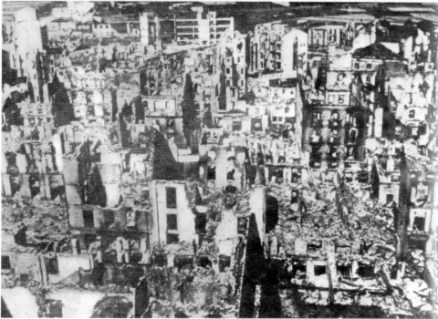
The horror that war brings to non-combatants or “innocents” can help to restrain the initiation of war and to curb its most destructive tendencies once it has begun. The bombing of the city of Guernica, Spain, in 1937, showed the world the horror of aerial bombing on innocents, a new feature of warfare in the 20th century.

This bombing took place in the initial year of the Spanish Civil War (July 1936 to April 1939). The war began after a declaration of opposition by a group of conservative generals against the government of the Second Spanish Republic.  The rebel coup was supported by a number of conservative groups including the Spanish Confederation of the Autonomous Right , monarchists, and fascists, eventually led by General Francisco Franco and a number of army generals.

Following the partially successful coup, Spain was left militarily and politically divided.  General Franco began a protracted war with the established government, as loyalist supporters of the centre-left Republican Government fought the rebel forces for control of the country. The conservative generals received the support of Nazi Germany and the Kingdom of Italy, as well as neighboring Portugal. The Republican government was supported by the Soviet Union and Mexico.

Although the US never formally took sides, American civilians eventually volunteered. Volunteers from the U.S. made up the Abraham Lincoln Brigade and served in what were called the International Brigades. They fought for Spanish Republican forces against Franco and the Spanish Nationalists.

Revolution in Military Affairs

While the airplane had been used in WWI, it had been used mainly for reconnaissance, that is, for gathering intelligence on enemy positions. There were no genuine bombers in WWI. During the interwar period, this changed. Technologies were developed to make planes bigger and capable of dropping bomb loads, eventually heavy bomb loads. We would see these bombers wreak their havoc in WW II; the Spanish Civil War was a sort of preamble to that conflict.

Guernica

Guernica, a town in the Basque country of Spain, had a population of around five thousand. It was of great symbolic importance to the Basque people and the center of their cultural tradition. The raid took place on a Monday, ordinarily a market day in Guernica. Generally speaking, a market day would have attracted people from the surrounding areas to town to conduct business.

Bombing

The bombing of Guernica on April 26, 1937, was an aerial attack causing widespread destruction and civilian deaths. German and Italian planes of  the German LuftwaffeCondor Legion” and the Italian Fascist Aviazione Legionaria conducted the raid. There were five waves in the first attack which began at 4:30 pm and lasted until about 6:00 pm. Thirty minutes later three bomber squadrons of Ju-52 Junkers attacked.  At the same time, and continuing for around fifteen minutes after the bombing wave, German attack planes strafed the roads leading out of town, adding to civilian casualties.

The number of victims of the attack is disputed. The Basque government reported 1,654 people killed, but modern speculations suggests between 200 to 400 civilians died. The bombing has often been considered one of the first raids in the history of modern military aviation on a defenseless civilian population, and denounced as a terrorist act, although the capital (Madrid) had been bombed many times previously.

This aerial attack came to have such great significance because it was the first time in history that a town was destroyed by aerial bombing.

Guernica, 2

Just War Principles

The Western military tradition includes what is called the Just War Tradition or Just War principles. One fundamental principle is that military action should not kill innocent civilians or non-combatants, people not directly or indirectly involved in the war. A second principle that applies is that of discrimination: The attacking state must discriminate between soldiers or combatants and those that are not combatants. Applying these principles to what we know about Guernica, it is clear that the Nationalist rebels led by Franco and their international supporters, the German and Italian aviation units, were not justified in conducting these bombing raids on the town of Guernica.

Legacy

Guernica quickly became a world-renowned symbol of civilian suffering resulting from war and inspired Pablo Picasso to adapt one of his existing paintings into Guernica, the image that adorns the banner of this website. The painting went on to become a symbol of Basque nationalism during the Spanish transition to democracy. Today it is located in a museum in Madrid. A tapestry copy of Picasso’s Guernica is displayed on the wall of the United Nations building in New York City, at the entrance to the Security Council room, placed there as a reminder of the horrors of war. On April 26, 2007, Dr. Akiba, Mayor of Hiroshima and President of Mayors for Peace, compared the experience of Guernica to Hiroshima.

Human beings have often sought to give concrete form to our powerful collective longing for peace. After World War I, that longing led to the League of Nations and numerous rules and taboos designed to govern warfare itself. Of these, the most important was the proscription against attacking and killing civilian non-combatants even in times of war. However, the second half of the twentieth century has seen most of those taboos broken. Guernica was the point of departure of aerial bombing on innocents, and Hiroshima is the ultimate symbol. We must find ways to communicate to future generations, especially political leaders who have the power to initiate war, the history of horror that began with Guernica.

Posted in Uncategorized | Tagged , , , , , , , , , , , , , | 1 Comment

American Exceptionalism on Climate Change

(Note: This essay was originally published as “Fred Zilian: Obama Leads on Climate, but Will U.S. Follow?” by the Providence Journal on December 17, 2015, and as “U.S. Out of Step in Fight Against Climate Change,” by the Newport Daily News on December 22, 2015.)

On December 12, after over 20 years of largely futile attempts to reach a meaningful agreement on climate change, the international community succeeded at the COP (Conference of Parties) 21 meeting in France in taking its first genuine step toward curbing greenhouse gas emissions. The United States was once again exceptional in its leadership and vision; however, this positive exceptionalism may transform into a negative exceptionalism, given our domestic politics and public complacency.

A near universal international action, 195 states approved the agreement. While there is no legal requirement to cut emissions in the agreement, 186 states have already submitted plans for cutting carbon emissions through 2025 or 2030. There is, however, a legal requirement for states to strengthen progressively their measures on climate change. Beginning in 2020, states will convene every five years, and beginning in 2023, the pressure of world opinion will increase as states reconvene to report publicly their progress in decreasing emissions.

UN General Secretary Ban, Ki-Moon called it “a truly historic moment” and “a truly universal agreement.” President Barak Obama indicated that the agreement “sends a powerful signal that the world is fully committed to a low-carbon future.” German environmental scientist Hans Joachim Schellnhuber asserted: “This is a turning point in the human enterprise, where the great transformation towards sustainability begins.” On the Eiffel Tower the words “FOR THE PLANET” stood aglow.

Here in Rhode Island, Governor Raimondo jumped on the bandwagon by signing an executive order on December 8, committing the state’s government to be 100% powered by clean energy sources by 2025, an ambitious goal.

The agreement has come none too soon, as CO₂ in the atmosphere has reached levels unprecedented in human history. The global average temperature has risen about .8° Celsius (1.45° F) in the past century. The ten hottest years on record, dating back to 1880, have taken place since 1998. Last year was the hottest on record, and 2015 looks to beat that record. CO₂ levels in the oceans are increasing, boosting acidity, and sea ice is decreasing. Nearly all the world’s 144 glaciers monitored since 1900 have retreated. And in my garden, I find myself in mid-December weeding and admiring my Gazania flowers—uncanny for this time of year.

President Obama and his administration have shown exceptional leadership and management leading up to and at the conference. Last year the president enacted stronger regulations to cut greenhouse gas emissions from coal plants. In November 2014, he and Mr. Xi Jinping, the leader of China, announced jointly plans to slash these emissions. While it is unclear how much of a role the president and Secretary of State John Kerry played, the agreement is not a treaty and therefore will not require approval of the US Senate, as required by our Constitution—very smart politically.

Nonetheless, Congress must still approve any new appropriations to enact the agreement, and this is where the US may again prove exceptional—divided against itself and out of step with most other countries. Shortly after the conference had begun and after President Obama had pledged to be a leader in the global response to climate change, the Republican-dominated Congress passed two resolutions essentially denying this. Also, after the December 12 agreement, Republican leader Mitch McConnell stated: “Before his international partners pop the champagne, they should remember that this is an unattainable deal based on a domestic energy plan that is likely illegal … that Congress has already voted to reject.”

Moreover, Americans are out of step with most of the international community on climate change. Recent polling data (AP NORC Center for Public Affairs Research) indicates that fewer than one in four Americans are extremely or very worried about climate change. In Pew Research Center surveys conducted in 2013, 40 percent of Americans said that global climate change was a major threat to their country, compared to more than 50 percent of Canadians, Australians, French and Germans; more than 60 percent of Italians and Spaniards; and more than 70 percent of Japanese.

The words of Winston Churchill and Charles De Gaulle seem apt: “England is an island, France the edge of a continent, America another world.”

Fred Zilian (www.zilianblog.com) teaches environmental politics at Salve Regina University, Newport, RI.


Posted in Uncategorized | Tagged , , , , , , | 4 Comments

Causes of Peace, Part VI, Civil War, The Military Level and Political Will

The Military Level

First, The South had some notable advantages, including what are called “interior lines.” Defending its own territory from an external threat, it had shorter “lines of communication,” had greater familiarity with the terrain, and could count on the support of the local population.

However, the North had many more advantages. The battle force ratios favored the North, generally outnumbering the South in every battle except Chickamauga (September 1863). The North had the larger population base from which to draw recruits.

Second, after the Emancipation Proclamation took effect in January 1863, the North enlisted and employed blacks, the South did not. About 180,000 blacks served in the Union Army; 37,000 were killed and killed at a rate 40% higher than whites. Twenty-one distinguished themselves and won the nation’s highest military honor, the Medal of Honor.

Third, the competence of the North’s military leaders eventually equaled the South’s. At the outset of the war, the South clearly had the advantage of superior leaders in men like Robert E. Lee, Stonewall Jackson, James Longstreet. However, as the war continued, the North’s officer corps developed and improved in competence. Also, Lincoln eventually found the right generals who could prosecute the war to win battle victories: Ulysses S. Grant, William T. Sherman, and Philip Sheridan. General Grant became commander of all Union forces in the West in October 1863, and General-in Chief of the Army in March 1864

Fourth, the South’s tactics could be quite reckless at times. Grady McWhiney and Perry Jamieson contend:

“that the Confederates bled themselves nearly to death in the first three years of the war by making costly attacks more often than did the Federals. Offensive tactics, which had been used so successfully by Americans in the Mexican War, were much less effective in the 1860s because an improved weapon—the rifle—had vastly increased the strength of defenders. … The Confederates favored offensive warfare because the Celtic charge was an integral part of their heritage.” (Attack and Die, p. xv)

New technology had given the advantage to the defense rather than the offense. In the 1840s the French had developed the minié ball.  This, with the rifle (not musket), meant that the killing zone increased from 50 yards to 150 or more yards. The South aggressive offensive tactics often proved costly, and especially as manpower ran short, they simply could not afford the losses that such tactics brought.

Political Will

The final, crucial dimension which always matters in war is political will: the determination and resolve of a political actor to continue to prosecute a war.

In the early stages of the war, because of the Southern victories and the indecisiveness of the Northern generals, such as George McClellan, the South had swagger and confidence.  But this changed as the war progressed.

Southerners quite early lost their desire to volunteer, forcing the South to implement its First Conscription Act in April 1862. The early elation of Southerners evolved into dogged determination. Militarily, the summer of 1863 was a turning point. In the largest land battle in the history of North America, the South led by Robert E. Lee, invincible  to that point, was soundly defeated at Gettysburg by the North. Vicksburg, the final Southern bastion on the Mississippi River, fell shortly afterward.

As the war persisted, the Confederacy could not hold together under the strain of war as well as the North. By 1865 the South seemed to be full of wounded men, and women and children who were war refugees. Its will simply crumbled faster than the North’s.

After the victories at Gettysburg and Vicksburg, the North’s will and determination continued to grow. In early 1864 Grant so impressed Lincoln with his victories in the West that Lincoln brought him east and made him commander of all Union forces. Lincoln’s own determination was reinforced now after finally finding the right commander. His will and the will of the North were decisively reinforced with the fall of Atlanta in September 1864, and Lincoln’s subsequent re-election in November.

Conclusion: Not only in the military sphere, but in the political, economic, and social spheres, the North possessed at the outset, or gained as the war progressed, a number of distinct advantages over the South. These advantages, coupled with its better decision making in these spheres, eventually caused the South’s will to falter faster than the North’s and for peace to break out in the spring of 1865. (Please see Part VII.)

Posted in Uncategorized | Tagged , , , , , , , , | 4 Comments

The Causes of Peace, Part V: The American Civil War, Section I

Let us now apply the Multi-Dimensional War Model to the American Civil War.

Political Level

On the domestic political level, the South faced a dilemma, a contradiction. In the name of defending Southern rights, the Confederate government had to infringe of those very rights: on individual freedom by conscription when it ran short of manpower, on property rights by impressing slaves (property owned by Southerners) into service, and on civil rights by the suspension of habeas corpus. This contradiction proved to be very painful for Southerners to swallow.

Second, in Abraham Lincoln, the North had the better leader and commander in chief. It also had a stable two-party political system while the South did not. The Confederates looked down on political parties. This meant that Jefferson Davis lacked a secure political base, and the South never really had the benefit of an opposition to propose alternatives.

Third, on January 1, 1863, the Emancipation Proclamation took effect. Not all Northerners supported this; however, it still gave the North a sense of unity and a greater sense of purpose. It also helped to prevent Great Britain and France from endorsing the South.

On the international Level, the South was never able to get international recognition and the support it needed, especially from Great Britain and France.

Social-Demographic Level

The superior population base in the North allowed it to field more men without the strain on the society and the economy which took place in the South. The North had a population of about 22 million against the nine million of the South, including 3.5 million slaves.

In January, 1862, Lincoln clearly recognized the North’s advantage in this dimension and realized that it must take advantage of this in its strategy.

I state my general idea of this war to be that we have the greater numbers, and the enemy has the greater facility of concentrating forces . . . ; that we must fail, unless we find some way of making our advantage an over-match for his; and that this can only be done by menacing him with superior forces at different points, at the same time; and if he weakens one to strengthen the other, forbear to attack the strengthened one, but seize, and hold the weakened . . . .” (Peter J. Parish, The American Civil War, p. 158)

Economic Level

First, the South made the misassumption that its cotton would give it decisive influence. This proved false.

Second, the North clearly had economic superiority in many areas. It had more resources to draw from and used them more effectively. For example, the North’s iron and coal production was vastly greater than the South’s.

Third, the North’s railway net was much more extensive than the South’s. Because of this, the North was able to maintain a steady flow of supplies to its armies fighting in the south. By the end of the war, it was operating over 2,000 miles of track, with over 400 locomotives and 6,000 cars.

Fourth, the North’s financial system was much sounder that the South’s. The South failed to secure foreign loans and by the end of the war its inflation totaled 9,000%. By contrast, the North imposed taxes early and often to finance the war. Its inflation during the war was 80%.

Lastly, the North’s naval blockade was implemented early and over the long term had a great effect, especially after the seizure of Vicksburg in July 1863.

Having considered the political, social, and economic levels of the war, we shall take up in the next post the final two dimensions: the military level and political will. (Please see Part VI.)

Posted in Uncategorized | Tagged , , , , , , , , | 1 Comment

The Causes of Peace, Part IV, Paradigm #2: Zilian’s Multi-Dimensional War Model

Paradigm #2 views war not as uni-dimensional but rather as multi-dimensional. War is more than warfare. Call this Zilian’s Multi-Dimensional War Model. To truly understand why one side won and the other lost, we cannot simply look at the military dimension of any war. Rather we must consider all the possible dimensions—such as, political, economic, social-demographic, cultural—of a state (or other political actor) to understand the outcome of a war, why “peace broke out” and war ended.

In analyzing past wars, Zilian’s Multi-Dimensional War Model forces our analysis to be more sophisticated, complex, and comprehensive. In examining the Peloponnesian War in the 5th century BC, this model helps us to understand the role of the decline in political leadership within Athens and the Delian League, not just the invincibility of the Spartans as warriors. In addressing the Revolutionary and Napoleonic Wars of France in the late 18th and early 19th centuries, it helps us to appreciate the role of the nation in arms and the lack of cooperation among the allies in understanding the many early victories of France. In analyzing the victory of the Allies in World War II, it forces us to think about the role political-military relations within the U.S. and among the Allies as factors in their success. In evaluating the Vietnam War, it demonstrates the importance of considering political will on both sides.

For the American Civil War, overall, peace broke out in the spring of 1865 because, not only in the military sphere, but also in the political and economic spheres, the North possessed at the outset or gained a number of distinct advantages over the South as the war progressed. These advantages, coupled with its better decision making in these spheres, eventually caused the South’s will to crumble faster than the North’s. (Please Part V.)

Posted in Uncategorized | Tagged , , , , , , , , , , , | 1 Comment

The Causes of Peace, Part III, Thinking About War, Paradigm #1

In order truly to understand war & peace, we must delve into some military theory. A theory lays out the principal concepts of a given field of study and their relationships, and it must also explain the “why” of things: causality. In doing this it should help us predict behavior: what will take place in that field of study under a given set of circumstances.

There are at least two ways of looking at war—two theories, “paradigms,” or frames of reference. The first paradigm can be summed up by the expression: “In war, God is on the side of the heaviest battalions,” that is, the side with the strongest military forces wins.

In Paradigm #1, war is about military stuff. War is uni-dimensional. However, if we look at military history, this clearly is not always the case. The Thebans defeated the supposedly invincible Spartans at Leuctra in 371 B.C. despite an almost two-to-one inferiority. At Cannae in 216 B.C. Hannibal destroyed over 90% of a numerically superior Roman force. In 1757, Frederick the Great outmaneuvered an army over twice his number, losing 500 men while the enemy lost close to 8,000. Napoleon repeatedly achieved battle victories with inferior numbers. And in this century, the French lost against the Algerians in the 50s and 60s and the United States lost in Vietnam, despite having superiority in military forces.

Let’s consider the analysis of the Civil War historian Peter Parish. In his book, The American Civil War, he states:

[The battles of] Gettysburg and Vicksburg are commonly regarded as the decisive engagements of the Civil War; they both took place in July, 1863, but the war did not end until April 1865. What had happened in the field of battle had become more than ever the tip of the military iceberg. The great submerged mass was a matter of equipment, supply, transport, commo, of industrial power, and technical skill, and also of public opinion, civilian morale, and sheer will to resist. (p. 159.)

It is clear that victory in battle or in war does not always go to the side with military superiority. This is because war since the time of the French Revolution (1789) has not been fought by armies but by nations. States have mobilized and employed any and all of their dimensions to wage war. For example, in August 1793 the Committee of Public Safety, during the height of the Revolution, decreed a universal mobilization:

“Young men will fight, young men are called to conquer. Married men will forge arms, transport military baggage and guns and will prepare food supplies. Women . . . will forget their futile tasks: their delicate hands will work at making clothes [and tents and they shall attend the wounded]. Children will make lint of old cloth. . . . And old men, . . . , will be guided to the public squares . . . where they will kindle the courage of young warriors and preach the doctrines of hate for kings and the unity of the Republic.”

Since then, war has become multi-dimensional. If we wish a truly comprehensive explanation of any modern war, we must look at various dimensions of the states waging war, not just the military forces. Any comprehensive analysis of the American Civil War must be multi-dimensional. In order to understand “why peace broke out” in the spring of 1865 after four long years of war, one must look at more than military things. One way of expressing this succinctly is that: “War is more than warfare.” (Please see Part IV)

Posted in Uncategorized | Tagged , , , , , , , , | 3 Comments

The Causes of Peace, Part II

The authoritative, London-based, weekly magazine, The Economist, has just issued its annual look into the next year: The World in 2016. It contains an essay written by John Andrews entitled, “More War than Peace.” He notes International Peace Day, September 21, established by the United Nations in 1981, and predicts that this day in the coming year will be anything but peaceful. “…swathes of Syria, Iraq, and Africa will be racked by violence; murderous drug cartels will threaten the stability of Latin America; and “frozen conflicts”, from the Korean peninsula to the Caucasus, will risk thawing into renewed wars.”

He continues by indicating the “(relatively) good news is that the casualties will be trifling compared with the horrors of the past.” He then provides summary statistics for the world wars of the 20th century, followed by statistics showing the drop in war-related deaths in the decades, 1960-2010.

Unfortunately, he indicates, this trend will reverse itself in the future. He predicts an increase in such deaths because of religious, ideological or ethnic insurgencies, and also civil wars.

He thus contradicts Steven Pinker in his book, The Better Angels of Our Nature, discussed in my earlier essay on the causes of peace. Such quantitative analysis and prediction is certainly interesting but built on a very precarious foundation. Historically, war and peace are very hard to predict. We can hope that world wars are a thing of the past; however, Plato was correct in saying, “Only the dead have seen the end of war.” War will remain a recognized, legitimate instrument of international politics to resolve clashes of interests. We must do our best to push it as far as possible to the bottom of the options available to a political actor pursuing its interests. (Please see Part III.)

Posted in Uncategorized | Tagged , , , , , , | 3 Comments