Amid Horrors of 1864, R.I. Soldier Perseveres

Through the battles, death, mud and misery of 1864, Elisha Hunt Rhodes, a Civil War soldier from the village of Pawtuxet, Cranston, was sustained by his indomitably positive spirit, a deep religious faith, and a firm commitment to the Union cause. Rhodes entered military service for the Union in July 1861, as a private and left it four years later as a colonel, serving most of his time with the 2nd RI Volunteer Regiment (Infantry).

He began this year with the rank of 1st lieutenant in the position of regimental adjutant. On June 7 he assumed command of the regiment and on June 26, achieved the rank of captain.

elisha_hunt_rhodes

          The miseries of warfare during his fourth year of the war continued. There was the stifling heat in summer and the frigid cold in winter. In early July he states that the temperature reached 124° and “the men are suffering severely.” On Dec 12 near Petersburg he writes: “It was so cold that riding was an impossibility, and as the snow turned to rain the men’s clothes became stiff with ice.” “We had no tents….” “We hovered over our fires half frozen until daylight ….”

Death at times surrounded him. In the Battle of the Wilderness in early May, Rhodes states: “The line surged backwards and forwards, now advancing and now retreating until darkness put an end to the carnage. Many men were lying upon the ground dead or wounded ….” The following day, he states: “Our Brigade charged in to the swamp six times, and each time were driven out. Darkness again put an end to the fighting, and we lay down amid the dead and wounded. During the night the brush caught fire, and many of the wounded burned to death.”

At the Battle of Cold Harbor in June, he writes: “Constant roar of Artillery and bursting of shells. Even as I write I saw one poor fellow shot down as he left his shelter.” In September after the Battle of Winchester, he indicates: “Our first duty was to bring in such of the wounded as were not found last night. The Taylor house and the Virginia House, the two principal hotels are used as hospitals and are full of wounded, while the churches as well as private houses are put to the same use.”

Rhodes himself was shot several times but miraculously escaped death. On May 6 he was struck in the right forefinger, which “only hurt me a little.” On May 12 he was hit in his right breast, tearing his coat, and bruising his right arm. It turned out to be just a surface wound.

On the lighter side, Rhodes writes about some of the simple pleasures he enjoyed, including animals. In September he writes: “My mare Katie is a beauty, and I enjoy the rides both on duty and for pleasure which I take every day.” He writes also of a new pet for his unit. “I selected one lamb from our flock, and we are to make a pet of it. We have named him ‘Dick’ and he is already a great favorite.” Unfortunately, in December the officers, short of cash, “sacrificed our sentiment and sold poor Dick to a butcher for $5.00 ….”

On July 4, he invited his officers to a dinner to celebrate the holiday. The bill of fare: stewed oysters (canned), roast turkey (canned), bread pudding, tapioca pudding, apple pie (made in camp), lemonade, cigars.

Rhodes witnessed black military units in action this year which changed his view of their fitness for combat. In June near Petersburg (VA) he writes: “I have not been much in favor of colored soldiers, but yesterday’s work convinced me that they will fight. So Hurrah for the colored troops!”

Having been at war for over three years, it is remarkable how Rhodes was able to maintain his positive spirit. At Cold Harbor in June he writes: “Every few minutes a shell comes screaming over, and then we run to our holes. It is amusing as well as dangerous. We are covered with dirt, but still I am happy.” Near Petersburg in July he states: “The Army presents a rather motley appearance now …. Still I am happy and probably the best contented man in the Army of the Potomac.” In December he states: “Two nights without sleep has a tendency to make me sleepy. Winter campaigning is cold work, but it is all for the Union, and I will not complain. I thank God that I have such good health and can stand it.”

His abiding faith in God and the Union cause clearly sustained him throughout this year. He regularly attended Protestant services on “the Sabbath” in many towns in the South, often noting the rebellious nature of the sermons.

He was determined to see the war through to its end, hoping for a Union victory. After campaigning in the ShenandoahValley under Gen. Philip Sheridan in October, he writes: “…I am tired of the bloodshed. But God has been good to me, and I hope I shall live to see the end as I saw the beginning of the Rebellion.” A few months later he writes: “I was sorry to leave the Shenandoah, for we have had a fine campaign, but duty is duty, and I do not complain. If it will end the war I am satisfied to go to any point they choose to send me.”

His final entry of 1864 comes in winter camp near Petersburg: “Goodbye old 1864. Your departure is not regretted, as it brings us so much nearer the end of the war. May God grant us success in the year about to open.”

(Note: This essay is based on Rhodes’ diary, published as “All for the Union,” Robert Hunt Rhodes, ed.)

Posted in Uncategorized | Tagged , , , , , | 1 Comment

The Great (Berlin) Wall of China

(This essay was originally published as “1989: A year of protests,” in the Newport Daily News on November 8, 2014.)

 Twenty-five years ago on November 9, 1989, the Berlin Wall fell, leading not only to the unification of East and West Germany but also to the toppling of communist regimes throughout Eastern Europe and in the Soviet Union.

By coincidence 25 years ago this year, student-led demonstrations in Tiananmen Square, Beijing, were suppressed by the Chinese armed forces, an event which my Chinese students tell me does not appear in Chinese history books—a non-event. The death toll is disputed; the government figure is 241 while others place it in the thousands.

Reminiscent of Tiananmen, demonstrations mainly by students and disaffected people in their 20s and early 30s have occupied central Hong Kong, wearing “Freedom Now” T-shirts, demanding a truly free election process for the chief executive of Hong Kong in 2017. Understandably the Chinese Communist Party worries over the potential damage to its “Berlin Wall”—the wall of its inviolable supreme sovereignty—if concessions are given to the protestors.

The Berlin Wall, built during the Cold War in 1961, isolated free, democratic West Berlin geographically within communist East Germany. It was built not so much to keep foreign forces out but rather, as is characteristic of totalitarian regimes, to keep East Germans—fleeing in ever increasing numbers—within. During its 28 years of existence, 408 people died trying to flee from East Germany.

The immediate factors which led to its fall came from outside the German Democratic Republic (East Germany). The most important factor was the set of reforms which Mikhail Gorbachev implemented in the Soviet Union and the Warsaw Pact. In 1988 he announced “freedom of choice” for socialist states within the Warsaw Pact, eliminating the requirement for ideological conformity. The Soviet Union followed by acquiescing in the first free elections in Poland. When Gorbachev visited Bonn in June of 1989, the possibility of genuine change was palpable when he agreed to a joint declaration that expressed “”respect for the right of peoples to self-determination.”

After these changes, Hungary decided in August 1989, not to honor the 1969 mutual assistance treaty that required the capture and return of individuals seeking to flee their own countries. On September 10, the border between Hungary and Austria was opened; the exodus to the west began.

Over the next months the initial trickle of refugees swelled into a river of refugees. During 1989 nearly 340,000 East Germans left for the west. The crowds in Leipzig, East Germany, grew from 70,000 on October 9 to 450,000 on November 6. The chants for the Wall to come down were soon joined by a new chant: “Germany, fatherland.”

General Secretary Egon Krenz and the reschuffled leadership decided to take a gamble and open the Wall on November 9. In the first week nine million Easterners visited the West. This was the breach which led ultimately to a national movement for German Unification on October 3, 1990.

It is not surprising that today’s protests in China are taking place in Hong Kong. Great Britain, with its history of constitutional monarchy, ruled it as a colony for 155 years. After a British-Chinese agreement in 1984, Hong Kong became in 1997 a “Special Administrative Region” of China under the principle of “one country, two systems.”

The Chinese leadership correctly fears a breach in its wall of supreme sovereignty. An essay in the Party’s main newspaper, the People’s Daily, indicated that allowing multiple parties in the Hong Kong legislature would spell trouble: “…competitive elections with ‘one man, one vote’ would be sure to quickly lead to a state of turmoil, chaos, even civil war.” Hong Kong’s leader, Leung Chun-ying, in late October stated that full democracy would involve a “numbers game” that would allow the poor too much power. If the report about party officials studying the French Revolution is true, one wonders if they see the parallel with the deadlock over voting in the Estates General in 1789.

With all the many differences between Hong Kong today and Berlin in 1989, the statements by party officials referring to unspecified “foreign forces” and the veiled references to the United States and Great Britain remind me of what former East German officers told me in 1991 when I asked them about their failure to intervene militarily in the demonstrations. They were also told that American agents were inciting the crowds; however, when they looked at the people they realized that they were common East Germans. Second, there were so many. Lastly, they stated that the demonstrators were so peaceful.

It is clear that along with studying the French Revolution, party officials should also be studying the fall of the Berlin Wall.

Posted in Uncategorized | Tagged , , , , , , , , , , , , , , | 2 Comments

The Columbus Day Debate

(This essay was originally published as “Don’t junk Columbus and other heroes,” in the Providence Journal on October 13, 2014.)

Like the celebration of Thanksgiving, which has been squeezed severely by the commercialism of Halloween at one end and Christmas on the other, Columbus Day has diminished in importance as an American holiday since FDR made it a national holiday in 1934 and therefore as a source of American identity.

Hawaii, Alaska, Oregon, and South Dakota do not recognize it at all. South Dakota renamed it “Native American Day,” and California and Texas do not recognize it as a paid holiday for government workers. Several cities, such as Berkeley, California, have replaced it with “Indigenous People’s Day.”

Here in Rhode Island, Columbus’ image is still strong, even though my US History students shrug in indifference when I mention his name. Once again Newport should be celebrating Columbus Day with its annual Columbus Day Parade through the heart of the city, ending at the Columbus statue at Memorial and Bellevue. It is a handsome statue with Columbus atop, holding a small globe in one hand. In the granite pedestal are engraved the words: “Discoverer of America.”

Critics of Columbus and this holiday argue from two primary vantage points. The first emphasizes the negative effects of what he began: Historians call it the Columbian Exchange, a tremendous exchange of plants, animals, insects, disease, technology, and humans. The second strand of criticism focuses on his undesirable character traits, such as his self-promotion and desire for noble status. These criticisms suffer in that they judge him by our ethics and not those existing at the time. Also, the critics may not fully appreciate or admit how they, themselves, might have acted at that time. Let’s not forget that native American tribes could be bitter enemies and sometimes welcomed European settlers for their technology and their support in seeking to dominate other tribes. Cortes and the Spanish, for example, were able to conquer the Aztecs in part because of the allied support from other native American tribes who hated the Aztecs.

Our own Ivy League school, Brown University, founded ironically with money in part from the slave trade beginning with the Columbian Exchange, eliminated “Columbus Day” in 2009. The student group, Native Americans, led a protest “after controversy arose over the nature of Christopher Columbus’ conquests and treatment of Native Americans.” By a voice vote, the faculty voted to end Columbus Day in favor of “Fall Weekend.” Quite understandably, John Brown (more irony), the medicine man of the Narragansett Indians, was delighted and said, “… people are beginning to see from a historical point of view that Christopher Columbus was no real hero.”

Heroes and role models are part of the glue which holds civilizations together. The ancient Greeks had their Odysseus and other warriors whose exploits, in the works of Homer, provided for centuries the moral code Greeks used to educate and socialize their children. The ancient Romans had their Aeneas and also their Romulus and Remus.

(USA Today)

We must use caution in chiseling away too many of our heroes if we are to endure as a vibrant civilization. Granted we still have other sources of shared identity: our remarkable, oft-plagiarized Constitution, American Jazz, baseball, our vibrant entertainment culture, and our ethos of freedom and democracy as sources of American identity. However, fiddling too much with these well-springs, especially our heroes, can prove perilous. Are we to dethrone Thomas Jefferson, the principal writer of our Declaration of Independence, not only for owning slaves but probably siring six children with one of those slaves, Sally Hemings? Are we to dethrone Franklin Delano Roosevelt for his adulterous affairs? And what of Martin Luther King, the only person for whom we have dedicated a national holiday? Should his courageous deeds be ripped from our history books because of his infidelity to his wife? Like Christopher Columbus, these men—along with even George Washington and Abraham Lincoln—had what could be viewed as character flaws. This does not deny their heroism; rather, it confirms their humanness.

We should keep Columbus on his pedestal and teach our children, in increments, both his virtues—his courage, tenacity, leadership, and vision –and his foibles. However, let’s be sure to continue to name our streets, towns, counties, lakes, community colleges, and parks after native Americans. (I myself was born in Passaic, NJ; my first car was a Pontiac.) Along with statues of Columbus, let’s also erect statues of Squanto, Massasoit, and Geronimo, and tell our children about their virtues … and shortcomings.

Posted in Uncategorized | Tagged , , , , , , , , , , | Leave a comment

To Help Climate: Decrease Footprint; Increase Handprint

(This essay was originally published in the Providence Journal on October 7, 2014.)

President Obama’s speech at the United Nations on September 23, underlining the urgency for action on climate change to over 100 assembled world leaders at the UN Climate Change Summit, was a welcomed antidote to the continued ominous scientific data on our climate.

This summer was the hottest on record (since 1880), 1.28° F warmer than the 20th century average. In early September, the UN’s World Meteorological Organization announced that the level of carbon dioxide—the most significant greenhouse gas—in the atmosphere had reached 396 parts per million in 2013, an increase of 2.9 ppm from the 2012 level. Before the Industrial Revolution of the 18th-19th centuries, the level was 280 ppm. The huge glaciers on Greenland and West Antarctica continue to melt, contributing to the rise in sea levels, potentially threatening such coastal cities such as Boston, New York, Miami, New Orleans … and our own Providence and Newport. The evening news no longer seems complete without some type of extreme weather event. Such news has gone from the extraordinary to the commonplace.

In addressing the UN General Assembly, the president asserted that the United States would succeed in its pledge to reduce no later than 2020 its carbon emissions by 17% from 2005 levels. As he is pushing our power plants to curb their carbon emissions, he called on China—the world’s largest polluter—to follow suit. He went on to state: “We can only succeed in combating climate change if we are joined in this effort by every nation, developed and developing alike.”

The Sunday before the summit, grass roots’ concern and hopes were on display in New York in the form of a People’s Climate March in which over 300,000 marched a 2.2 mile route through the city. One of the many banners on display said, “There is no Planet B.” Marches also took place in other cities around the globe.

Close to home this summer, I was pleasantly surprised to see for the first time recycle bins at the entrance to Clements Market here in Portsmouth. There are three separate bins: a brown one for trash, a blue one for cans and bottles, and a green one for paper products, reminding me of the containers I had seen in Germany in 1990.

My friends have asked me: What can we as individuals do to combat climate change? The first imperative is attitudinal: We must change the way we think of the environment. Instead of thinking of it as a bottomless trash dump, able to take all the pollution we dish out without any negative repercussions, we must recognize that the environment has its limits and that it will answer back. We must appreciate the impact our actions have on the environment and strive to adopt a model of sustainable living. Former Secretary of the Treasury Henry M. Paulson, Jr. has written: “Climate change is the challenge of our time. Each of us must recognize that the risks are personal. We’ve seen and felt the costs of underestimating the financial bubble. Let’s not ignore the climate bubble.”

Practically speaking, here are some ideas for reducing one’s individual “footprint” (negative impact on the environment) and increasing one’s “handprint” (positive impact). 1. Start a compost heap. Recycle appropriate food waste including egg shells, fruit & vegetable waste, and coffee grinds. 2. Start a vegetable garden. Place the composted matter into the garden each year. 3. Buy produce locally—less transportation and packing. 4. Reduce the use of plastic products, especially drinks in plastic bottles and plastic bags. The bags take years to decompose and can find their way into our water supplies and oceans. 5. Drive the car less. Car pool, ride a bike, and walk more. Be sensitive to your next vehicle’s miles-per-gallon rating. 6. Turn off lights not in use and install energy-saving bulbs. 7. In winter, wear a heavier sweater and turn down the thermostat; in summer, turn up your air conditioning. 8. Plant a tree. Trees eat carbon dioxide and release oxygen. 9. Install a clothes line in the yard. Use the dryer less and the line more. Heating elements draw much electricity. 10. Recycle, of course, and be sure to recycle all that junk mail.

Posted in Uncategorized | Tagged , , , , , , , , , | Leave a comment

World War II Begins

(This essay was originally published by the Newport Daily News as “Long March Back to War,” on August 30, 2014.)

Seventy-five years ago today, Nazi Germany attacked Poland and began World War II, a war that lasted until August 1945, killing at least 50 million people and witnessing the only use of nuclear weapons in war. This war, even more than WWI, was a “total war:” forcing participants to mobilize and employ all segments of their societies.

The roots of this war lay in World War I and its aftermath. Indeed some historians consider the two wars as one war containing twenty-one years of unstable peace. In this view the most important factor in explaining its outbreak is the failure of the peace settlements at the end of WW I to establish a sufficiently stable international system, leaving too many major powers angry or unsatisfied. Germany, disallowed from the negotiations, felt that the Treaty of Versailles was “dictated” and that it was unduly harsh. Its army was reduced to 100,000, its navy was diminished, and its air force was eliminated. Most irritating was the so-called “War Guilt Clause,” declaring that Germany (and Austria-Hungary) was responsible for the war and ordering Germany to pay reparations for all the damages “imposed upon them by the aggression of Germany and her allies.”

Italy, one of the victors, was so upset that it abruptly left the peace conference when the lands it desired were given to other countries or given independence under President Woodrow Wilson’s principle of “self-determination.”

Even before World War I, the modernizing government of Japan—one of the victors in the war—sought to build an empire. It defeated the Chinese in the First Sino-Japanese War of 1894-95, defeated the Russians in the Russo-Japanese War of 1904-05, and annexed Korea in 1910. WW I seemed to whet its appetite for empire even more. When Western powers rejected its recommendation for a racial equality clause in the charter of the new League of Nations, it began its tilt away from the West.

After the WW I armistice, sincere efforts were made to ensure peace and to prevent aggression. The single most important demand of President Wilson during the peace negotiations was the formation of a “league of nations” to prevent future wars. While Wilson’s proposal was eventually adopted, the US Senate never ratified the Versailles Treaty and hence never joined the newly-created League of Nations. In 1921-22 the US hosted the Washington Arms Conference, the first arms control conference in history, resulting in three major arms limitation treaties. In1928 the US and France negotiated an international agreement, the Kellogg-Briand Pact signed by sixty-three states, which pledged “to renounce war as an instrument of national policy.”

Despite such efforts, world leaders seemed unable to make World War I truly the “war to end all wars.” The Great Depression only exacerbated the political tensions already in place, especially regarding Italy and Germany and their new ideology of fascism, named after the fasces of the Roman Empire. (This was a bundle of rods and an ax with a blade projecting outward, a sign of authority of a Roman magistrate.) This ideology was totalitarian in that it sought complete control of all segments of society. It was hyper-nationalistic and also pro-capitalism, seeking to exploit both for the benefit of the state.

roman-fasces

Roman fasces

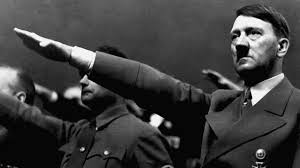
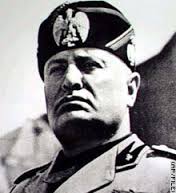
        In both Italy and Germany, strong, charismatic leaders took control of the governments and used intimidation and force to eliminate enemies and quickly control society. In Italy Benito Mussolini and his Fascist blackshirts took control of the government in 1922. In Germany an aging President Hindenburg appointed Adolf Hitler chancellor in 1933.

Hitler

 Adolf Hitler

(bbc.co.uk.com)


Mussolini

Benito Mussolini

(resourcesforhistoryteachers.wikispaces.com)

 Next to the failure of the WW I victors to establish a stable peace, the second factor in the coming of WW II was the rise of Hitler and his Nationalist Socialist Workers’ Party (Nazis). Hitler quickly moved to instill a sense of hope and pride in the German people and to reverse the terms of the Versailles Peace Treaty. In 1935 he publicly announced the rearmament of Germany, in violation of the Treaty. In 1936, Germany reoccupied with military forces the Rhineland, an area on Germany’s border with France which had been demilitarized after WW I. In 1938 it annexed the Germanic country of Austria (portrayed in the famous musical, The Sound of Music). He next demanded that the Sudetenland, a mostly German populated area within the boundaries of Czechoslovakia, be given to Germany. At the infamous Munich Conference of September 1938, the British and French government leaders acquiesced, an act that has become the most referenced example of ignominious “appeasement.” British Prime Minister Neville Chamberlain proclaimed that he had achieved “peace in our time.” In several months however, Germany seized the rest of Czechoslovakia. A third factor then in the coming of WW II was the inability of the key Western powers to stand up to the rising fascist states.

2Q==

Germans Marching through Warsaw

(National Archives)

         After concluding a Non-Aggression Pact with the Soviet Union on August 23, Germany invaded Poland on September 1, 1939. The Soviet Union joined the attack on September 17.

Posted in Uncategorized | Tagged , , , , , , , , , , | 4 Comments

Sean Spicer (‘89) Shares Thoughts on Life and Leadership

(The essay was first published in the Portsmouth Abbey School Bulletin, Summer, 2014.)

Sean Spicer believes in family, God, trust, hard work, determination, gratitude, service, and seizing opportunities. It is also clear that the Abbey’s hallmark values of reverence, respect, and responsibility infuse the personal and professional life of this Class of ’89 Abbey graduate who has risen to the high ranks of the Republican National Committee.

On April 14 in a Mother Seton Lecture to the Abbey school community, Sean offered his “Rules for Life Beyond Cory’s Lane.” Afterward I had the opportunity to explore his thoughts on leadership and other aspects of his life.

Since February, 2011, Sean has been the Communications Director for the Republican National Committee (RNC), supervising the party’s strategic communications, research, television studio, war room, minority engagement, and media affairs operations. With a staff of thirty, he indicated that the position is clearly his most challenging to date. There was once a “news cycle” which allowed some daily breathing room; however, now the communications environment is much more fast-paced. A person in the political communications business is really on duty “24/7”. Sean stated that nowadays a situation can change dramatically with a few words said in a Tweet. True to his upbeat and positive personality, he followed by saying that he has enjoyed all his jobs to date and implied that they have all given him valuable experience in the complex world of American politics.

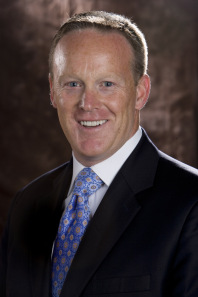
profile-sean_m-_spicer

Sean Spicer

His current position is a culmination of many lesser positions, ones which others may have rejected. During his lecture in which he offered students “Seventeen Rules for Life,” he spoke to this subject with his very first rule. Rule #1: “There are no jobs for ‘anything’.” He related a story about an early interview he had in which he eagerly told the interviewer that he was “prepared to do anything.” The interviewer indicated: “I do not have a job for anything.”  Looking to their future, he encouraged Abbey students to formulate clear ideas on positions they desire before they enter an interview.

Sean began his discussion of leadership with me by referring to his military career. Since 1999, he has been a member of the Navy Reserves, and now holds the rank of commander. He attended the Naval War College in Newport in 2012, and earned a Master of Science degree in National Security and Strategic Studies. Mission accomplishment is a phrase which the military can drum into you; however, I found that Sean never focused on this. He holds as fundamental the principle: If you take care of your people, they will take care of you. He added that leadership always begins at the top, implying that a leader’s behavior affects the entire culture of an organization. Second, Sean also believes that a leader must treat all people—no matter what rank or station in life—with respect. Third, in a situation that demands leadership but where an absence exists, a good leader steps in and takes charge. Such a leader can perceive the void and also can muster the fortitude to take action.

In his current job, he leads and manages the Communications section of the RNC, composed mainly of young college graduates. He describes his leadership challenge as twofold: to keep them energized and focused, and also to strive to find and recruit the highest quality individuals available.

In his lecture to the students, he covered a number of principles which clearly relate to leadership. Rule #4: Take responsibility when you screw up, and you will be rewarded. Many people just make excuses. Rule #7: Have a plan, but be flexible. Here he related a story about taking a position with a candidate running for Congressional office in Pennsylvania. Even though this meant leaving the capital and even though the individual lost the election, Sean gained valuable experience, something which helped him gain future positions. Rule #12: Remember to say thank you, orally and in writing. Rule #16: Follow your mom’s advice: It’s not what you say, but how you say it. The tone and tenor of your words count.

Sean’s religious-spiritual side was also evident in his lecture. Tucked into his essentially secular set of 17 rules was: “Rule #14: Have a relationship with God.” In his case, both he and his wife value their religions and their personal relationships with God.

Both in his formal comments as well as in our discussion, the values which Sean cherishes as foundational and fundamental became evident. Prominent were family, God, trust, and voluntary service, but there were others. Hard work was shown in his Rule #3: Showing up is half the battle. Showing up early and often is the other half.      The value of gratitude was also evident. His Rule #12: Say thank you/write thank you. Responsibility, a hallmark of the Abbey Mission, also ranked high. His Rule #4: Take responsibility when you screw up and you will be rewarded. Determination surfaced in Rule #5: Never give up. The value of friendship shined in Rule #11: Make good friends. Find a mentor. Asked about his mentors, Sean indicated that his father was his key mentor in life, the man who infused him with his “moral compass.” For a career mentor, he mentioned Ed Gillespie, who has served as the party chair and a senior White House counselor, and who is now a candidate for the U.S. Senate.

A native of Barrington, Rhode Island, he developed early an interest in Portsmouth Abbey, and as he investigated it, his interest grew. “There was something about the Abbey that was special, and I wanted to be here.” St. Aelred’s and St. Leonard’s were his homes, and he played soccer, sailed, and wrestled. Not surprisingly, Cliff Hobbins’ Political Science course was one of his favorite classes. He also appreciated Father Damian’s English class, and he admired Father Pashal’s genuine interest and active engagement with students. During his visit to the Abbey, Sean marveled at the physical changes to the campus, especially the more magnificent views of the Bay that have been created.

Sean’s initial interest in politics which germinated at the Abbey was nurtured at Connecticut College where he majored in Government. With degree in hand, he decided to venture to the locus of political power—Washington, D.C. From the start, Sean’s “Seventeen Rules” were surfacing and shaping his life. He realized early the importance of knowing before an interview the types of jobs for which he searched (Rule #1). In his lecture Sean related an experience in which a colleague had recommended a particular internship. After winning the position, Sean realized it was a mistake. The position may have been well suited for his friend, but not for Sean.

In order to gain positions of higher responsibility in the political world, Sean first had to serve in many intern and other low-level positions. In his lecture, he related this in his Rule # 3: Showing up is half the battle. Showing up early and often is the other half. He illustrated this point with a story from his younger days when he filled a position in one of Senator Robert Dole’s campaigns. The position called for a daily, 5:00 am, visit to Union Station, Washington, D.C., to receive the New York papers. He then prepared a summary of important news with clippings.  Showing his lighter and more humble side, Sean twice served as an Easter Bunny during the White House Easter Egg Roll.

In February 2011, Sean was accepted into his current position of the Communications Director of the Republican National Committee. At the time the Republican Party, staggering with a $23 million debt, was badly in need of good leadership and management. He led the party organization out of these doldrums, rejuvenating the Committee both inside and outside the capital. In the 2012 election cycle, Sean oversaw a substantial growth in the Committee’s social media strategy, quintupling the party’s Facebook fans and multiplying its Twitter followers by over 700 percent. Sean has also increased the YouTube videos of the Party and their viewership. Sean’s team was recognized for its outstanding efforts during the 2012 election cycle with 18 Pollie Awards by the American Association of Political Consultants.

I directed our discussion to the highly abrasive partisanship in national politics today.  Sean noted that Congressmen today spend less time in Washington and therefore less time with each other. This clearly helps to explain the harsh tone, adding his hope it would decline. I noted that he, with his Democratic counterpart, had raised over $16,000 for St. Baldrick’s, a foundation dedicated to children’s cancer research, by shaving their heads on ABC’s “This Week”. Sean is clearly able to separate his professional work from his volunteer work and to reach across the political aisle.

I asked him about maintaining his integrity in the rough and tumble world of Washington politics. Sean emphasized that “you can be a strong partisan and still be a good person.” There are always short cuts that a person may take, but with regard to integrity, Sean has not seen an individual take these short cuts, compromise his or her integrity, and win “the marathon.” In his lecture he also spoke to this with two of his rules. Rule #8: Trust your gut. If it does not feel right, use caution, he told the students. Also Rule #13: Your mail can always be addressed to “occupant.” Here Sean stressed the importance of being the person you truly want to be. Do not be arrogant and pretentious in an enviable position you have attained. With these comments he clearly reflected the Benedictine value of humility.

Sean also encouraged Abbey students to seize life and the opportunities beyond Portsmouth Abbey. Get to know the international students and understand their different perspectives (Rule # 10). Life is short. Live it fully so you can look back with no regrets (Rule #17).

Sean currently resides in Alexandria, Virginia, with his wife Rebecca and their two children.


Posted in Uncategorized | Tagged , , , , , , , , | 11 Comments

Fall of Atlanta Boosts Lincoln’s Re-Election Hopes

(This essay was originally published as “Tide of war turns at last,” in the Newport Daily News on August 16, 2014.)

After the stunning Northern victories at Gettysburg and Vicksburg in July 1863, Northern hopes were high that the war would soon be concluded. The invincibility of the South’s pre-eminent general, Robert E. Lee, had been shattered and his redoubtable Army of Northern Virginia had sustained heavy casualties. With General Ulysses S. Grant’s seizure of Vicksburg on the Mississippi River, the Confederacy had been torn in two. Historian James McPherson calls these two events the war’s “crucial turning point.”

But in the following year victory proved elusive. The South rebounded and won battles. The North also won some victories; however, none were decisive. And then there were battles with heavy casualties on both sides and no clear victors. In September 1863, Confederate General Braxton Bragg tactically defeated Union forces led by Gen. William S. Rosecrans at Chickamauga, Georgia; however, losses were heavy on both sides, the second highest in the war after the Battle of Gettysburg. In October-November, Gen. Grant had a stunning victory over Gen. Bragg at Chattanooga, Tennessee.  In the spring of 1864, Gen. Grant faced Gen. Lee in numerous, horrific battles, including the Battle of the Wilderness, the Battle of Spotsylvania Court House, and the Battle of Cold Harbor. This was relentless war with heavy casualties on both sides. During the summer, Gen. Grant was unable to make any significant progress in his siege of Petersburg, Virginia.

Southern hopes were raised in July when Confederate Gen. Jubal Early threatened Washington, DC. Rebel forces came within five miles of the White House. President Lincoln visited the front lines, stovepipe hat and all, and could not resist peering over the parapet as bullets whizzed by him. A Captain Oliver Wendell Holmes, Jr., not knowing his identity, shouted: “get down, you damn fool, before you get shot!”

Gloom descended over the North during the summer of 1864, reflected in the popular songs of the day. The more robust, hopeful songs of the earlier years gave way to more melancholy refrains. The most popular was “When This Cruel War is Over.”

Dearest Love, do you remember, when we last did meet,

How you told me that you loved me, kneeling at my feet?

Oh! How proud you stood before me, in your suit of blue,

When you vow’d to me and country, ever to be true.

 CHORUS: Weeping, sad and lonely, hopes and fears how vain!

When this cruel war is over, praying that we meet again.

There were also: “I Would the War Were Over,” “Brother, Will You Come Back?” and “Tell Me, Is My Father Coming Back.”

At this point Southern grand strategy was clear. The South had to stifle Union armies enough so that the Northern will to fight would weaken. This would increase the political power of the Northern “peace Democrats” and increase the chances of Lincoln losing the November election to a man who would be prepared to end the war on terms favorable to the South. For Confederate President Jefferson Davis the essentials were independence for the Confederacy and the retention of slavery.

Northern grand strategy was also clear. Lincoln was adamant that the Union must be maintained. Secondly, despite tremendous political pressure to reverse Emancipation, Lincoln’s commitment to it did not falter. Happily Lincoln had found generals who understood how the war had to be fought: Generals Grant, William T. Sherman, and Philip H. Sheridan. Once Jefferson Davis’ views were clarified, Lincoln said in a message to Congress: “[Davis cannot voluntarily reaccept the Union; we cannot voluntarily yield it. Between him and us the issue is distinct, simple, and inflexible. It is an issue which can only be tried by war and decided by victory.”

In that summer, with decisive victories elusive and with Southern will manifesting remarkable endurance, Lincoln was clear-eyed about his chances at being re-elected in November. He told an Army officer: “I am going to be beaten and, unless some great change takes place, badly beaten.”

A great change did come: the fall of Atlanta on September 2. Next to Richmond, Atlanta was politically the most important city in the South. Gen. Sherman finally succeeded in dislodging Confederate Gen. John B. Hood, who withdrew his forces from the city. Sherman raised the American flag over city hall and sent a wire to Washington: “Atlanta is ours, and fairly won.”

An attentive follower of events, New York lawyer George Templeton Strong was elated. He wrote in his diary: “Glorious news this morning—Atlanta taken at last!!! . . . It is (coming at this political crisis) the greatest event of the war.”

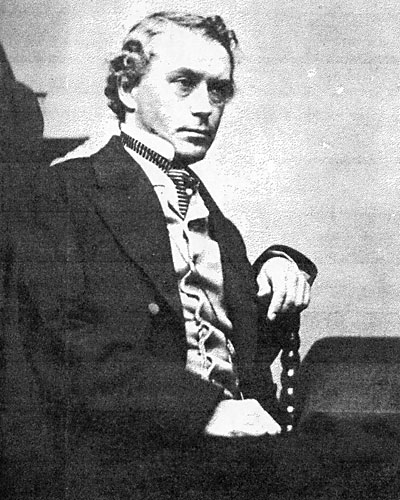
GeorgeTempletonStrong

George Templeton Strong

 Mary Boykin Chesnut

Mary Boykin Chesnut

          In South Carolina Mary Boykin Chesnut was shaken and wrote in her diary: “Since Atlanta I have felt as if all were dead within me, forever.” “We are going to be wiped off the earth.”


Posted in Uncategorized | Tagged , , , , , , , , | Leave a comment

“The Great War” Begins: July 28 is the 100th Anniversary of World War I

(This essay was originally published by the Newport Daily News on July 26, 2014.)

For many Europeans, the early 1900s must have been exciting and hopeful times. The Industrial Revolution, beginning 150 years earlier, had given them a higher standard of living and had transformed their lives to be more comfortable, healthy, and entertaining. The world economy had become truly interconnected, cities were booming, transportation systems were much faster and more efficient, health and sanitation had improved. Historian Arnold Toynbee captured the spirit of the age when he said that his generation expected that “life throughout the World would become more rational, more humane, and more democratic…that the progress of science and technology would make mankind richer…that all this would happen peacefully.”

We should forgive this generation, then, for failing to foresee the coming catastrophe of World War I, fought by all the major and many lesser powers throughout the world, lasting over four years, and resulting in 17 million deaths of military personnel and civilians. (Statistics vary widely.)

By the early 20th century, after four centuries of expansion and development, the most powerful states of Europe and the United States had come to dominate the world. These states included Austria-Hungary, France, Germany, Great Britain, Russia, and to a lesser extent, Belgium, Italy, the Netherlands, Portugal and Spain. These states controlled directly or economically just about the entire continent of Africa and the better part of South and Southeast Asia. Beyond Europe the Ottoman (Turkish) Empire was unraveling, China was in turmoil, and Japan was modernizing and seeking an empire.

In 1914 the United States was on the road to becoming the most powerful country in the world. By 1890 it had surpassed other Western states to become economically the most powerful by most indicators. Fed by a surge of immigrants searching for economic opportunity, education, and a better way of life, American cities in the decades before the War grew at a tremendous rate. The Statue of Liberty, completed in 1886, bore Emma Lazarus’ words relating to this process: “Give me your tired, your poor, your huddled masses yearning to breathe free.”

With the battle for the American West essentially over by 1890, the United States cast its eyes beyond its shores to spread its influence and secure its interests. In 1898 it had won the Spanish-American War and gained the overseas territories of Guam, Puerto Rico, and the Philippines. My grandfather had helped to build the Panama Canal which opened in 1914.

At home Americans had become focused on “Progressive” issues in their search for a better society: poverty, prostitution, women’s rights, temperance, corporate greed, and environmental conservation. In 1912 they elected Woodrow Wilson to the presidency, and he readily used his powers for progressive ends. In 1913 and 1914 the Federal Reserve system was established to regulate the money supply, credit, and the banking system; the Federal Trade Commission was established to regulate commerce; the Clayton Antitrust Act was passed, prohibiting some of the worst corporate practices. What historians call the era of the “modern, activist state” had clearly begun.

Volumes have been written about the causes of World War I, which historian Jackson Spielvogel has called “the defining event of the twentieth-century.” Historians cite the following major factors. The international competition between the major powers had reached a very high pitch. Austria-Hungary competed with Russia and other minor powers for influence and control in the Balkan Peninsula. Great Britain, the dominant naval power for 150 years was now challenged by a united and assertive Germany, determined to play a more prominent role on the world stage.

Second, the small Kingdom of Serbia sought to free all Southern Slavs from Austria-Hungary and form a new pan-Slavic state. This agitation was a nagging thorn in the side of Austria-Hungary.

Third, since the end of the Napoleonic Wars in 1815, the European powers had shown a certain flexibility in political-military alliances to match the interests they sought to protect. By 1914 this flexibility had given way to a more rigid bipolar system: the Triple Alliance (Austria-Hungary, Germany, and Italy) versus the Triple Entente (France, Great Britain, and Russia).

Alliances, WWI.jpeg

Military Alliances, 1914

(Wikipedia.com)

          Fourth, while the size of European armies had grown dramatically during the Napoleonic Wars, they now continued to grow not only in size but also in weaponry and technological and logistical sophistication, a consequence of the Industrial Revolution. Also, in preparation for a possible conflict, several states had developed elaborate and fairly rigid war plans. The German “Schlieffen Plan,” for example, assumed a simultaneous war against both France and Russia, not one or the other. The Russian plan assumed a war against both Germany and Austria-Hungary.

The spark that ignited the war was the assassination on June 28, 1914, of Archduke Franz Ferdinand, the heir to the throne of Austria-Hungary, by Serbian nationalist Gavrilo Princip. On July 28 Austria declared war on Serbia. Within two weeks the major powers of Europe were at war; the U.S. would join the war in 1917.

Ferdinand

Archduke Franz Ferdinand and wife Sophie

(findagrave.com)

          The British statesman Sir Edward Grey reportedly said: “The lamps are going out all over Europe; we shall not see them lit again in our life-time.”

Posted in Uncategorized | Tagged , , , , , , , | 1 Comment

Returning Home to Hasbrouck Heights

(This essay was originally published as a letter to the editor–abridged– by The Record (North Jersey) on July 24, 2014.)

There is something both comforting and disquieting about returning to one’s home town after many years. With voices both pushing me and restraining me, I—with my nine-year-old grandson in tow—returned to Hasbrouck Heights where I grew up in the 50s and 60s and graduated the High School in 1966.

Beginning on the Boulevard, I was very happy to see some of the old anchors of the avenue still remaining: Corpus Christi Church—our family parish, Spindler’s Bakery, Henry’s Deli, and Lovey’s Pizzeria. With many of the older trees gone, the Boulevard overall looked brighter and still exuded a certain community feeling. The trees in the Passaic Street Circle stood very healthy.

I noted a number of new eating establishments such as Sofia’s Mediterranean Grill—with outdoor seating no less. As an Italian-German-American, I was very happy that The Risotto House has replaced Chicken Delight. Gus’s Sweet Shop is now an Italian restaurant.

Other changes were evident. Franklin School, where I attended junior high, has been converted to senior apartments, and the high school now incorporates the middle school.

I was sad to see a Chinese restaurant in place of the Boulevard Pork Store. At twelve I began to work there when Helmut Wildermann owned the store. Once I began studying German with Ms. Rechnic at the High School, I could practice the language with customers and also with the new owners, Hans Gartner and Alois Lipp. Little did I know that 25 years later I would use the language to study the unification of Germany in 1990.

The most striking change I realized was that the town now has people of color. As a teenager I remember playing sports against African-Americans from other towns; however, they were not to be found on our streets and in the high school, something which puzzled me. In the summer of 1963, Martin Luther King led the March on Washington and gave his “I Have a Dream Speech.” In the summer of 1964, we white teenagers danced to black groups like Martha and the Vandellas singing “Dancing in the Street,” and the following summer to the Four Tops singing “I Can’t Help Myself;” however, we did not have black classmates or teammates. In those years I assumed some type of conspiracy kept the town white. This contrasted with what I saw on my visit. I noticed people of color on the streets and behind the counters at the stores. It seems that my home town has indeed entered the 21st century.

Traveling down Franklin Avenue, I visited the athletic field and little league fields which all looked in very good shape with the athletic field now having artificial turf, suggesting the continued value the town still places on its athletic teams. On Route 17, Fat Mike’s, Jiffy Burger, and Dairy Queen are long gone.

Slowly I drove down Columbus Avenue pointing out to Vincent the houses of Mrs. Bear and Ms. Hoag where I tended the lawns and gardens, friend Jimmy McKenna’s house where we played basketball, and friend “Speedy” Wall’s house whose cousin set the garage on fire.

Most of the old trees whose shade I played under were gone; newer, younger trees lined the street. Midway to Terrace Avenue I pulled over, and I asked Vincent to follow me. I had to show him where we spent many summer hours playing stickball in the street, a game played with a broom stick and a pink rubber “Spalding” ball. I pointed out the location of the bases and especially of the home run line. After my friends and I had painted the line and marked it “Home Run,” a very angry woman left her adjacent home armed with a pail and wash broom. As she leered and cast angry words at us, she tried furiously to remove our home run line—in vain.

Stickball Street, Columbus Ave, 7-2014 003

        Adjacent to my former house on the corner of Columbus and Terrace, I identified the Finks’ house. It was on this property brother Denis and I agitated a hornet’s nest. Mr. Fink left his home to investigate and drifted a bit too close to the nest. The hornets attacked and drove a tumbling Mr. Fink back into his home.

I was comforted to see my former home at 75 Terrace Avenue still standing and in good repair, especially since I found my wife’s former home at 318 Henry Street demolished and replaced with two new homes. Although most of the sidewalk was new, I did find a segment made up of the original pieces of the uneven blue slate which made shoveling snow so challenging. Our lamp post, which once had my father’s name and “Massaging” on it, remains with the number “75.” I was also happy to see evidence of a young family living there—a portable basketball net stood in the driveway and a trampoline stood in the side yard where I played endless hours of catch with brother Denis and climbed the cherry tree. Reflecting the heightened concern for children’s security in our society at large, the most striking change was the fence around the property. The neighborhood in my time had very few of these, allowing much free-for-all through back yards and across property lines.

75 Terrace, Grandson Vincent, 7-2014 002

         The highlight of the return was lunch at Lovey’s Pizzeria in the heart of town. As a teenager this was where I would go with Terry Gascoyne and Bobby Wildermann for a slice of pizza or a hero sandwich, perhaps the occasional eggplant parm sandwich. One of these tasty items with a soda and we were sitting on top of the world.

Lovey's Pizzeria, Boulevard

        Choosing lunch was a tough challenge, but in the end I went with the eggplant sandwich with a side of broccoli rabe. We met the current owners Corinne and Duke Seidel who very patiently listened to my stories of the old days. It was Corinne’s father, Jimmy Longo, who always was to be found behind the counter throwing pizza dough.

Vincent and Corinne Seidel

        My return to Hasbrouck Heights proved to be, on balance, very rewarding and comforting. I embraced my home town as a source of constancy in this world of increasing inconstancy.

Follow me on Twitter: @FredZilian

Posted in Uncategorized | Tagged , , , , , , , , | 23 Comments

Burnside: A “Want of Success”

(This essay was originally published by the Newport Daily News on June 18, 2014.)

Ambrose Everett Burnside, Rhode Island’s most famous Civil War general, had a military career with actions sometimes very competent and praiseworthy but at other times incompetent and ineffective. After his military service he gave distinguished service to our state as a political leader.

Born in Indiana to poor Quakers, Burnside attended West Point, graduated with the class of 1847, and was commissioned as an artillery officer. Early in his career he had a short tour at Fort Adams, Newport, and then spent three years in the New Mexico Territory where he was wounded fighting Apaches. He returned to Newport, met and married Mary Bishop of Providence in 1852.

In 1853 he resigned his commission and moved to Bristol where he developed a breech-loading carbine. Failing to secure a government contract, he left Rhode Island and took a position with the Illinois Central Railroad under his classmate and friend George B. McClellan.

At the outbreak of the Civil War in April, 1861, Governor William Sprague invited Burnside to lead its first infantry unit, the 1st RI Volunteers. He ascended to brigade command and led his unit in the First Battle of Bull Run in July. In August he was promoted to brigadier general.

Over the next four years he obtained many commands and saw action in numerous campaigns. In the first half of 1862, Burnside led a combined army-navy force to North Carolina to seize coastal fortifications and to help enforce the blockade of the Confederacy. Within a few weeks Union troops had secured all of Carolina’s ports in the main sound, a success which brought Burnside a promotion to major general.


640px-Burnside_Park_monument, wikipedia

 Burnside Statue, Kennedy Plaza, Providence

(www.wikipdedia.com)

His next major operation came at the Battle of Antietam (MD) in September, 1862. Burnside commanded the 9th Corps in McClellan’s Army of the Potomac. In the battle Burnside showed a lack of imagination in securing a bridgehead across Antietam Creek but finally succeeded by early afternoon. However, later that day fresh Confederate units forced his three divisions to retreat.

After tolerating General McClellan’s timidity in battle for many months, President Lincoln replaced him in November 1862, with Burnside, who had twice earlier refused to accept the position, indicating he felt unqualified for the command.

With high expectations for an offensive from both Lincoln and the public, Burnside decided to engage General Robert E. Lee and his army at Fredericksburg (MD) on December 13, 1862. His plan of attack was questionable and his execution was flawed as his written orders were confusing. A total of 14 Union brigades eventually charged without success the Confederate forces which occupied the Marye Heights. It was at this battle that Lee remarked to General Longstreet: “It is well that war is so terrible—we should grow too fond of it!” One newspaper reporter wrote: “It can hardly be in human nature for men to show more valor, or generals to manifest less judgment.” With almost 13,000 Union casualties, the battle proved to be one of the worst Union defeats. Burnside quickly accepted responsibility and offered his resignation to Lincoln, which he did not accept.

During the following month Burnside made another attempt at a campaign against Lee. However, as soon as the operation began, heavy rains made movement impossible, giving the operation the name of the “Mud March.”  Within two days Burnside called off the operation. Morale plummeted, Burnside’s generals opposed him, desertions and sick call lists increased. When Burnside again offered his resignation, Lincoln accepted it and assigned him as the commander of the Department of the Ohio. In the fall of 1863, Burnside successfully seized and held the city of Knoxville (TN).

His final major operation was in the summer of 1864 in the siege of Petersburg (VA). Burnside once again commanded the 9th Corps. He approved an unusual plan for digging a tunnel under a Confederate fortified position. Union troops of the 48th PA Regiment succeeded in digging a tunnel 511 feet long and loaded it with four tons of gunpowder. The explosion on July 30 blew a hole 170 feet long, 60 feet wide and 30 feet deep. Changes to the battle plan from higher headquarters at the last minute seemed to confuse Burnside, who with his subordinate leaders did not control their troops well. Instead of skirting the crater, they attacked into it, stopping to look at the carnage and spectacle. When the battle ended, the Union had suffered 4,000 casualties with little to show. General Grant stated: “It was the saddest affair I have witnessed in the war.”

In April, 1865, after a court of inquiry found him “answerable for want of success” at Petersburg, Burnside resigned. He worked as a director of railroads, was elected three times as governor of the Rhode Island, and served as a senator from 1875 until his death in Bristol in 1881. He gave his name to the style of whiskers he wore.

ambrose-burnside, history.com

 Ambrose Everett Burnside

(www.history.com)


Posted in Uncategorized | Tagged , , , , , , , , | 4 Comments